



Why Every Local Business Needs a Lead Generation Website
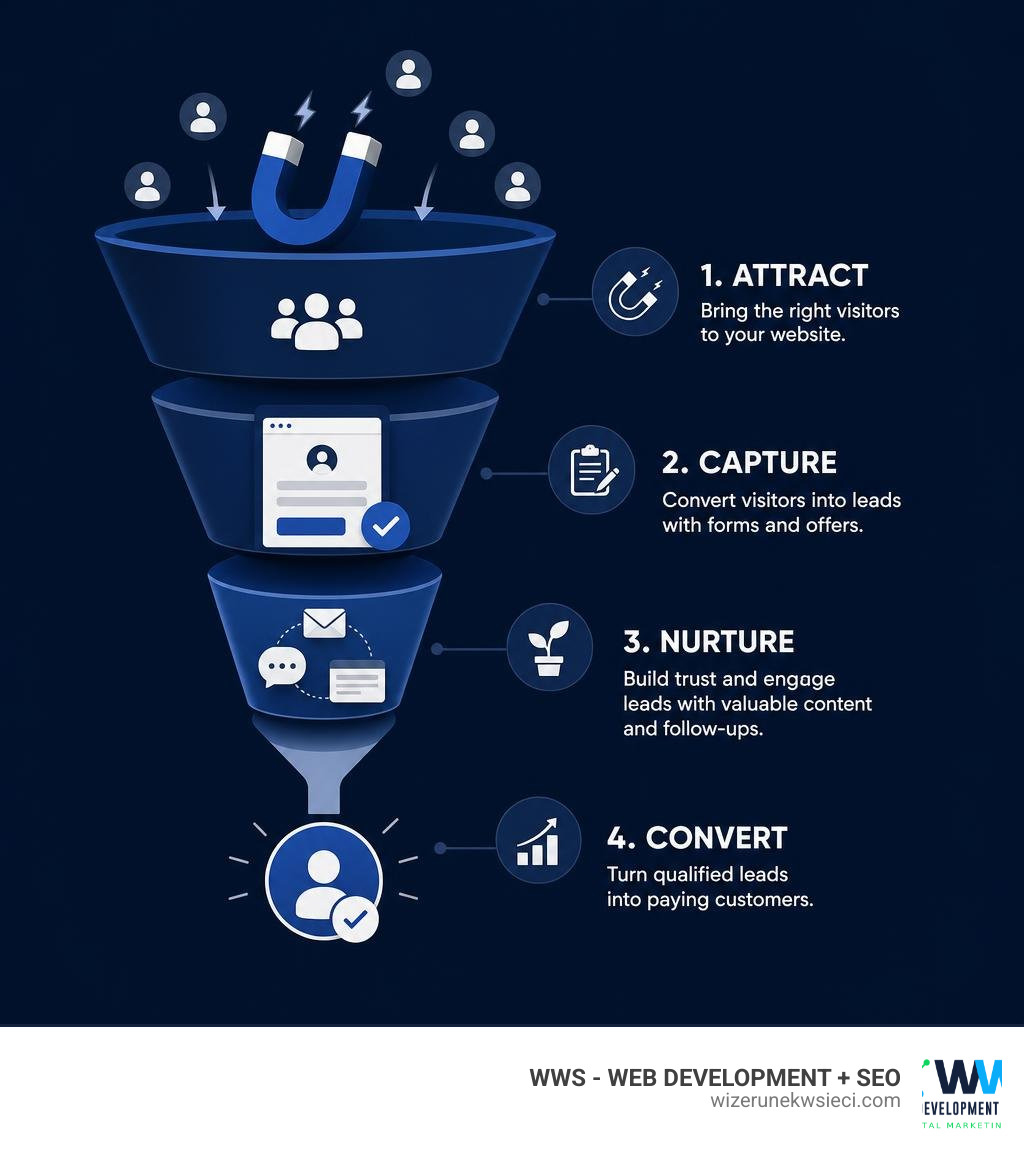
A lead generation website is a site built with one purpose: turning visitors into contacts your business can follow up with and convert into paying customers.
Quick answer — what is a lead generation website?
- A website designed to capture visitor information (name, email, phone) through forms, offers, and calls-to-action
- Every page is treated as a conversion opportunity, not just an information display
- It uses lead magnets, landing pages, and automation to move visitors toward becoming qualified leads
- It connects to a CRM or email platform so no lead falls through the cracks
This is different from a standard business website, which mostly informs visitors. A lead generation website actively works to fill your pipeline.
63% of marketers say generating leads is one of their top challenges. And most B2B websites only convert between 2% and 5% of their visitors into leads — meaning the vast majority of your traffic leaves without ever contacting you.
For local service businesses, that’s a serious problem. If your website isn’t capturing leads, it’s not doing its job.
I’m Tomasz Lasota, Digital Development and Technology Director with over 22 years of experience building and optimizing lead generation websites for both B2B and B2C businesses. In this guide, I’ll walk you through exactly what makes a lead generation website work — and which tools can help you get there faster.
What is a Lead Generation Website and How Does It Work?
To understand why a lead generation website is so powerful, we have to look at how it differs from a classic “brochure” website.
A standard business website acts like a digital business card. It has an “About Us” page, a list of services, and a basic contact form buried somewhere in the footer. It is passive. It assumes that if a visitor wants to buy, they will do the heavy lifting to find out how.
In contrast, a lead generation website is built around a conversion-first mindset. It is an active participant in your inbound marketing strategy. Instead of hoping people find their way to a contact page, we engineer a deliberate visitor flow that guides them toward a high-value action.
Every element on the site is optimized to capture interest. When an anonymous visitor lands on your homepage, they are greeted by a clear value proposition. As they scroll, they are offered helpful resources, interactive tools, or limited-time promotions. Each of these touchpoints is designed to exchange valuable information for the visitor’s contact details.
| Feature | Standard Business Website | Lead Generation Website |
|---|---|---|
| Primary Goal | Inform and provide company overview | Convert anonymous traffic into qualified leads |
| User Journey | Self-guided, passive exploration | Guided, conversion-focused pathways |
| Calls-to-Action | Generic (“Learn More”, “Submit”) | Specific and benefit-driven (“Get My Free Quote”) |
| Lead Capture | Single contact form on a dedicated page | Multiple forms, popups, and live chat across all pages |
| CRM Integration | Often manual or basic email notifications | Real-time, automated sync to sales pipelines |
By transforming your digital presence from a static brochure into a conversion engine, you make sure that the money and effort you spend on driving traffic actually yields a return. If you want to dive deeper into how to structure your site’s layout for maximum impact, you can read our extensive guide on Website Design.
Core Features of an Effective Lead Capture Platform
Building an effective lead generation website is not just about slapping a few forms on your existing pages. It requires a carefully balanced ecosystem of trust, speed, and seamless user experience.
First and foremost, trust signals are the bedrock of any conversion. When a visitor lands on your site, they are naturally skeptical. To break down this barrier, we must prominently display:
- Real, human customer testimonials (ideally with photos or video)
- Detailed case studies showing real-world results
- Security badges and privacy guarantees next to your data entry fields
Another critical factor is page speed. Google’s data shows that over 50% of people will leave a website if it takes longer than 3 seconds to load. If your site is slow, you are literally throwing away half of your potential leads before they even see your offer.
Additionally, with more than half of all web traffic originating on mobile devices, mobile optimization is no longer optional. Your forms must be easy to tap, your text must be legible without zooming, and your navigation must be simple.

Essential Elements of a High-Converting Lead Generation Website
To turn passive visitors into active leads, your website needs several core elements working in harmony:
- A Compelling Value Proposition: Within three seconds of landing on your page, a visitor must understand exactly what you do, who you do it for, and how you do it better than anyone else.
- Strategic Calls-to-Action (CTAs): Your CTAs should be highly visible, contrasting in color, and written with benefit-driven copy. Instead of “Submit,” use “Get My Free Strategy Session.”
- Dedicated Landing Pages: When running targeted marketing campaigns, never send traffic to your homepage. Send them to highly focused landing pages designed around a single, specific offer.
- Exit-Intent Popups: Capture abandoning visitors by offering a last-minute discount, a free resource, or an invitation to chat just as their mouse moves to close the tab.
- Live Chat and AI Chatbots: Many modern buyers prefer messaging over calling. Implementing a live chat option allows you to answer questions in real-time and qualify leads instantly.
If you are looking to drive immediate, high-intent traffic to these high-converting pages, check out our tailored strategies for Paid Campaigns.
Lead Magnets, Automation, and Advanced Nurturing Strategies
A lead magnet is a high-value asset that you give away for free in exchange for a visitor’s contact information. The best lead magnets solve a specific, immediate problem for your target audience.
Some of the most effective lead magnets include:
- Gated Content: Comprehensive ebooks, industry whitepapers, or proprietary research reports.
- Educational Events: Live or on-demand webinars that demonstrate your expertise.
- Interactive Tools: Free calculators, templates, or self-assessments that provide instant personalized value.
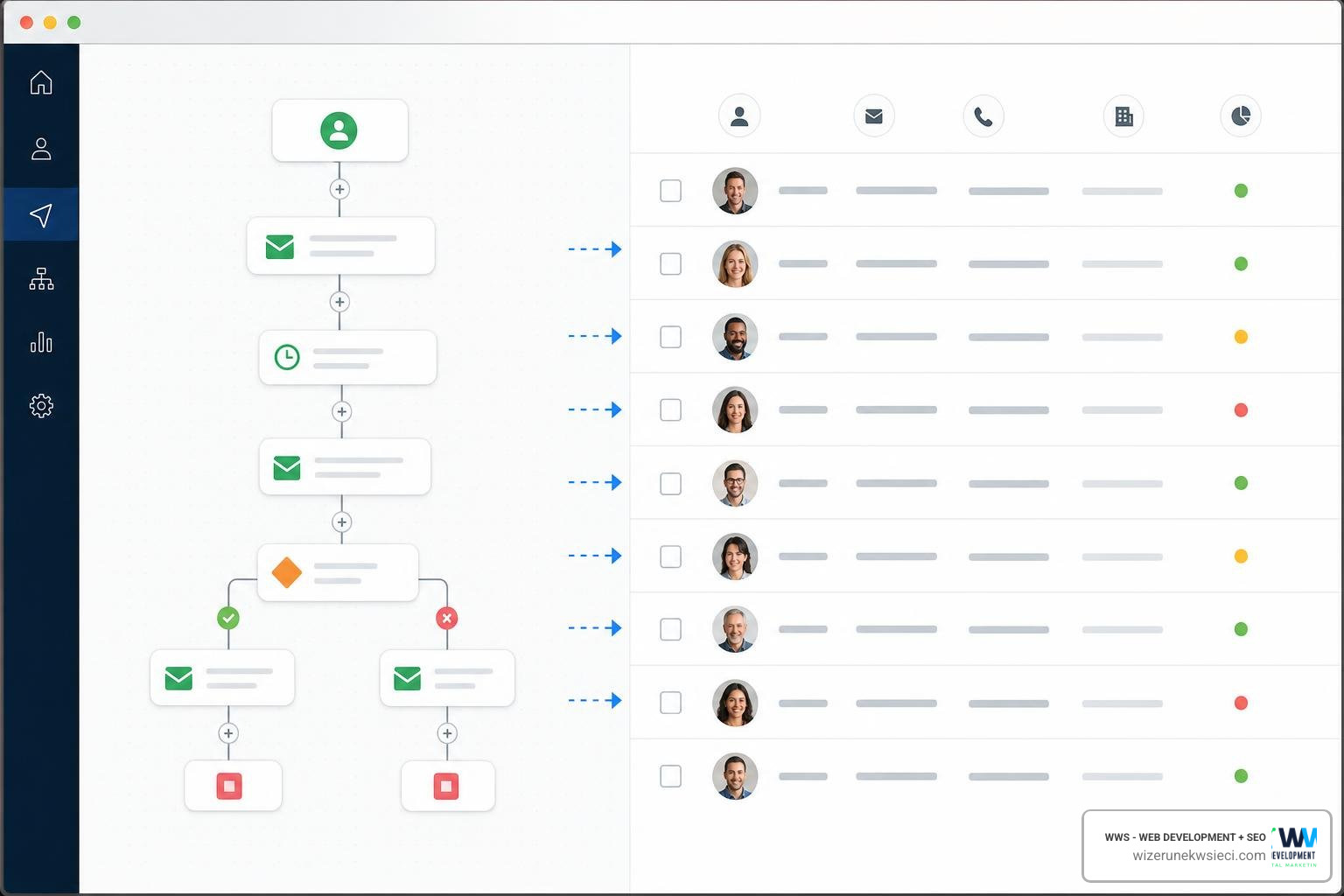
Once a visitor fills out your form to receive their lead magnet, the real work begins. Most newly generated leads are not ready to buy immediately. This is where marketing automation and CRM integration become essential.
By connecting your website’s forms directly to an automated email sequence, you can nurture those prospects over time. You can send them helpful tips, case studies, and thought leadership content that positions your business as the obvious choice when they are finally ready to make a decision.
In fact, 77% of surveyed customers reported clear improvements in lead generation and conversion rates after implementing automation tools.
To build a continuous stream of traffic to fuel this automated engine, you need a cohesive approach across all channels. Learn more about setting up these end-to-end systems in our guide on Marketing Campaigns.
Implementing Progressive Profiling and Lead Scoring
Asking for too much information upfront is a quick way to kill your conversion rates. If a top-of-funnel visitor has to fill out a 10-field form just to download a simple checklist, they will likely walk away.
To solve this, we use progressive profiling. This technology recognizes returning visitors and dynamically changes the form fields. On their first visit, you might only ask for their name and email. On their second visit, you can ask for their company size or job title. On their third visit, you can ask about their timeline or budget.
At the same time, you should implement a lead scoring system. This assigns points to leads based on their demographic fit and their behavior on your website. For example:
- Downloading a basic ebook: +5 points
- Visiting your pricing page: +15 points
- Viewing a detailed case study: +10 points
- Requesting a custom quote: +50 points (and an immediate alert to your sales team)
Using frameworks like BANT (Budget, Authority, Need, and Timing), your sales team can prioritize their outreach, focusing only on the warmest, most qualified prospects. If you need custom tools to handle this kind of data segmentation, you might want to explore our App Development services to build a tailored solution.
The 6 Best Lead Generation Software Options Compared
To help you turn your website into a high-performing lead generation engine, we have analyzed and compared the six best B2B prospecting and sales intelligence platforms available in June 2026.
1. Leadfeeder (Best for Anonymous Visitor Identification)
If you want to Turn Your Website Into a Lead Generation Engine, Leadfeeder is an incredibly powerful tool. It uses advanced IP-to-company database matching to identify the real companies visiting your website—even if they never fill out a form.
- Key Features: Real-time visitor tracking, dynamic IP tracking for remote workers, automatic CRM sync, and robust GDPR compliance (storing all data securely within the EU).
- How It Works: It integrates with your website and reveals buying intent by showing you exactly which pages a company looked at and how long they stayed.
- The Results: On average, Leadfeeder helps businesses identify up to 45% of companies from their anonymous website traffic, resulting in a 75% increase in MQL-to-SQL conversion rates and a 35% reduction in cost per qualified lead.
2. Express Leads (Best for Unlimited B2B Database Access)
For businesses looking to build outbound campaigns alongside their inbound efforts, Express Leads – Unlimited B2B Leads On Tap offers a unique value proposition by removing the credit limits that plague traditional lead databases.
- Key Features: Access to over 700 million decision-makers across 15 million companies globally, real-time data enrichment, and direct CRM synchronization.
- How It Works: Rather than charging per lead, their unlimited model allows you to scale your outreach campaigns without artificial restrictions.
- The Results: It is fully compliant with GDPR and CCPA, making it a highly reliable tool for sales teams who need to build massive, highly targeted outbound lists quickly.
3. Leadmo (Best for Multi-Source Lead Extraction)
Leadmo is a versatile, automated lead generation platform that allows sales teams to extract ready-to-contact leads from multiple online sources in just a few clicks.
- Key Features: Multi-source extraction (including Google Maps, classified ads, and direct website crawling), a verified database of 90 million contacts, and easy CSV exports.
- How It Works: You set your geographic and industry filters, and Leadmo scrapes and verifies the contact details of business owners, decision-makers, or active sellers.
- The Results: It is perfect for agencies and local service providers who need to build highly localized lists of prospects very quickly.
4. Leadsify (Best for Human-Vetted Web Design Leads)
Leadsify takes a highly curated approach to lead generation, focusing specifically on web design agencies and freelancers looking to grow their client base.
- Key Features: Daily human-vetted leads, US-based company targeting, and a rigorous 50+ point inspection checklist.
- How It Works: The Leadsify team manually scours the web to find businesses with outdated, slow, or poorly designed websites. They vet each company and provide verified contact details for decision-makers.
- The Results: Because these leads are human-vetted and exclusive, outreach campaigns enjoy significantly higher response rates than cold lists.
5. IntelLeads.ai (Best for AI-Powered Prospecting and Outreach)
IntelLeads.ai is a modern, complete sales prospecting and relevant outreach platform powered entirely by conversational AI.
- Key Features: Conversational natural language list building, real-time sales intelligence, automated email outreach, and verified contact data.
- How It Works: Instead of dealing with complex database filters, you simply describe your ideal customer in plain English (e.g., “Find me local HVAC company owners in northern Illinois”). The AI generates the list, verifies the emails, and helps you write personalized outreach based on real-time company news.
- The Results: It dramatically reduces research time and ensures your outreach is highly personalized and relevant.
6. Quantum Lead Gen (Best for Real-Time Data and AI Research)
Quantum Lead Gen combines real-time data sourcing with custom AI training to help businesses connect with their ideal customers.
- Key Features: Real-time data enrichment (no recycled or stale databases), AI trained on your specific business details, roll-over credits, and seamless Zapier integrations.
- How It Works: You train the platform’s AI on your unique value proposition. The AI then searches the web for matching prospects, identifies decision-makers, and drafts highly personalized outreach messages tailored to their pain points.
- The Results: It acts as an autonomous sales assistant, filling your pipeline while saving hours of manual prospecting time every day.
Metrics, ROI, and Real-World Examples
To know if your lead generation website is performing well, you must track the right metrics. In the B2B space, the standard benchmark for website conversion rates is between 2% and 5%. However, with a highly optimized, conversion-focused design, we often see local service websites hit conversion rates of 8% to 12% or even higher.
Let’s look at how local service businesses in Illinois are successfully leveraging these strategies:
- A plumbing company in Des Plaines, IL implemented a simple “Emergency Dispatch Calculator” on their homepage. By giving visitors an instant estimate of response times and basic diagnostic fees, they boosted their website conversion rate by 150%.
- A commercial cleaning agency in Chicago, IL started using exit-intent popups offering a “Custom Office Cleaning Checklist.” This simple addition captured 4% of leaving visitors, turning cold traffic into warm nurture leads.
To maximize these results, you must tie your website optimization with active social campaigns. Read more about how to distribute your lead magnets via Social Media.
By partnering with an experienced local agency, you can implement these advanced tracking and optimization strategies seamlessly, ensuring your business stands out in the competitive Illinois market.
How to Measure the ROI of Your Lead Generation Website
Calculating the financial return of your website doesn’t have to be complicated. You need to track four key metrics:
- Cost Per Lead (CPL): Total marketing spend divided by the number of leads generated. (For example, if a campaign costs $1,000 and generates 200 leads, your CPL is $5).
- Customer Acquisition Cost (CAC): The total cost of sales and marketing divided by the number of new customers acquired.
- MQL-to-SQL Conversion Rate: The percentage of marketing-qualified leads (newsletter signups, ebook downloads) that turn into sales-qualified leads (quote requests, scheduled consultations).
- Customer Lifetime Value (LTV): The total revenue a single customer brings to your business over their lifetime.
By monitoring these numbers in Google Analytics and your CRM, you can see exactly which traffic sources and landing pages are driving the highest-value customers. If you want to set up a comprehensive tracking dashboard for your business, we invite you to use our Contact page to get in touch with our analytics specialists.
Frequently Asked Questions about Lead Generation
What is the difference between a lead generation website and a landing page?
A landing page is a single, standalone web page designed with one specific conversion goal in mind (e.g., getting users to sign up for a webinar). It usually has no main navigation menu to prevent distractions. A lead generation website is an entire multi-page site designed to house multiple offers, blog posts, and service pages, all working together to guide different buyer personas through their unique user journeys.
What are the most common mistakes to avoid when building a lead generation website?
The most common mistakes are:
- A weak or confusing value proposition: If visitors don’t understand what you do within three seconds, they will click away.
- Overly complex forms: Asking for too much information (like phone numbers or budgets) too early in the relationship.
- Slow load times: Letting your site take longer than three seconds to load, which can cost you over 50% of your traffic.
- Lack of mobile optimization: Forgetting that more than half of your potential leads are browsing on their phones.
Do I need different lead magnets for different target audiences?
Yes, absolutely. Different buyer personas have different pain points and are at different stages of the buying journey. A business owner looking for commercial HVAC services wants a detailed cost-savings case study, while a homeowner looking for a quick AC repair just wants a simple booking tool or a discount coupon. Tailoring your offers to specific audiences will drastically improve your conversion rates.
Conclusion
A high-performing lead generation website is the single most valuable digital asset your business can own. It works for you 24/7, turning anonymous local traffic into a steady stream of predictable, qualified leads.
At Wizerunek w Sieci (WWS), we specialize in building highly optimized websites and running integrated SEO, Google Ads, and social media campaigns tailored specifically for local service businesses in Chicago, Des Plaines, and across Illinois. Our mission is simple: to deliver measurable, sustainable growth through conversion-focused digital strategies that fill your sales pipeline.
Ready to turn your website into a powerful revenue engine? Transform your business with professional website SEO and let’s build a strategy that works for you.