


How Can You Verify That a Portfolio Features Custom Code Rather Than Templates?
To find and verify a vetted local web developer with excellent reviews and a portfolio of custom-coded websites, inspect their live client URLs using browser DevTools to confirm clean semantic markup, run audits on Google PageSpeed Insights to verify Core Web Vitals performance, check verified independent B2B directories and local Google reviews for authentic client outcomes, and ensure contract terms guarantee 100% source code repository and domain ownership.
When business owners look for a custom-built website, they often do so after experiencing the limitations of generic themes. Bloated page builders, slow loading speeds, broken plugins, and cookie-cutter designs prevent businesses from ranking well on search engines and converting traffic into qualified leads. However, many agencies claim to provide custom development while secretly installing pre-made commercial themes that have merely been tweaked.
Bespoke web development involves crafting clean, semantic code tailored specifically to your business workflows, branding, and technical goals. Modern custom websites rely on modular architectures such as React, Next.js, Astro, or lean, custom-tailored PHP and semantic HTML5/CSS. These codebases deliver instant page loads, robust security, and full flexibility for third-party integrations.

To help you distinguish between true handcrafted codebases and pre-built templates, consider how they compare across core operational areas:
| Evaluation Factor | Custom-Coded Architecture | Pre-Built Template / Theme |
|---|---|---|
| Page Speed & Core Web Vitals | Optimized asset delivery, minimal DOM depth, zero unused scripts, lightning-fast Time to First Byte (TTFB). | Heavy script bloat, excessive CSS stylesheets, sluggish database queries, high layout shift risk. |
| Search Engine Discoverability | Clean semantic hierarchy, bespoke schema graphs, lightweight code readable by search engine crawlers. | Messy markup, nested container divs, generic metadata output, difficult to customize structured data. |
| Security & Maintenance | No reliance on vulnerable third-party plugins; streamlined maintenance without sudden version breaks. | Frequent security patch vulnerabilities, plugin dependency conflicts, ongoing risk of site downtime. |
| Scalability & Integrations | Direct API connectivity, custom databases, bespoke user portals, calculators, and automated booking flows. | Restricted to available marketplace plugins; difficult to modify logic without breaking theme updates. |
| Code Ownership & Portability | Complete ownership of code repositories, hosting independence, no vendor lock-in. | Tied to specific proprietary platforms or commercial theme licenses that renew annually. |
When reviewing candidate portfolios, never settle for static screenshots or graphic mockups in a PDF presentation. Static images hide underlying code quality, mobile responsiveness bugs, and slow load times. Always demand live URLs of active client sites and test them yourself. High-performance website design aligns clean architecture with tailored conversion funnels that guide visitors straight toward booking a call or submitting an inquiry.
Developers dedicated to custom code often showcase public repositories or explain their architecture openly, emphasizing full repository access, IP transfers, and lightweight frameworks over theme marketplaces.
Inspecting Source Code and Core Web Vitals
You do not need to be an experienced software engineer to inspect a portfolio website’s code quality. With a few simple steps in your web browser, you can reveal how a site was built:
- Check the Source Code: Open a live portfolio website in Google Chrome, right-click anywhere on the page, and select Inspect or View Page Source. Press
Ctrl+F(orCmd+Fon Mac) and search for common theme identifiers like/wp-content/themes/,divi,elementor, orbuilder. If you find massive blocks of nestedtags and hundreds of external plugin stylesheets, the site relies heavily on a pre-made page builder.- Run Google PageSpeed Insights: Enter the live URL into Google PageSpeed Insights. Custom-coded websites built on modern architectures consistently score 90+ on both mobile and desktop performance metrics. Pay close attention to Time to First Byte (TTFB), Largest Contentful Paint (LCP), and Cumulative Layout Shift (CLS). Clean code eliminates unnecessary JavaScript bundles and renders content instantly.
- Examine Semantic Markup: Look for clean HTML5 structural elements such as
,,,, and. Clean semantic structure allows search engine bots and screen readers to parse the page without parsing through code bloat.Testing Live Interactive Functionality and Responsiveness
A hallmark of genuine custom development is the presence of smooth, purposeful interactive elements built for specific business workflows:
- Bespoke Dynamic Tools: Test calculators, instant quote estimators, custom multi-step lead forms, and interactive service locators on the live site. Verify that they calculate data instantly without reloading the page or displaying clunky layout jumps.
- Fluid Viewport Responsiveness: Open the portfolio site on your smartphone and slowly resize your desktop browser window. Look for awkward horizontal scrolling, overlapping buttons, or unreadable typography. Custom code uses modern CSS Grid and Flexbox layouts to provide an intuitive experience across any screen size.
- Performance Under User Action: Observe interactive dropdowns, mobile navigation menus, and custom modal windows. Custom-coded animations execute smoothly at 60 frames per second without stuttering or delaying user inputs.
Which Review Platforms and Signals Best Demonstrate Developer Trustworthiness?
Finding a skilled coder is only half the battle; you also need a reliable business partner who respects deadlines, communicates transparently, and stays on budget. With more than 94,000 web development companies listed across global directories, filtering for verified quality is essential.
To assess developer credibility, start with independent B2B evaluation platforms rather than unverified testimonials pasted on a developer’s own homepage. The most reliable platforms independently verify reviews through direct client interviews, confirming project scopes, budgets, and operational outcomes before publishing.
When researching local development partners across the Chicago metropolitan area, Cook County, and Northwest Suburbs such as Des Plaines, Schaumburg, and Arlington Heights, combine B2B platforms with active Google Business Profiles. Look for verified client testimonials and real-world case studies that highlight tangible business results, such as conversion rate improvements, increased phone calls, and seamless project management.
Evaluating Verified B2B Directories and Scorecards
Top-tier B2B directories score development firms across multiple objective criteria:
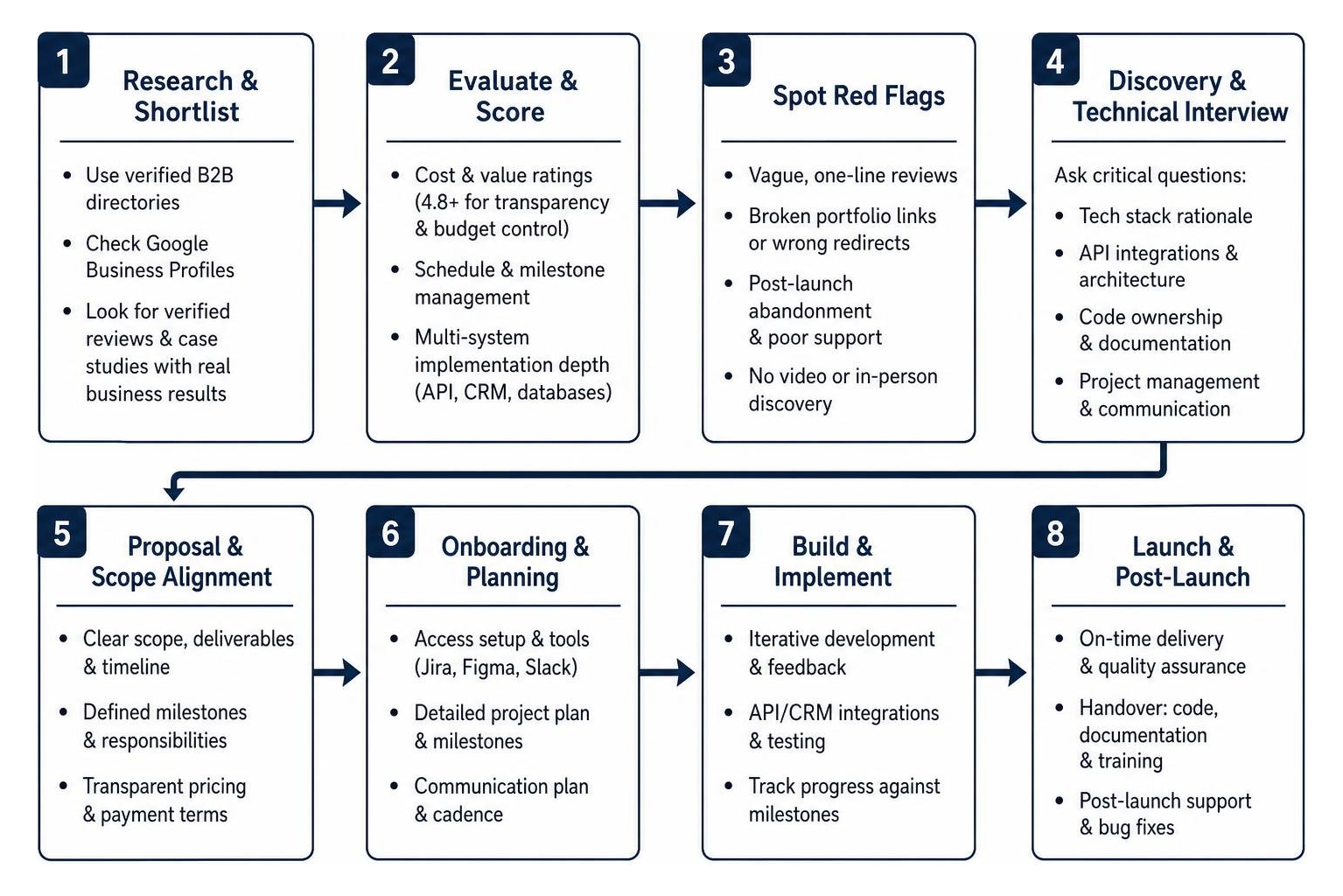
- Cost and Value Ratings: Look for quantitative metrics where past clients rate whether the developer delivered strong value for their budget. High-performing firms regularly achieve 4.8+ ratings for cost transparency and budget control.
- Schedule and Milestone Management: Check how consistently the agency meets agreed-upon delivery dates. Case studies showing complex websites launched on schedule or ahead of deadlines indicate well-structured project management using modern systems like Jira, Figma, and Slack.
- Multi-System Implementation Depth: Look for verified reviews that describe technical complexity, such as custom API connections, CRM integrations, or custom database migrations. These confirm the developer has genuine engineering capabilities rather than simple template-editing skills.
Spotting Red Flags in Client Feedback and Portfolios
When evaluating feedback, watch for warning signs that suggest an unreliable contractor or fabricated reputation:
- Vague, One-Line Reviews: Be cautious of review profiles filled with generic comments like “Great service!” or “Nice design” that lack specific details about the project timeline, business niche, or technical deliverables.
- Broken Portfolio Links: If a developer’s portfolio features dead links, staging subdomains that return 404 errors, or links that redirect to completely different agencies, they may have lost the client due to poor work or taken credit for another agency’s project.
- Post-Launch Abandonment: Look closely for complaints regarding communication drop-offs after final invoice payment. If multiple reviewers mention that the developer refused to fix post-launch bugs or provide code documentation, consider that a major warning sign.
- Absence of Video or In-Person Discovery: If a prospective developer refuses to hold a discovery video call or meet locally to discuss your project scope, they may be outsourcing your project to unvetted third parties.
What Critical Questions Should You Ask to Assess Technical Competence and Ownership?
Before signing a proposal or paying a deposit, conduct a structured technical interview. Asking specific architectural and legal questions will quickly reveal whether you are dealing with a seasoned custom development team or a basic reseller.
Inquiring About Tech Stacks, API Integrations, and Architecture
Use these direct questions to evaluate technical expertise:
- “Why are you recommending this specific tech stack for my business goals?”
A qualified developer will explain their architectural choice in plain business terms. For example, they might recommend a headless architecture (like Next.js paired with a lightweight backend) to maximize page speed and conversion rates, or a tailored PHP build to support easy in-house content updates without theme bloat. - “How do you ensure search engines can parse and index custom interactive elements?”
Your website must be built from the ground up with solid technical seo web design. The developer should explain how they implement server-side rendering (SSR), static site generation (SSG), and structured schema markup to make sure search engine crawlers understand your local services. - “How will you integrate our existing third-party business tools?”
Ask how they handle API endpoints for your CRM, payment gateways (such as Stripe), online booking software, and automated lead notifications. They should be able to describe their data sanitization and security protocols clearly. - “What automated and manual testing procedures do you execute before launch?”
Verify that their workflow includes cross-browser testing, mobile responsiveness checks across multiple screen resolutions, form submission tests, Core Web Vitals audits, and 301 redirect mapping to protect any existing SEO rankings.
Clarifying Asset Ownership, Admin Rights, and Hosting Setups
Vendor lock-in is one of the most frustrating traps small businesses face. Ensure your contract guarantees complete ownership:
- 100% Code and Asset Ownership: Your agreement must explicitly state that all custom source code, graphic assets, database schemas, and content belong entirely to your company upon milestone completion.
- Direct Repository Access: Insist on receiving full administrative access to your code repository (such as GitHub, GitLab, or Bitbucket) with clean documentation so any qualified engineer can maintain the codebase if needed.
- Domain and Hosting Registration in Your Name: Never allow a web developer to register your primary domain name or hosting server under their own personal account. You should hold primary account ownership and grant the developer administrative access.
- No Hidden Licensing Fees: Clarify whether any proprietary components or third-party tools require ongoing licensing fees, ensuring full transparency regarding your annual operating costs.
How Much Does Professional Custom Web Development Cost in 2026?
Understanding custom web development pricing helps you budget effectively while avoiding both overpriced enterprise packages and suspiciously cheap quotes that result in abandoned projects.

In 2026, custom web development project costs generally fall into three tiers based on complexity, integration depth, and custom functionality:
- Standard Custom Business Websites ($1,500 – $5,000): Tailored for local service businesses, medical practices, law firms, and contractors. These builds feature bespoke layouts (typically 5 to 12 pages), handcrafted responsive code, custom lead capture forms, local schema integration, and high-speed optimization. Turnaround is typically 2 to 4 weeks.
- Mid-Tier Functional Web Platforms ($10,000 – $49,000): Designed for growing mid-market companies requiring custom customer portals, e-commerce storefronts, dynamic product configurators, or two-way CRM/ERP API integrations. Turnaround typically spans 4 to 8 weeks with extensive user testing.
- Complex Enterprise Platforms & Custom Web Apps ($50,000 – $199,999+): Built for larger organizations requiring multi-tenant architectures, proprietary SaaS logic, high-volume database processing, advanced security compliance, and multi-system automation.
For small and medium-sized businesses, fixed-price milestone agreements provide the greatest financial safety. Under this model, payments are tied directly to agreed deliverables (such as wireframe approval, staging preview sign-off, and final launch approval), protecting you from the unexpected hourly billing increases common in open-ended agency retainers.
For deeper insights on balancing agency capabilities with cost transparency, explore our guide to local web design companies your guide to finding the perfect partner.
What Are the Key Benefits of Choosing a Nearby Agency Partner Like WWS?
While remote freelancers can be found across the globe, partnering with an established local agency gives your business significant advantages in communication, accountability, and market insight.
At Wizerunek w Sieci / WWS — Web Development + SEO, located at 636 S River Rd #218, Des Plaines, IL 60016 (Phone: (773) 814-2992, Website: wizerunekwsieci.com), we bridge the gap between large, impersonal agencies and unvetted solo freelancers. We serve small and medium-sized businesses throughout the Chicago metropolitan area—including Des Plaines, Schaumburg, Naperville, Arlington Heights, Mount Prospect, Glenview, Park Ridge, and across Cook and Lake Counties—as well as clients nationwide.
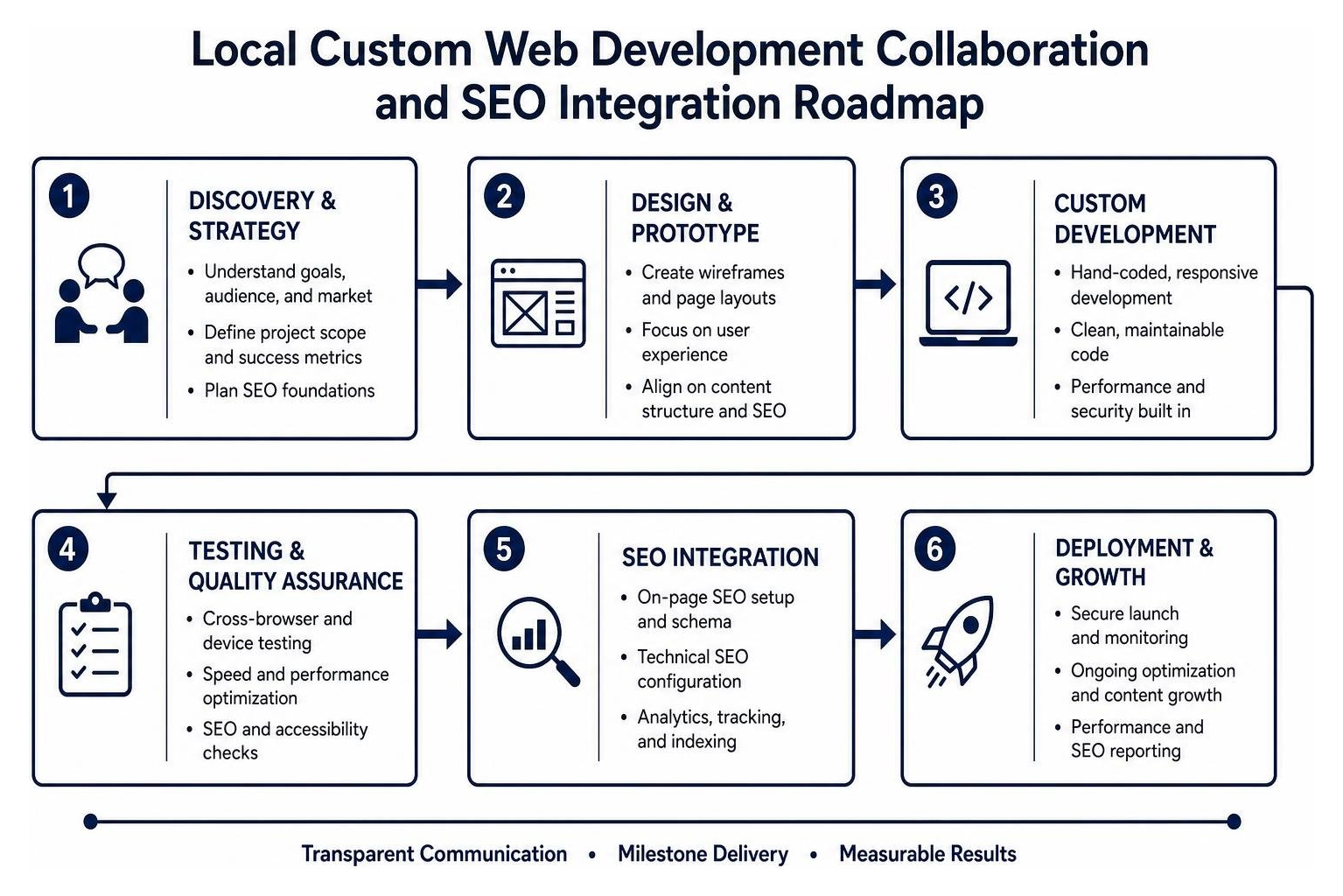
Direct Communication and Personalized Project Stewardship
When you partner with our team, you work directly with experienced developers and digital strategists who take personal ownership of your project:
- Zero Bureaucratic Layers: You collaborate directly with the people building your platform rather than passing messages through intermediate account managers.
- In-Person and Real-Time Collaboration: Whether you prefer meeting at our Des Plaines office, holding focused video sessions, or collaborating via Slack and Figma, our local presence ensures seamless communication during regular business hours.
- Bilingual Capabilities: We provide fluent English and Polish language support, offering dedicated expertise to the vibrant Polish-American business community (Polonia Chicago) as well as the broader regional market.
- Meticulous Custom Code: We write clean, high-performance code built without unnecessary page-builder bloat, giving your business a fast, secure website designed to turn visitors into paying customers. You can learn more about us and our client-first development process.
Seamless Integration of Custom Development with Local Search and Marketing
A custom-coded website delivers the greatest return when integrated directly with a comprehensive digital marketing strategy:
- Built-In Local Search Optimization: We embed localized keyword structures, semantic tags, and geo-targeted schema markup directly into your code, helping you attract high-intent customers in your specific service communities.
- Optimized for Paid Advertising Campaigns: Our custom layouts are built with conversion rate optimization (CRO) principles that improve quality scores and reduce cost-per-click on Google Ads and Meta Ads campaigns.
- Long-Term Performance and Security: We build clean foundations that do not break whenever a third-party plugin updates, keeping your site fast, accessible, and secure for years to come.
Frequently Asked Questions About Finding Local Custom Web Developers?
How can I tell if my business needs a custom-coded website instead of a pre-made template?
If your business relies on organic local search traffic, requires custom calculators or booking workflows, connects to proprietary third-party databases, or demands high mobile page speeds that pre-built templates struggle to deliver, a custom-coded website is the right choice. Custom code eliminates unnecessary script bloat, protects you from plugin security vulnerabilities, and gives you total control over user experience and conversion paths as your company grows.
Will I own my website’s custom code and domain once the project is finished?
Yes. When working with an ethical, professional agency, you must retain 100% legal ownership of your domain registrations, hosting accounts, database files, and source code repositories. At WWS, we configure every asset under your company’s credentials and provide full administrative access upon launch, ensuring you are never locked into proprietary hosting systems or forced retainers.
How long does it take for a local agency to build and launch a custom website?
Timelines depend on project scope and integration requirements:
- Single-page high-conversion landing pages: Typically completed within 5 to 10 business days.
- Standard multi-page custom business websites (5–12 pages): Typically delivered within 2 to 4 weeks.
- Complex platforms with custom database logic or portals: Typically take 6 to 10 weeks, including staging reviews, API testing, and final quality assurance.
How Do You Make Your Final Selection and Get Started?
Selecting the right local web development partner comes down to four disciplined steps:
- Verify the Portfolio Live: Click through live client websites, inspect source code for clean structure, and test mobile speed on Google PageSpeed Insights.
- Review Verified Feedback: Read third-party B2B ratings and local Google reviews that detail communication consistency, adherence to deadlines, and post-launch reliability.
- Confirm Full Code Ownership: Ensure your project contract guarantees complete repository access, domain control, and signed IP ownership transfers.
- Schedule a Technical Discovery Call: Speak directly with the developers to confirm they understand your business workflows and target market.
Ready to build a high-performance custom website that drives real customer growth? Take the first step today and contact our team at WWS (Wizerunek w Sieci) to schedule your free website audit and project discovery session.