





Yes, SMS is a high-impact channel for restaurants: it gets read fast and drives immediate orders, reservations, and loyalty when run with proper consent. Restaurants use it for promotions, reservation confirmations, order updates, and loyalty rewards, all delivered straight to a guest’s phone. The catch is legal, not technical: promotional texts require prior consent before a single message goes out.
TL;DR:
- The success of SMS marketing depends heavily on obtaining explicit consent, segmenting audiences, and timing campaigns to match guest intent.
- Regular automation like reservation reminders, pickup alerts, and loyalty offers boost engagement and reduce staff workload effectively.
- Compliance with FCC regulations requires clear opt-in, messaging disclosures, and immediate handling of STOP requests to avoid legal penalties.
- Using targeted, relevant messages rather than frequent blanket blasts improves guest retention and reduces unsubscribes.
- Integrating SMS with POS, reservation, and loyalty systems ensures accurate consent records and personalized communication.
Table of Contents
- Why SMS works for restaurants: benefits and expected results
- High-impact campaign types and use cases for restaurants
- Compliance and legal essentials for restaurant text programs
- Step-by-step setup: how to build an SMS program for a restaurant
- Message templates and sample copy restaurants can reuse
- How to measure success: KPIs, ROI math, and testing ideas
- Tools and integrations your restaurant needs
- A 30/60/90 day launch checklist for restaurant SMS
- Publisher perspective: how WWS approaches SMS for restaurants
- What most restaurants get wrong about text marketing
- Get help building an SMS program that actually converts
- Sources
- FAQ
Why SMS works for restaurants: benefits and expected results
Text messages reach people where they already spend their time. Americans devote a considerable share of each day to their smartphones, and texting remains one of the most consistent mobile habits, which is why SMS performs so well for time-sensitive restaurant offers, according to smartphone usage data. A reservation reminder or a same-day discount has a much better shot at being seen within minutes than an email sitting in an inbox.
That immediacy is the entire value proposition. A slow Tuesday night can turn into a full dining room with a single well-timed text to nearby regulars. Order confirmations reduce phone calls to the kitchen, and pickup alerts cut down on customers standing at the counter waiting.
- SMS reaches guests during dead hours and turns them into same-night covers.
- Order and reservation updates reduce front-of-house phone traffic.
- Loyalty texts re-engage guests who have not visited recently.
Industry summaries consistently show SMS open and read rates outperform email by a wide margin, according to Statista’s messaging data, which is why restaurants lean on it for last-minute deals email cannot match in speed.
High-impact campaign types and use cases for restaurants
Not every SMS campaign serves the same purpose, and matching the message type to the moment is what separates a useful program from noise in someone’s phone.
- Limited-time promos: send a “show this text” offer for a slow shift to drive walk-ins within a tight window.
- Reservation confirmations and reminders: cut down no-shows by confirming the booking and following up a few hours before arrival.
- Waitlist nudges: text guests when their table is ready instead of relying on a buzzer or a shouted name.
- Pickup and curbside updates: confirm the order, then text again the moment it is ready, which removes the guesswork from a curbside wait.
- Loyalty and birthday offers: reward repeat guests with a small perk timed to a birthday or an anniversary of their first visit.
- VIP re-engagement: reach out to guests who have not ordered in a while with a personal-feeling offer rather than a generic blast.
Each of these works because it matches intent to timing. A birthday offer sent two weeks early gets forgotten; one sent the morning of gets used.
Compliance and legal essentials for restaurant text programs
This is the part restaurants cannot skip. Promotional text messages require prior express written consent under rules the FCC finalized in its Second Report and Order, and that consent has to be one-seller, one-to-one: a guest who opts in to your restaurant’s list has not opted in to anyone else’s.
Carrier and industry guidelines set additional expectations for what a first message must contain, according to CTIA messaging best practices:
- Identify your restaurant by name in the welcome or confirmation text.
- State the program purpose and expected message frequency.
- Include HELP and STOP instructions along with a message-and-data-rates-may-apply disclosure.
- Link to a privacy policy hosted on your own domain rather than a shared shortener.
Recordkeeping matters as much as the message itself. Keep a timestamped log of every opt-in, honor STOP requests immediately, and send exactly one confirmation that the guest has been removed. Under FCC enforcement guidance, carriers can now block senders after notification of unlawful texts, and penalties for non-compliant messages can range between $500 and $1,500 per violation, according to FCC enforcement materials. A single blast to a large list without proper consent could expose a restaurant to significant statutory damages in a worst-case scenario, based on per-message penalties.
Pro Tip: Avoid SHAFT categories (sex, hate, alcohol, firearms, tobacco) in your copy entirely, even in a casual tone, since carriers filter for these terms and can block your whole program.
Step-by-step setup: how to build an SMS program for a restaurant
Building the program in the right order keeps you compliant from day one instead of retrofitting consent later.
- Collect opt-ins at the point of sale, on your reservation page, through website forms, and at the table with clear language such as “Text JOIN to [number] for exclusive offers, up to 4 messages a month, reply STOP to opt out.”
- Segment your list by visit frequency, recency, and average spend so a first-time guest and a weekly regular do not get the same message.
- Build core automations: a welcome flow that confirms opt-in, reservation reminders sent a few hours ahead, pickup-ready alerts, and a re-engagement message for guests who have gone quiet.
- Choose sending infrastructure that matches your volume, typically starting with a long code or toll-free number and moving to a short code once volume justifies the cost.
Automation does the daily work once the flows are built.
- Welcome messages confirm consent and set expectations immediately.
- Reservation reminders reduce no-shows without staff having to call each guest.
- Pickup alerts replace a guessing game at the counter.
- Re-engagement texts bring back guests before they forget your restaurant exists.
Message templates and sample copy restaurants can reuse
Short, clear, and compliant beats clever every time in SMS. Keep messages under 160 characters where possible and always personalize with the guest’s first name when your platform supports it.
- Welcome/opt-in confirmation: “Welcome to [Restaurant] Rewards! Msg frequency varies, msg & data rates may apply. Reply HELP for help, STOP to cancel.”
- Promo offer: “[Name], show this text for 20% off any entree today only at [Restaurant]. Valid until 9 PM.”
- Reservation reminder: “Reminder: your table for [party size] at [Restaurant] is booked for [time] tonight. Reply YES to confirm.”
- Pickup ready: “Your order is ready for pickup at [Restaurant]! We’ll have it waiting at the counter.”
- Birthday/VIP offer: “Happy Birthday, [Name]! Enjoy a free dessert on us this week at [Restaurant].”
Pro Tip: Test one variable at a time, like send time or the offer amount, so you know exactly what moved the needle on your next campaign.
How to measure success: KPIs, ROI math, and testing ideas
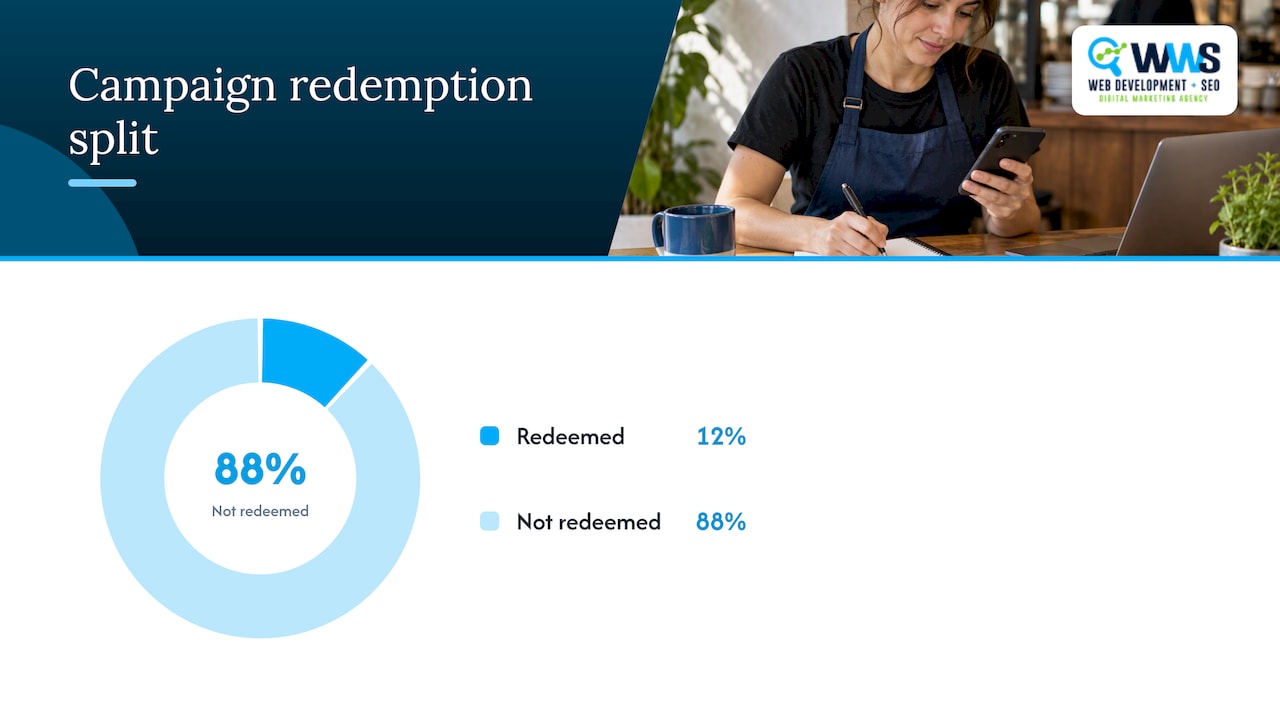
Four numbers tell you whether an SMS program is paying for itself: delivery rate, response rate, redemption rate, and the incremental revenue those redemptions generate.
A simple example makes the math concrete. Say a restaurant sends a promo to 500 opted-in guests, 60 redeem the offer, and the average check with the discount applied is $25. That single campaign generates $1,500 in revenue from one text, before factoring in repeat visits the offer might spark.
- Track delivery rate to catch carrier filtering or bad numbers early.
- Track redemption rate against the offer type to see which promos actually drive visits.
- Test send time, the call to action, and audience segment separately rather than all at once.
Text messaging remains a core mobile behavior for reaching diners, according to Pew Research Center’s mobile data, which supports treating SMS as a dependable channel rather than an experiment.
Tools and integrations your restaurant needs
An SMS program only works as well as the systems feeding it. Restaurants need their point-of-sale, online ordering platform, reservation or waitlist software, and a CRM or loyalty system talking to each other, plus web forms that capture consent cleanly.
- POS integration ties purchase history to segmentation for smarter offers.
- Reservation system sync enables automated reminders without manual entry.
- CRM or loyalty platform integration keeps consent records and preferences in one place.
- Website forms need to route consent data into the same system, not a separate spreadsheet.
When these systems do not talk to each other, consent records get lost and segmentation becomes guesswork, which is usually the point to bring in outside help.
A 30/60/90 day launch checklist for restaurant SMS
- Week one: set up opt-in capture at the POS, online, and in-house, plus a compliant welcome message.
- Week one: build STOP and HELP auto-responders before sending a single promotional text.
- Month one: launch reservation reminders as your first automated flow.
- Month one: send one test promo to measure redemption and refine the offer.
- Month two: add pickup-ready alerts and a re-engagement flow for lapsed guests.
- Month two: segment your list by spend and visit frequency for sharper targeting.
- Month three: scale sending infrastructure and expand loyalty and birthday campaigns based on what performed.
Publisher perspective: how WWS approaches SMS for restaurants
WWS – Web Development + SEO builds SMS programs as part of broader marketing campaigns for Chicago-area restaurants, with an in-house team of Google and Meta certified experts. Typical work covers consent capture setup, POS and reservation integrations, campaign build, and measurement. A restaurant with a simple menu and one location can often run basic flows itself, but multi-location operators or anyone juggling several booking systems usually saves time handing the integration work to a restaurant marketing agency.
What most restaurants get wrong about text marketing
The biggest mistake is not compliance, though that gets the most attention. It is treating SMS like a broadcast channel instead of a permissioned one. Restaurants that succeed with texting build their list from real relationships, table visits, online orders, birthday club signups, rather than buying or scraping numbers, and they message with a purpose behind every send, not because Friday rolled around again.
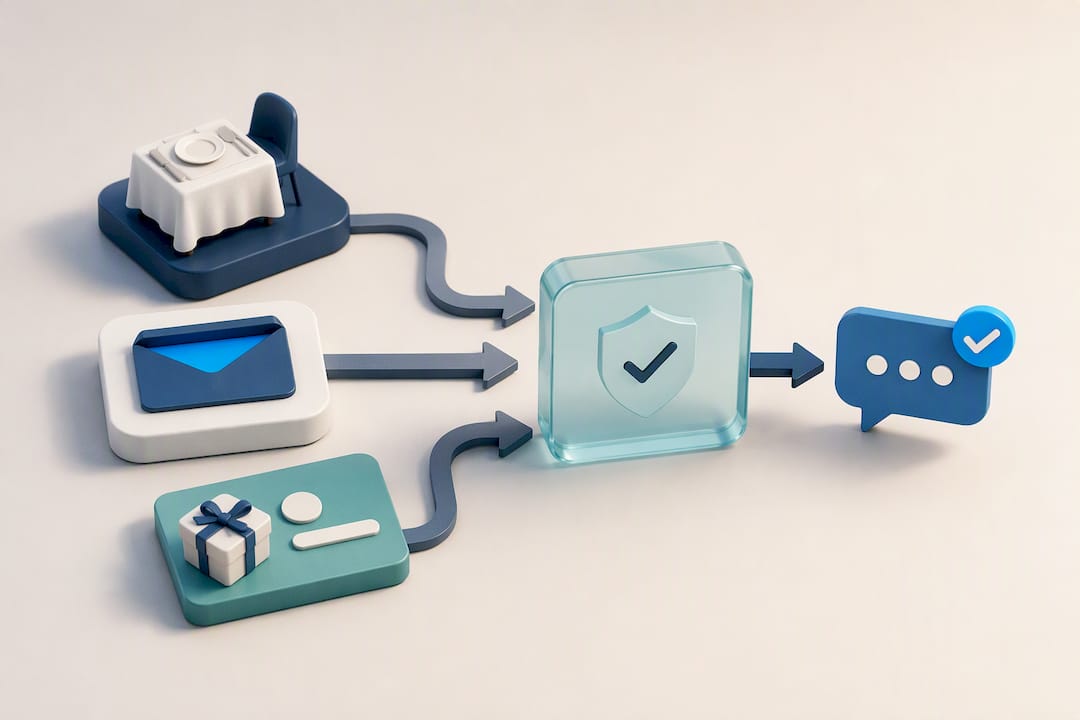
Conventional advice tends to overemphasize frequency and offer size, as if bigger discounts sent more often equal more revenue. Guests unsubscribe fast from restaurants that text too often with nothing relevant to say.
If you take one thing from this, prioritize consent quality and segmentation before you touch automation or creative copy. A clean list of 300 real opt-ins beats a shaky list of 3,000, and the Federal Register rules on written consent exist precisely because that distinction protects both the guest and the restaurant sending the message.
*— Online Marketing Experts
Get help building an SMS program that actually converts
Running a compliant SMS program alongside a full-time restaurant is a lot to manage on top of service, staffing, and everything else on a manager’s plate. WWS – Web Development + SEO handles consent capture, system integrations, and campaign management entirely in-house, so nothing gets lost between a POS update and a text going out the door.
- Consent capture audit across your POS, website, and reservation flow.
- STOP/HELP handler setup and welcome message compliance review.
- Automation build for reservation reminders, pickup alerts, and loyalty offers.
WWS – Web Development + SEO is your premier local business marketing expert solution serving Des Plaines, IL, and the greater Chicago Area. As an official Google and Meta Partner, our team consists exclusively of Google and Facebook certified experts dedicated to growing local service businesses. From contractors to restaurants, we combine custom web development with aggressive SEO and GEO strategies to turn your online presence into a lead-generating engine. With over 200 successful client partnerships, we don’t just build websites, we drive real calls, consistent leads, and year-round revenue for Chicago-area businesses. Visit our marketing campaigns page to request a consultation on your restaurant’s SMS strategy.
Sources
- Federal Register, Volume 89 Issue 18 (Friday, January 26, 2024)
- DA-24-910A1.txt (FCC enforcement / Second Report and Order materials)
- CTIA Messaging Principles & Best Practices Explained (SignalMash)
- Time spent per day on smartphone in the United States (Statista)
FAQ
Is SMS marketing profitable for restaurants?
SMS can be profitable when built on consented lists and tied to clear offers, since redemption from a single well-targeted promo can cover the cost of the platform many times over. Profitability depends on list quality and segmentation more than message volume.
What are the 4 P’s of marketing for restaurants?
The 4 P’s, product, price, place, and promotion, apply to restaurants the same way they apply to any business: the menu and experience (product), what you charge (price), your location and delivery channels (place), and how you reach guests, including SMS (promotion). SMS specifically supports the promotion piece by delivering time-sensitive offers directly to guests’ phones.
Is SMS marketing illegal without consent?
Sending promotional texts without prior express written consent violates rules finalized in the FCC’s Second Report and Order, and carriers can block senders found to be sending unlawful messages. Restaurants should capture and log consent before adding any number to a promotional list.
Does SMS marketing still work in 2026?
Text messaging remains a core mobile behavior, and SMS continues to outperform email on open and read speed, according to messaging usage data. Restaurants that pair compliant opt-ins with relevant, well-timed offers continue to see strong engagement from the channel.