



Your Website Should Be Your Best Salesperson — Here’s Why It Probably Isn’t
If you want to increase website leads, the fastest path forward isn’t buying more traffic — it’s fixing what happens after visitors land on your site.
How to increase website leads (quick answer):
- Fix your messaging — make it clear who you help and what problem you solve, within seconds of arrival
- Speed up your site — 40% of users leave if a page takes more than 3 seconds to load
- Align your SEO — attract high-intent visitors who are ready to act, not just browse
- Simplify your forms — reducing form fields from 7 to 4 can lift conversions by over 20%
- Add trust signals above the fold — reviews, credentials, and case studies build credibility fast
- Use clear, specific CTAs — “Get Your Free Audit” outperforms “Contact Us” every time
- Retarget and follow up — 96% of visitors aren’t ready to buy on their first visit
Here’s a frustrating truth most local business owners discover too late: traffic without conversion is just noise.
You might be spending money on Google Ads. You’ve done some SEO. People are landing on your site. And yet — your phone isn’t ringing and your inbox is empty.
The average B2B website converts just 2.23% of visitors into leads. And for most small and local service businesses, the number is even lower. That gap between visits and actual enquiries isn’t a traffic problem. It’s a conversion problem.
The good news? Most of the fixes are practical, testable, and don’t require starting from scratch.
I’m Tomasz Lasota, Digital Development and Technology Director with over 22 years of experience building and optimizing digital products that increase website leads for both B2B and B2C businesses. In this guide, I’ll walk you through exactly what’s blocking your conversions — and what to do about it.
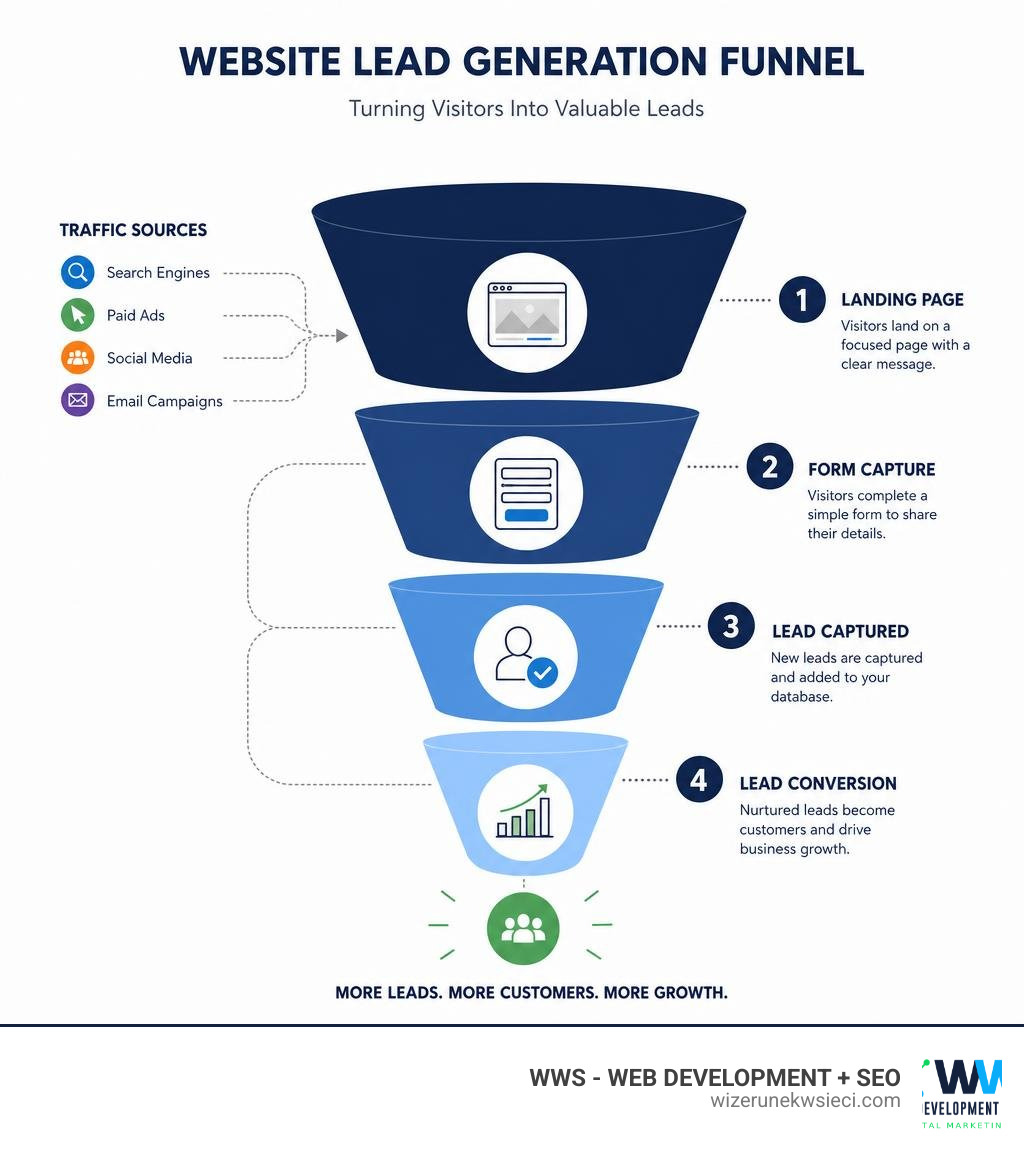
Why Your Website Gets Traffic But No Leads
When we audit local websites in Chicago, IL or Des Plaines, IL, we often see the same story: healthy traffic graphs, but empty lead pipelines. Why does this happen?
First, let’s look at human behavior online. Industry data shows that 55% of users spend fewer than 15 seconds on a web page before deciding whether to stay or leave. If your page doesn’t immediately capture their attention, they will click the back button and visit your competitor.
The most common culprits behind a high bounce rate and low lead volume include:
- Poor Traffic Quality: You might be ranking for keywords that attract informational searchers (people looking for DIY tips) rather than transactional searchers (people looking to hire a professional in Illinois).
- Technical Friction: If your page takes too long to load or looks broken on mobile devices, users will abandon it.
- The Trust Deficit: If your site lacks local trust signals, reviews, or clear business credentials, visitors will hesitate to share their contact information.
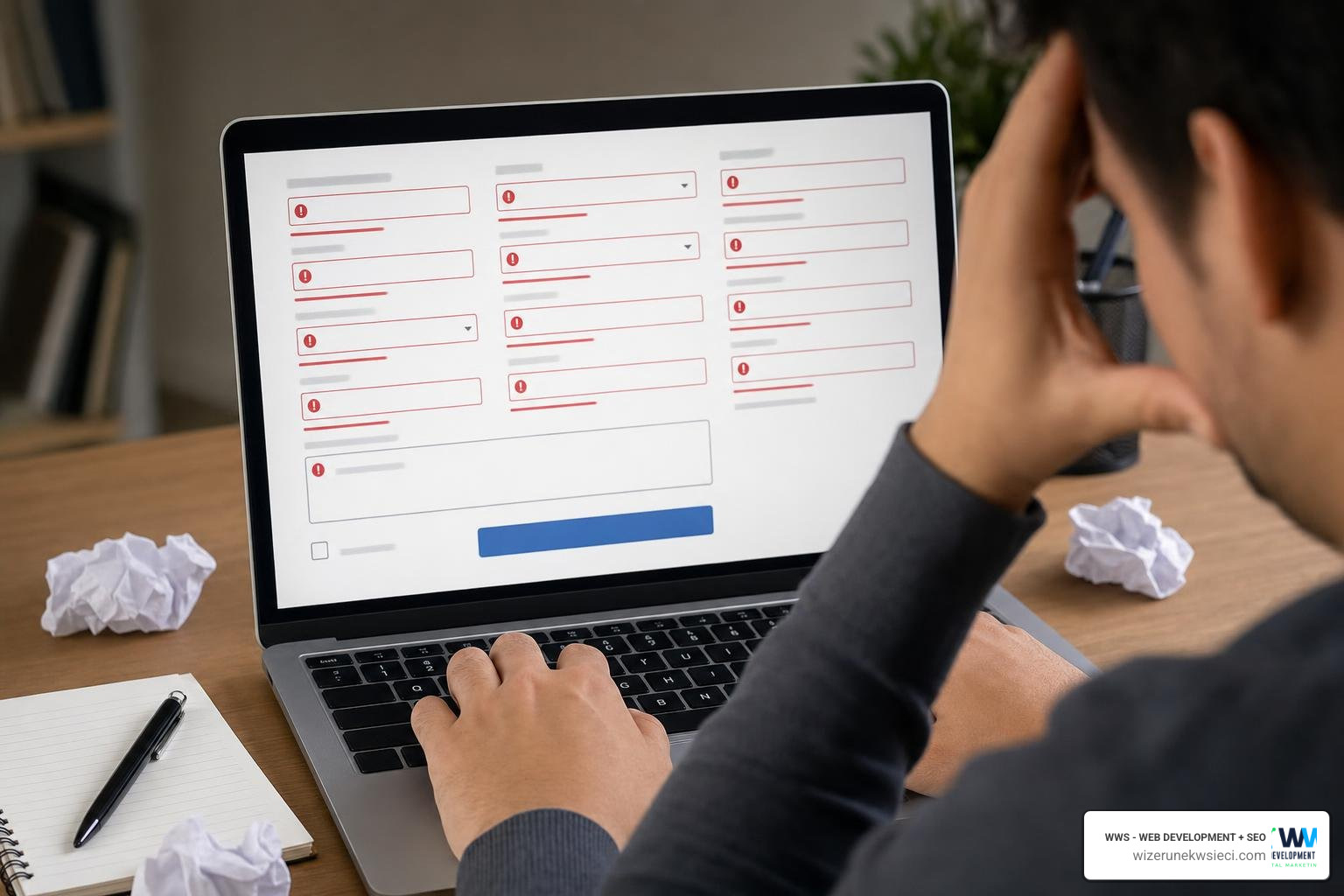
- Form Fatigue: Long, complex forms that demand too much personal data upfront scare potential leads away.
The Intent-Content Gap and How to Align It
The primary reason visitors bounce within those first crucial seconds is the intent-content gap. This occurs when a user searches for a specific solution, clicks your link, and lands on a page that fails to immediately address their problem.
To bridge this gap, your value proposition must be crystal clear and placed prominently above the fold. Your copy shouldn’t just explain what you do; it must explain how you solve the visitor’s specific pain point.
For example, a homeowner in Des Plaines looking for emergency plumbing doesn’t want to read a long, poetic history of your company. They want to see: “Emergency Plumbing in Des Plaines — Available 24/7. Call Now.”
When we design conversion-focused websites, we focus heavily on aligning user psychology with your layout. If you want to see how we structure pages to match user intent, explore our specialized Website Design services.
Technical Friction: Speed, Mobile UX, and Core Web Vitals
Technical performance directly impacts your bottom line. We know that 40% of users will abandon a site if it takes more than 3 seconds to load. A single-second delay in page load time can tank your conversions, especially for mobile users who may be browsing on slower cellular networks in the Chicagoland area.
Mobile optimization is no longer optional. Over 60% of local search traffic in Illinois comes from mobile devices. If your website’s buttons are too small to tap, or if your forms are designed for desktop and render poorly on a smartphone, you are actively losing business.
To optimize user experience for local audiences, we recommend:
- Designing for the “Thumb Zone”: Place critical interactive elements and CTAs within easy reach of a user’s thumb.
- Streamlining Navigation: Simplify your menu structure. Piling on too many navigation options confuses visitors. Guide them down a single, clear path.
- Passing Core Web Vitals: Optimize images, leverage browser caching, and eliminate bloated third-party scripts to keep your load times well under 2.5 seconds.
How to Optimize Your SEO Strategy to Increase Website Leads
To increase website leads, you must attract high-intent visitors. Traditional SEO often focuses purely on search volume, which can lead to “empty” traffic. True lead-generation SEO focuses on search intent and topical relevance.

Mapping Keyword Intent to the Buyer’s Journey
To turn searchers into buyers, you must serve the right content at the right time. We categorize search queries into three main buckets:
- Informational Intent (Awareness Stage): Searchers are looking for answers to questions (e.g., “why is my basement leaking”). Blog posts and helpful guides work best here.
- Commercial Intent (Consideration Stage): Searchers are comparing solutions (e.g., “best waterproofing companies in Chicago”). Case studies, comparison tables, and service pages are highly effective.
- Transactional Intent (Decision Stage): Searchers are ready to buy or hire (e.g., “hire basement waterproofer Des Plaines IL”). Highly optimized landing pages with strong lead capture forms convert this traffic.
By mapping your keyword strategy to these stages, you ensure that visitors seeking immediate help aren’t forced to read a long blog post, and research-phase visitors aren’t pressured with a aggressive “buy now” pitch before they are ready. For a deeper dive into how we build search campaigns that target high-intent keywords, check out our guide on Website SEO.
Using Intent Data to Target High-Value B2B Accounts
If your business operates in the B2B space, your buying landscape is complex. Over 75% of B2B purchasers aren’t interested in speaking to a salesperson until they’ve done their own research. In fact, B2B buyers conduct 61% of their research in the dark funnel, exploring solutions, reading independent reviews, and downloading ungated resources long before they ever fill out a contact form.
Furthermore, 97% of buyers are already familiar with at least one shortlisted vendor before formal consideration even begins, and they consume an average of nine content pieces before reaching a consensus.
To win in this environment, B2B companies must use intent data to identify anonymous traffic. Tools like Leadfeeder can identify up to 45% of the companies visiting your website by matching anonymous IP addresses to real company databases.
By analyzing which high-value accounts are visiting your pricing or service pages, your sales team can run highly targeted outbound campaigns to those exact businesses, turning anonymous web traffic into warm sales opportunities.
High-Converting Landing Page Architecture and Form Design
A high-converting landing page is designed like a slide: once a visitor lands, everything guides them smoothly toward the bottom without interruption.
Your page layout should follow a clear psychological hierarchy:
- Above-the-Fold: A compelling headline, a subheadline explaining your value proposition, a strong trust signal (like a 5-star rating badge), and a prominent CTA.
- The Proof: Customer testimonials, local reviews, and industry certifications.
- The Solution: Benefit-driven bullet points explaining exactly what the customer gets.
- The Action: A frictionless, simple lead capture form.
To maximize your return on investment, we always recommend pairing your organic efforts with structured Marketing Campaigns and targeted Paid Campaigns that point directly to these dedicated landing pages rather than your homepage.
Single-Step vs. Multi-Step Forms
Should you use a single-step or a multi-step form? While a single-step form is great for simple newsletters, multi-step forms often convert significantly better for complex service inquiries because they reduce cognitive load.
| Form Type | Best Used For | Pros | Cons |
|---|---|---|---|
| Single-Step Form | Newsletters, simple downloads, quick contact | Quick to complete, low barrier to entry | Can look overwhelming if it has more than 4 fields |
| Multi-Step Form | Detailed quotes, service inquiries, B2B leads | Higher conversion rate, allows qualification, uses micro-commitments | Requires more design and development effort |
Crafting CTAs That Increase Website Leads
Your Call to Action (CTA) is the most critical button on your website. To increase website leads, stop using generic, boring text like “Submit” or “Contact Us.”
Instead, apply these best practices:
- Use Action-Oriented, Specific Copy: Tell the user exactly what they will get. “Get My Free Quote” or “Book My Free Consultation” is far more compelling than “Send.”
- Write in the First Person: Changing CTA copy from “Start your free trial” to “Start my free trial” can significantly boost click-through rates.
- Create Visual Contrast: Your CTA button should use a color that stands out from the rest of your website’s color palette.
- Add Supporting Microcopy: Place small, reassuring text right below the button, such as “No credit card required” or “We respect your privacy.”
Designing Frictionless Forms to Increase Website Leads
Every field you add to a form reduces its conversion rate. If you want to maximize submissions, follow the 4-field rule: keep your forms restricted to the absolute essentials needed to qualify and contact the lead (typically: Name, Email, Phone, and a brief message or service type).
If you need more data for your sales team, use progressive profiling. This technology recognizes returning visitors and displays different fields over time, allowing you to build a detailed lead profile across multiple interactions rather than asking for everything upfront.
Additionally, implement inline validation. Showing a green checkmark as users fill out fields correctly reduces form abandonment by keeping users engaged and correcting errors in real-time.
Once a lead is captured, speed-to-lead is everything. The average company response time is a sluggish 12 hours. If you can reach out to a new lead within five minutes of submission via automated email or text, your chances of converting them into a paying customer skyrocket.
Frequently Asked Questions about Website Lead Generation
Why is my website getting traffic but no leads?
This usually happens because of an intent-content gap, slow page speeds, a lack of trust signals, or confusing navigation. If visitors can’t find what they need within 15 seconds, or if your forms are too long and complicated, they will leave without converting.
What is a good website visitor-to-lead conversion rate?
The average B2B conversion rate is 2.23%. However, highly optimized websites that focus on conversion rate optimization (CRO) and target high-intent local traffic can achieve conversion rates between 5% and 11%.
How long does it take to see results from conversion rate optimization?
While long-term organic SEO strategies can take 3 to 6 months to drive substantial new traffic, technical CRO fixes (like speeding up your site, simplifying your forms, and rewriting your CTAs) can yield noticeable conversion improvements within just 30 days.
Conclusion
If you want to increase website leads in 2026, you don’t need to double your advertising budget. You need to make your website work harder for the traffic you already have. By aligning your content with search intent, optimizing your technical performance, displaying local trust signals, and making your forms frictionless, you can turn your website into a reliable, 24/7 lead-generation engine.
Fun fact: while the Illinois State Police relies on LEADS 3.0 – Illinois State Police to manage critical law enforcement data, we use advanced digital marketing tools to help local businesses track and capture sales leads!
At Wizerunek w Sieci (WWS), we specialize in helping local service businesses in Chicago, Des Plaines, and across Illinois grow through integrated, conversion-focused digital marketing. Whether you need a high-performing website built from scratch or want to optimize your existing search presence, we deliver measurable growth.
Ready to transform your website into a high-performing lead machine? Explore our Website SEO services, check out our Resources for more digital marketing tips, or connect with us on Social Media to start your journey toward better conversions today.