


Why Most Local Businesses Are Invisible Online — And How to Fix It
SEO for local businesses is the process of optimizing your online presence so nearby customers can find you when they search on Google, Google Maps, or AI tools like ChatGPT.
Here’s a quick breakdown of what it involves:
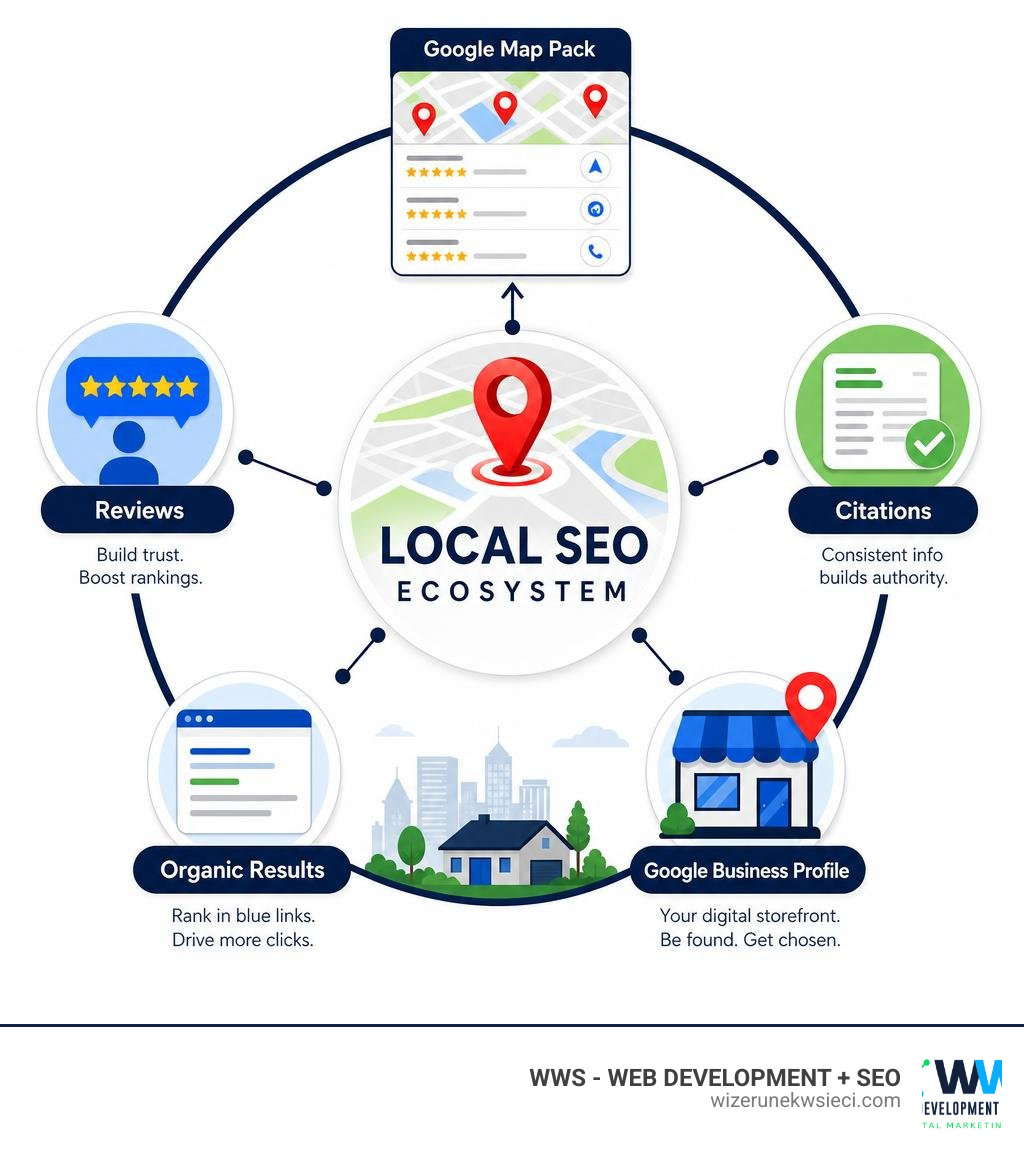
| What It Covers | Why It Matters |
|---|---|
| Google Business Profile | Your most important local ranking asset |
| NAP consistency (Name, Address, Phone) | Builds trust with Google and customers |
| Online reviews | Influences rankings and purchase decisions |
| Location pages on your website | Targets service-area and city-level searches |
| Local citations and backlinks | Signals authority and prominence |
| On-page keyword optimization | Connects your pages to local search intent |
The numbers tell a clear story. Nearly half of all Google searches have local intent. 78% of people who search for something nearby on their phone visit that business within a day. And 28% of those searches result in a purchase.
Yet most local businesses are still nearly invisible online — running on outdated websites, inconsistent directory listings, and zero reviews.
That’s a massive gap between where customers are looking and where most small businesses actually show up.
The good news? Local SEO levels the playing field. A small independent plumber or dentist can outrank a national chain in their own neighborhood — because Google’s local ranking system heavily weights proximity and relevance. You don’t need a massive budget. You need the right foundation.
I’m Tomasz Lasota, Digital Development and Technology Director with over 22 years of experience building digital products and driving growth for businesses across B2B and B2C markets — including building the kind of seo for local businesses strategies that consistently fill service calendars with qualified leads. In this guide, I’ll walk you through exactly what works in 2026, step by step.
Why SEO for Local Businesses is More Critical Than Ever in 2026
The local search landscape has evolved dramatically over the last two years. In June 2026, relying solely on drive-by traffic or traditional word-of-mouth is no longer a viable growth strategy. Today, 98% of consumers search online to find local businesses in their area, up from 90% in 2019.
Mobile dominance is now absolute. Over 84% of local searches occur on mobile devices, and 30% of all mobile searches are directly related to location. When someone in Chicago or Des Plaines searches for a local service on their phone, they aren’t just browsing—they have immediate, high-intent needs.
Consider this: 78% of people who perform a nearby search on their smartphone visit a business within 24 hours, and 28% of those searches result in a purchase. If your business doesn’t appear in those searches, you are handing qualified leads directly to your competitors.
Investing in Local SEO is the single most cost-effective marketing strategy available for small businesses in Illinois. Unlike paid advertising, which stops generating leads the second you turn off your budget, local SEO delivers compounding ROI. A well-optimized presence continues to drive organic traffic, phone calls, and foot traffic month after month without an ongoing cost-per-click.
To scale your visibility effectively across the state, utilizing trusted resources like the list of Best Local SEO Companies for Small Business in Illinois 2026 or partnering with a specialized local agency can help you establish a dominant local presence.
How Google Ranks Local Results: Map Pack vs. Organic
When a user searches for a local service—such as “electrician near me” or “roofing contractor Des Plaines”—Google displays two distinct types of search results:
- The Map Pack (or Local Pack): This is the highly prominent box featuring a map and three selected local business profiles. It appears at the very top of 93% of local searches, capturing approximately 44% of all clicks.
- Organic Blue Links: These are the traditional search engine results that appear beneath the Map Pack. The number one organic page gets roughly 32% of all clicks from searchers.
To rank in both areas, you must optimize for two different sets of ranking factors.
| Ranking Factor Group | Map Pack Weight (SEOs Perceived Importance) | Organic Search Weight (SEOs Perceived Importance) |
|---|---|---|
| Google Business Profile Signals | 36% | 9% |
| On-Page Signals | 19% | 34% |
| Review Signals | 17% | 5% |
| Link Signals | 11% | 31% |
| Behavioral Signals | 8% | 9% |
| Citation Signals | 7% | 2% |
To navigate this competitive landscape, many businesses work with dedicated local experts who understand the regional market. Partnering with an experienced local agency ensures your strategy aligns perfectly with the unique search behaviors of Cook County consumers.
The Three Core Pillars of Local Search Algorithms
Google’s local algorithm relies on three fundamental pillars to determine which businesses appear in the Map Pack:
- Relevance: How well your business profile and website content match the user’s search query. This is why thorough profile completion and specific keyword targeting are essential.
- Distance (Proximity): How far your business is from the searcher or the specified location. While you cannot change your physical location, optimizing other factors ensures you rank as widely as possible within your target radius.
- Prominence: How well-known and trustworthy your business is. Google measures this using your review count, star ratings, local backlink profile, and directory citations.
Service-Area Businesses vs. Brick-and-Mortar Models
Google accommodates two primary business models:
- Brick-and-Mortar Businesses: Physical storefronts where customers visit you (e.g., a dental clinic in Des Plaines or a gym in Chicago). These businesses must display their physical address.
- Service-Area Businesses (SABs): Businesses that travel to customers to provide services (e.g., plumbers, roofers, and electricians). If you operate from a home office or warehouse and do not serve customers at your physical address, Google allows you to hide your address and define up to 20 service areas by city, county, or zip code.
Google Business Profile Optimization: The Foundation of Local Visibility
Your Google Business Profile (GBP) is the absolute core of your local search presence. It acts as your digital storefront, directly influencing whether customers call you or click away.
A fully optimized profile makes your business look highly professional and significantly increases conversions. In fact, businesses with complete profiles are 70% more likely to attract location visits and convert searchers 3.2 times more often than those with incomplete listings. To maximize this asset, implement a comprehensive Google Business Profile Optimization strategy.
Step-by-Step Setup and Category Selection
- Claim and Verify Your Profile: Search for your business on Google Maps. If it exists, claim it; if not, create a new profile and complete the verification process (usually via a quick video verification or phone code).
- Select Your Primary Category: This is the single most critical setting on your GBP. Choose the most specific category that describes your core business (e.g., “Plumber” instead of “Contractor”). You can then add relevant secondary categories to capture broader searches.
- Write a Compelling Business Description: You have 750 characters. Use this space to describe your services, highlight your local expertise in Chicago or Des Plaines, and include core keywords naturally. Avoid keyword stuffing.
- Set Accurate Business Hours: Ensure your regular and holiday hours are always up to date. Inaccurate hours frustrate customers and lead to negative reviews.
Leveraging GBP Posts, Photos, and Q&As
An active profile signals to Google that your business is operating and trustworthy.
- Publish Weekly Posts: Share updates, special offers, and seasonal tips. Regular GBP posts can lead to a significant increase in user actions, such as directions requests and website clicks.
- Upload High-Quality Photos: Profiles with photos receive far more direction requests. Aim to upload at least 10 to 20 high-quality, original photos of your team, completed projects, and office space. Top-ranking local businesses often accumulate hundreds of images over time.
- Manage the Q&A Section: Anyone can ask and answer questions on your profile. Take control of this space by posting your own frequently asked questions and answering them clearly.
Core Tactics: Citations, Reviews, and Local Link Building
To build strong local prominence, your business must establish trust across the wider web. This is achieved through a combination of consistent listings, active customer reviews, and high-quality local links.
Managing NAP Consistency and Directory Citations
A citation is any online mention of your business Name, Address, and Phone number (NAP). Google uses these mentions to verify that your business is legitimate and located where you say it is.
- Structured Citations: These are formal listings in directories like Yelp, YellowPages, Bing Places, and local Chicago business directories.
- Unstructured Citations: These occur when your business is mentioned on local blogs, news websites, or community pages.
The golden rule of citations is 100% consistency. If your address is “123 Main St, Des Plaines, IL,” do not write it as “123 Main Street, Des Plaines” on Facebook and “123 Main St., Suite A” on Yelp. Inconsistent data confuses Google’s algorithm and weakens your prominence signal.
For businesses in Cook County, partnering with a local specialist can help streamline your citation clean-up and ensure your business data is accurate across all major platforms.
Building a Review Generation Engine
Online reviews are incredibly powerful: 95% of customers read online reviews before making a purchase, and 17% of SEOs consider reviews the single most important Map Pack ranking factor.
To build a healthy, rank-boosting review profile, focus on:
- Review Velocity and Recency: A steady stream of new reviews is far better than a massive block of reviews from two years ago. In fact, 73% of consumers only trust reviews written in the last 30 days.
- Service-Specific Language: Encourage happy customers to mention the specific service they received and the city they are in (e.g., “Great roofing repair in Chicago!”). This adds highly relevant contextual keywords to your profile.
- Responding to Every Review: Respond to both positive and negative reviews within 24 hours. Google values active owners, and responding professionally to negative feedback builds trust with future customers.
Local Link Building and Community Authority
While citations establish your location, local backlinks establish your authority. In regular organic search, 31% of SEOs deem links the most important ranking signal.
Great ways to build local links in Chicago and Des Plaines include:
- Chamber of Commerce Memberships: Joining local business associations provides highly authoritative, local .org backlinks.
- Sponsoring Local Events: Sponsoring a youth sports team or a neighborhood charity event in Illinois often earns you a high-quality link on their website.
- Collaborative Guest Posting: Write helpful articles for complementary, non-competing local businesses (e.g., a landscaper writing a guest post for a local real estate agent’s blog).
To scale these efforts, exploring comprehensive SEO Services Packages Chicago can provide the link-building resources needed to outrank national competitors.
On-Page Optimization and Keyword Strategy
Your website acts as the digital anchor for your local SEO campaign. To rank well in both organic search and the Map Pack, your site must be technically sound, mobile-friendly, and highly optimized for local search intent. Utilizing professional Website SEO practices ensures your pages are easily crawlable and structured for maximum conversion.
Keyword Research and Intent Mapping: SEO for Local Businesses
Local keyword research involves finding the exact phrases your target audience uses when they need your services. Instead of targeting broad, highly competitive terms like “electrician,” focus on location-specific, high-intent keywords:
- Service-Plus-Location Queries: “electrician Chicago IL”, “emergency plumber Des Plaines”
- Modifier Queries: “best roofing repair Chicago”, “affordable contractor near me”
- Problem-Based Queries: “how to fix a leaking roof”, which can lead users to your service pages.
If you run a trade business in Cook County, mapping these keywords to highly specialized pages—such as SEO for Electricians Chicago—helps capture high-intent local leads at the exact moment they need assistance.
Creating High-Converting Location Pages: SEO for Local Businesses
If your business serves multiple neighborhoods or suburbs across Illinois, do not make the mistake of creating thin, duplicate “city-swap” pages where only the city name changes. Google easily detects this and suppresses the pages.
Instead, build unique, high-quality location pages that include:
- Local Context: Mention specific landmarks, neighborhood names, and local building regulations.
- Local Testimonials: Feature reviews from real customers living in that specific city or neighborhood.
- Structured Data: Implement LocalBusiness schema markup containing your exact NAP, business hours, and geo-coordinates.
For home service providers, building dedicated, optimized landing pages using frameworks like Chicago Roofing SEO Get Found Online, SEO for Roofing Companies Chicago, or SEO for Contractors Chicago (and Contractor SEO Chicago) can dramatically improve your organic reach.
To bring all these elements together into a cohesive strategy, utilizing Boost Your Business with Expert SEO Chicago Services will help you turn local search traffic into loyal, paying customers.
Generative Engine Optimization (GEO) and AI Search
As we navigate 2026, the way consumers find local businesses is undergoing a massive shift. While traditional search engines remain highly dominant, AI-driven platforms like ChatGPT, Perplexity, and Google AI Overviews are growing rapidly. Roughly 30% of all searches now involve some form of AI assistance.
This shift has introduced a new discipline: Generative Engine Optimization (GEO). GEO is the practice of optimizing your online content so that AI engines can easily find, understand, and recommend your business.
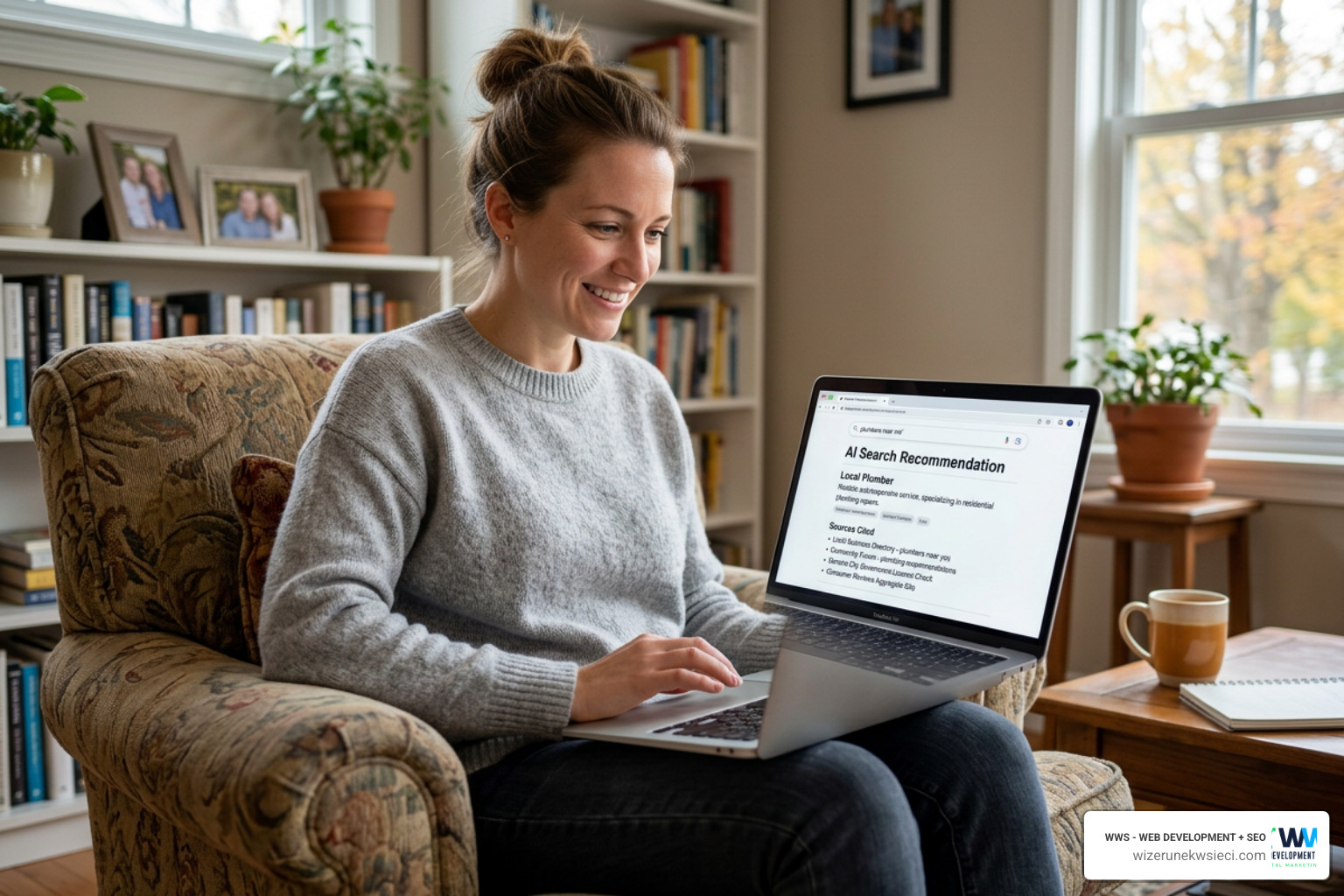
AI engines do not crawl the web the same way traditional search engines do. They rely heavily on structured data, clear answers, and authoritative third-party mentions. To optimize your business for AI search, follow these advanced strategies:
- The Answer Capsule Technique: Place a clear, direct 50-to-60-word summary answering common customer questions near the top of your service pages. AI engines love citing these concise “capsules.”
- Implement FAQPage Schema: Structure your FAQ sections with proper schema markup so AI crawlers can recognize your direct, authoritative answers.
- Allow AI Crawlers: Ensure your
robots.txtfile does not block AI crawlers like GPTBot, ChatGPT-User, or PerplexityBot. - Maintain Presence on Aggregators: AI platforms often recommend local consumer businesses based on data from trusted aggregators like Yelp, TripAdvisor, and local chambers of commerce. Keeping your profiles updated on these platforms is essential for AI visibility.
Frequently Asked Questions about Local SEO
How long does it take to see results from local SEO?
For most businesses in Illinois, a consistent local SEO strategy begins yielding measurable ranking improvements and increased calls within 60 to 90 days. If you are starting with a brand-new website and a fresh Google Business Profile in a highly competitive market like downtown Chicago, achieving top Map Pack positions may take 4 to 6 months of continuous optimization, review acquisition, and link building.
Do I need a website to rank in the Google Map Pack?
Technically, you can claim a Google Business Profile and rank in the Map Pack without a website. However, having a high-performing, optimized website makes it significantly easier. Google’s algorithm heavily weighs your website’s on-page signals and backlink authority when determining Map Pack rankings. A website also gives you a dedicated place to convert those searchers into leads.
How many Google reviews do I need to outrank my competitors?
There is no magic number. Google values review quality, recency, and diversity over sheer volume. A business with 50 highly detailed, positive reviews from the last two months will often outrank a competitor with 200 reviews from three years ago. Analyze the top three businesses in your local Map Pack, calculate their average review count, and aim to match their volume while maintaining a higher review frequency.
Conclusion
Local SEO is no longer a luxury for small businesses—it is the foundation of local survival and growth. By optimizing your Google Business Profile, maintaining consistent directory citations, building a steady stream of customer reviews, and creating high-converting, localized website content, you can establish a dominant online presence that outranks national competitors.
At Wizerunek w Sieci (WWS), we build high-performing websites and run integrated, conversion-focused SEO, Google Ads, and social media campaigns tailored specifically for local service businesses. Serving Chicago, Des Plaines, and the wider Illinois area, our mission is to deliver measurable growth that fills your calendar with qualified leads.
Ready to dominate your local market? Let us build a custom strategy for your business. Visit our Local SEO page to get started today.