



Why Getting More Leads for Your Construction Business Is Harder Than It Looks
If you’re trying to figure out how to get more leads for my construction company, here’s a quick answer:
The fastest ways to get more construction leads in 2026:
- Optimize your Google Business Profile — show up when local customers search “contractor near me”
- Run Google Local Services Ads — pay only for real, verified leads
- Build a fast, mobile-friendly website with a short estimate request form
- Ask every finished-job client for a Google review — 87% of homeowners read reviews before hiring
- Partner with complementary trades (plumbers, electricians, realtors) for cross-referrals
- Respond to every inquiry within 5 minutes — contractors who do are 10x more likely to close the deal
- List your business on key directories like Angi, Houzz, and Nextdoor
- Follow up with past clients — repeat business costs 5–10x less than finding new customers
Most contractors start out relying on word of mouth. A happy client tells a neighbor, the phone rings, and the crew stays busy. It works — until it doesn’t.
Word of mouth is unpredictable. You can’t turn it up during slow months. You can’t scale it when you’re ready to grow. And when it dries up, overhead doesn’t wait.
The construction market in 2026 is also more competitive than ever. Homeowners and commercial buyers search Google first. They read reviews, compare portfolios, and often book the contractor who responds fastest — not necessarily the best one or the cheapest one.
That means the companies winning the most work aren’t always the most skilled. They’re the most visible and the most responsive.
The good news? There’s a clear, repeatable system for building a steady flow of qualified leads — one that doesn’t depend on luck or who you happen to know.
I’m Tomasz Lasota, founder of WWS — Web Development + SEO, a Des Plaines, IL digital marketing agency where I’ve spent over 22 years helping local service businesses — including many construction companies across the Chicago metropolitan area — solve exactly this problem of how to get more leads for their construction company through SEO, Google Ads, and websites built to convert. In this guide, I’ll walk you through every channel and tactic that’s actually working in 2026, so you can build a pipeline that keeps your crews busy year-round.
High-Intent Digital Channels: How to Get More Leads for My Construction Company via Local Search and Paid Ads
When someone experiences a roof leak, decides to renovate their kitchen, or plans a commercial build-out, they do not wait for a direct mail flyer to arrive in the mail. They pull out their smartphone and search Google. Capturing this high-intent demand is the most reliable way to generate exclusive, profitable construction leads.
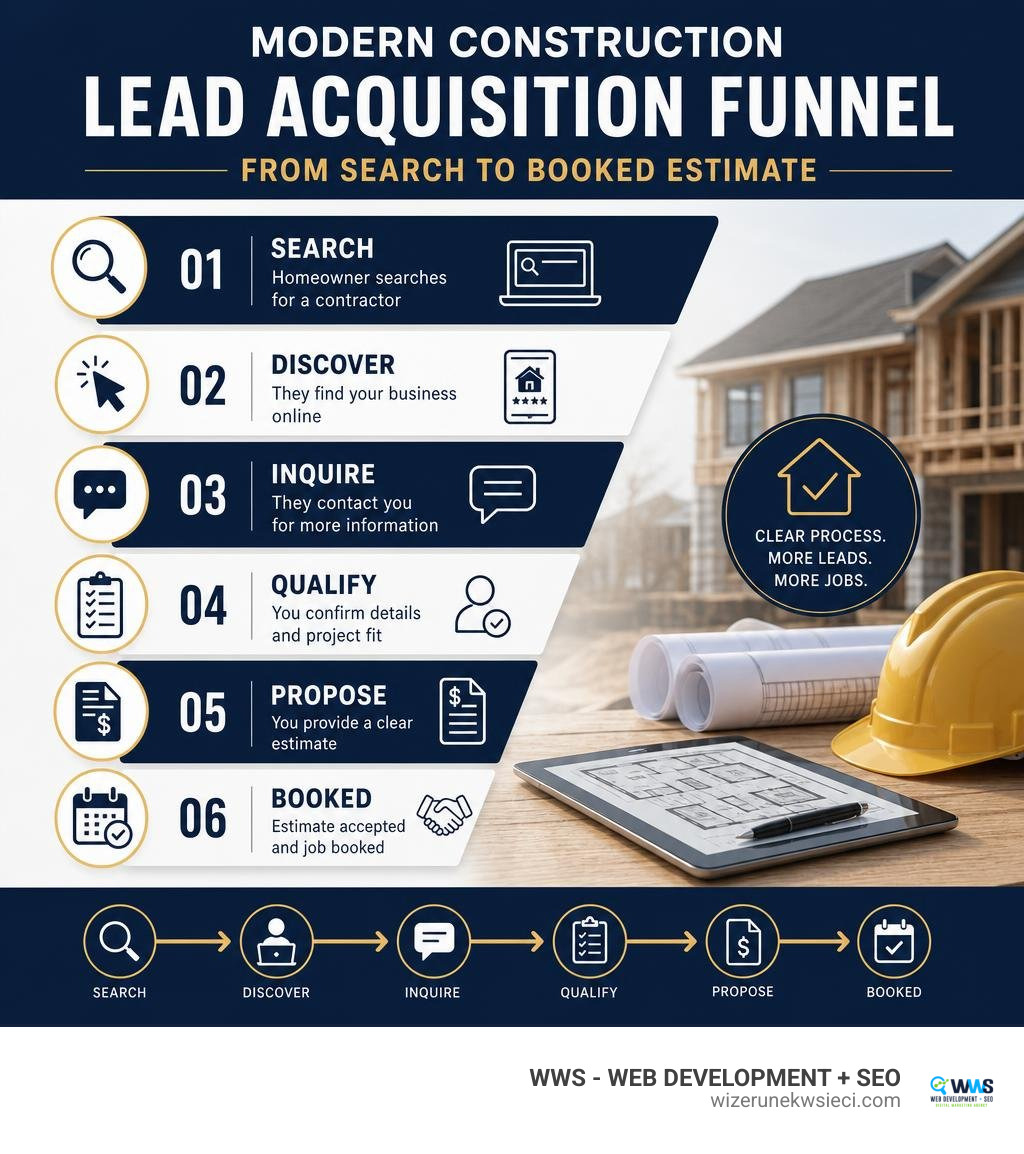
High-intent searches happen when a prospect is actively looking to hire a professional immediately. In search engine marketing, targeting these queries allows construction companies to capture clients at the exact moment of decision. By combining organic local search optimization with targeted pay-per-click (PPC) and pay-per-lead advertising, you build a steady acquisition funnel that works 24/7.
To ensure your ad dollars and search efforts are not wasted, filtering out non-buyers is essential. Setting up strict negative keyword lists—blocking terms like “DIY,” “jobs,” “salary,” “how to,” and “free plans”—prevents tire-kickers from draining your budget. This targeted filtering drastically reduces your overall cost per lead while driving higher conversion rates.
Optimizing Your Google Business Profile: How to Get More Leads for My Construction Company Locally
For residential contractors and local builders, the Google Map Pack—the block of three local business listings that appears at the top of Google search results—is the single most valuable piece of digital real estate. Over 80% of local service inquiries start right here.
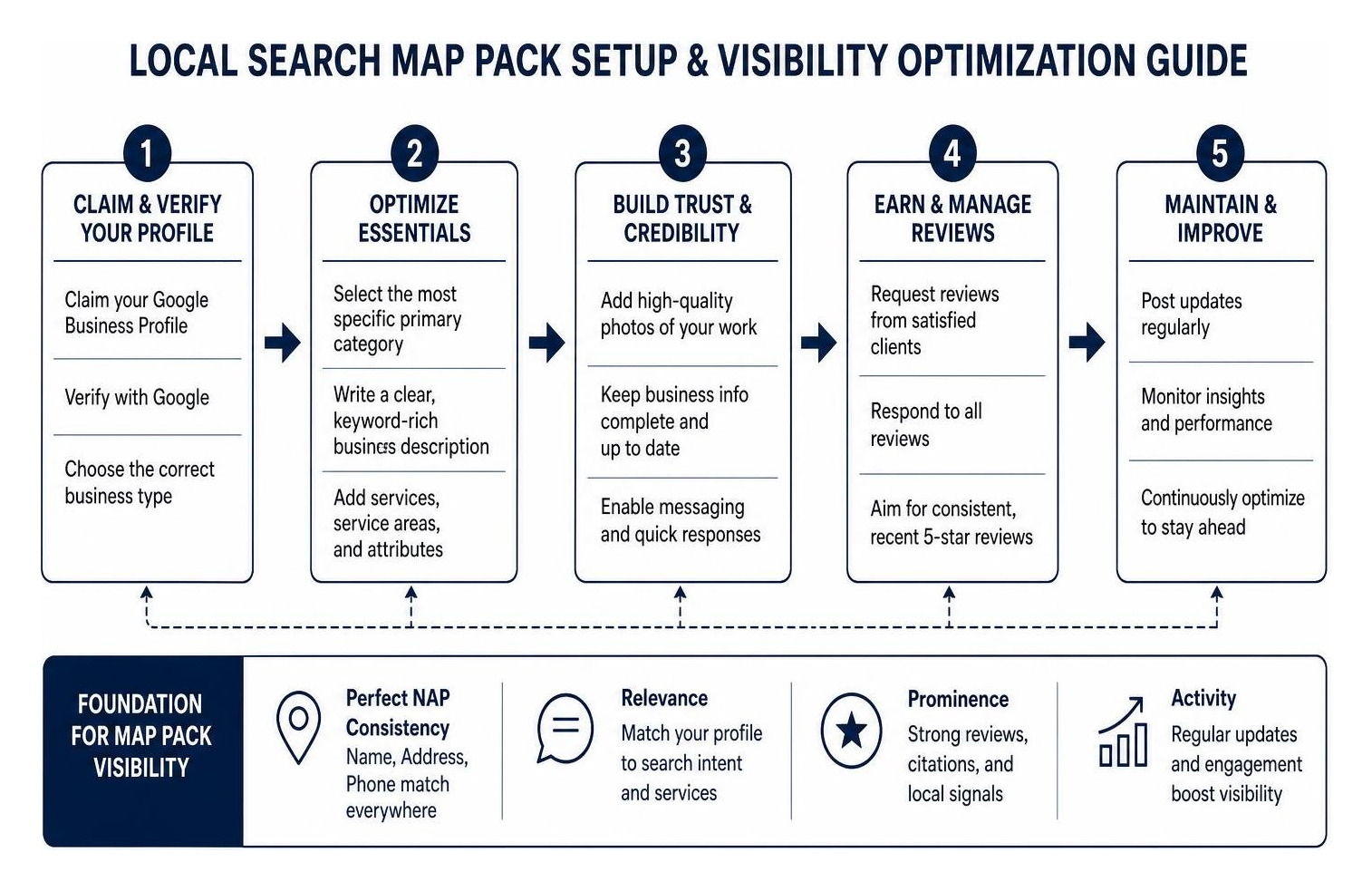
To dominate local search results, claiming your profile is only the first step. You must perform continuous Google Business Profile Optimization to stay ahead of nearby competitors:
- Select the Most Specific Primary Category: Google heavily favors specificity. Rather than selecting a broad category like “General Contractor,” choose your primary specialty, such as “Kitchen Remodeler,” “Roofing Contractor,” or “Masonry Contractor.” You can add secondary categories later, but your primary category drives your local map pack rankings.
- Maintain Perfect NAP Consistency: Your Business Name, Address, and Phone Number (NAP) must match identically across your website, Google profile, and every online directory. Inconsistencies confuse search engine crawlers and suppress your local rankings.
- Accelerate Customer Review Velocity: Industry statistics reveal that 97% of consumers read online reviews for local businesses, and 87% of homeowners read online reviews before hiring a contractor. Having 35 recent, genuine 5-star reviews will frequently outrank a competitor with 100 older reviews because Google prioritizes recency and review velocity.
- Upload Jobsite Photos Weekly: Consistently upload high-resolution photos of active job sites, before-and-after transformations, team members, and branded work vehicles. Profiles that regularly publish photos earn significantly more map interactions and direction requests.
- Audit Local Citations: Perform regular audits across localized platforms, chamber of commerce listings, and trade directories to eliminate duplicate or outdated contact information.
To learn more about mastering local map pack rankings, explore our comprehensive guide on Local SEO.
Fast-Tracking Results: How to Get More Leads for My Construction Company When Starting from Scratch
If you are launching a new construction enterprise or entering a competitive new service area across Chicagoland, organic search engine optimization takes three to six months to gain traction. When you need estimate requests immediately, paid advertising provides instant top-of-page visibility.
Google Local Services Ads (LSAs) are tailored specifically for home service and commercial contractors. Unlike traditional PPC ads where you pay for every website click, LSAs operate on a pay-per-lead model. You only pay when a qualified customer calls or messages you directly through the ad platform.
Upon completing Google’s verification process—including background checks, license validation, and proof of general liability insurance—your company receives the Google Verified badge (formerly the Google Guaranteed badge). This badge displays prominently at the very top of search engine results pages, instantly establishing trust with potential clients.
For maximum lead volume, combine LSAs with targeted Google Search Ads. By targeting high-value zip codes in affluent communities (such as Northbrook, Glenview, Barrington, or Naperville), you focus your ad spend on homeowners with realistic renovation budgets. For a step-by-step framework on setting up high-converting ad campaigns, read our guide on A Quick Start Guide to Google Ads for Local Businesses.
Converting Website Visitors into Booked Construction Estimates
Generating website traffic is only half the battle. If your website is slow, outdated, or difficult to navigate on a mobile device, prospective clients will press the back button and hire your competitor.
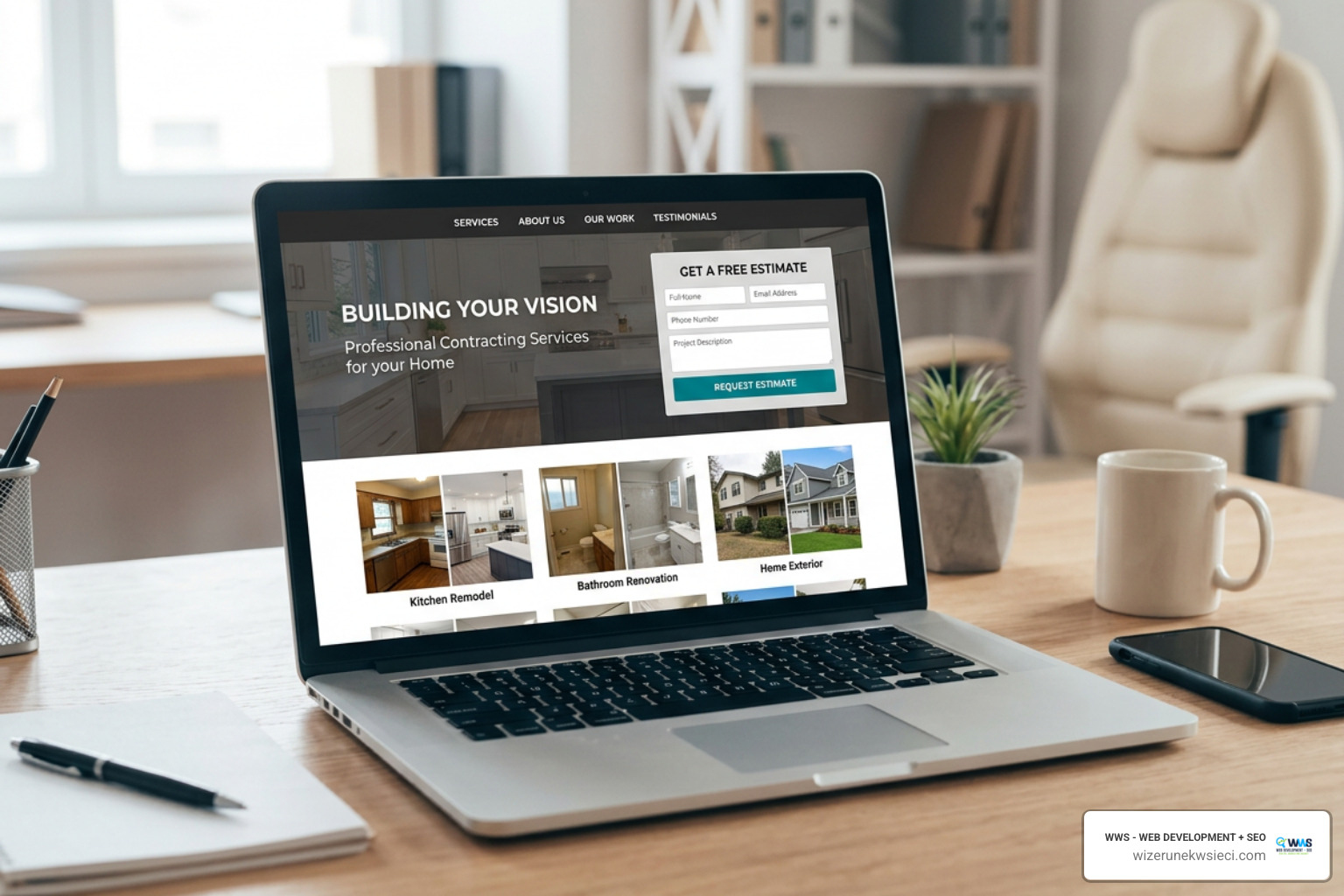
A high-converting contractor website acts as your top-performing salesperson. It must load in under 3 seconds, clearly display your service area, and present immediate conversion pathways.
Key elements of a high-converting construction website include:
- Mobile-First Responsive Design: Over 60% of local construction searches happen on mobile devices. Your site must display perfectly on smartphones with click-to-call header buttons permanently visible.
- Short, Frictionless Lead Forms: Keep inquiry forms brief. Ask only for essential details: Name, Phone Number, Project Type, and Rough Location. Studies show that restricting contact forms to 4 essential fields maximizes completion rates.
- Prominent Trust Signals: Place license numbers, insurance verification badges, trade association memberships, and 5-star Google review badges above the fold on every page.
- Detailed Project Case Studies: Show, don’t just tell. Publish detailed case studies featuring before-and-after image sliders, project timelines, materials utilized, and direct client quotes. Visual content is processed thousands of times faster by the brain than text, instantly reassuring homeowners of your craftsmanship.
For practical advice on transforming passive web visitors into active estimate requests, review our breakdown on Stop Bouncing and Start Buying: How to Capture Leads from Your Website and check out these additional How to Get More Construction Leads: 21 Proven Methods (2026) tactics.
Commercial vs. Residential Online Directories and Project Databases
Depending on whether you operate in the B2C residential space or B2B commercial sector, third-party lead generation platforms and directories play very different roles.
For residential contractors, third-party marketplaces such as Angi, Thumbtack, Houzz Pro, Porch, and Nextdoor provide immediate access to active homeowners. However, relying exclusively on shared lead marketplaces can become costly because multiple contractors compete for the same lead. Residential platforms should be used as a supplementary tactic while you build your own search assets.
For commercial contractors, general contractors, and trade subcontractors, finding project opportunities requires a different approach. Commercial platforms and project databases allow you to identify opportunities during the early pre-design and planning stages—weeks or months before public bidding begins:
- Dodge Construction Network & ConstructConnect: These commercial intelligence databases track commercial, industrial, and public works projects nationwide. They provide detailed project scopes, architectural plans, estimated project values, and direct contact details for project owners and general contractors.
- Construct-A-Lead & PlanHub: Specialized commercial databases that offer human-verified decision-maker contacts, allowing subcontractors to establish relationships with general contractors early in the process.
- SAM.gov: The official, free federal database for sourcing public government construction contracts and municipal solicitations.
To evaluate which directory platforms fit your specific trade, compare platforms directly in our article on Lead Generation Websites: The X Best Options Compared.
Building a Predictable Referral and Trade Partnership Network
While digital channels generate consistent inbound inquiries, offline networking and strategic cross-referral partnerships create some of the highest-margin construction projects.

Cultivating relationships with non-competing professionals gives you direct access to clients who are already pre-qualified and ready to start work.
In addition to trade partnerships, physical jobsite marketing turns active work sites into neighborhood lead generators. Installing professional yard signs with clear branding, phone numbers, and QR codes linked to your website’s portfolio invites nearby neighbors to review your craftsmanship firsthand. Distributing branded door hangers to 20 neighboring properties surrounding a job site generates an average of 2 to 3 direct callbacks per project.
Establishing Cross-Referral Agreements with Complementary Contractors
Building an active trade partner network starts with reaching out to businesses that enter homes and commercial buildings right before a major construction project begins:
- Realtors and Insurance Adjusters: Real estate agents frequently work with buyers who want to remodel newly purchased properties or sellers needing repairs before listing. Insurance adjusters are the first on the scene following property damage, making them natural partners for restoration and roofing contractors.
- Complementary Subcontractors: A framing contractor can build reciprocal bidding relationships with local electricians, plumbers, HVAC technicians, and painters. When a customer asks an electrician for a kitchen remodeler recommendation, having an established relationship ensures your name is put forward.
- Architects and Interior Designers: Architects and designers create plans for clients who need trusted general contractors to execute the work. Inviting local architects to review your past projects builds mutual trust that yields consistent referral opportunities.
- Building Material Suppliers: Local lumberyards, tile showrooms, and supply houses interact with property owners daily. Establishing personal relationships with sales desk staff can lead to direct customer referrals.
- Local Business Associations: Joining local chambers of commerce, business networking groups (such as BNI), and trade associations like the Home Builders Association connects you directly with commercial property managers and local business owners.
Lead Management, Speed-to-Lead, and Tracking Acquisition ROI
Generating construction inquiries is only the first step. If your response process is slow or unorganized, your marketing budget is wasted. Industry benchmark studies reveal that 78% of customers hire the contractor who responds to their inquiry first.
Furthermore, contractors who respond to new leads within 5 minutes are 10 times more likely to close the deal than those who wait just one hour. If an inquiry sits unattended for 24 hours, the probability of booking an estimate drops significantly.
| Response Time Window | Probability of Closing | Customer Experience Impact |
|---|---|---|
| Under 5 Minutes | 70% + Close Rate | Highest satisfaction; customer stops contacting competitors |
| Within 1 Hour | 50% Close Rate | Moderate conversion; homeowner may have called 1-2 competitors |
| Within 24 Hours | 25% Close Rate | Low conversion; client likely scheduled another estimate |
| After 24 Hours | Under 10% Close Rate | High risk of lead ghosting or lost interest |
To maintain rapid response times without staying glued to your phone on job sites, modern construction companies connect their digital marketing tools directly to a field service CRM (Customer Relationship Management) system. Automated instant text messages sent within seconds of a form submission reassure the homeowner that their request has been received and prompt them to schedule a phone consultation.
Equally important is tracking your marketing metrics. Evaluating performance solely on raw lead volume or individual ad click costs can be misleading. Instead, measure your metrics based on Cost Per Booked Estimate and Customer Acquisition Cost (CAC).
For instance, if the average cost per lead for general construction is $165.67, spending $165 to win a $50,000 remodeling project represents an outstanding return on investment. Tracking every lead source in your CRM shows you exactly which marketing channels generate profitable closed jobs versus low-margin tire-kickers. For a detailed operational overview of lead tracking, review the comprehensive guide on Construction Lead Generation for Contractors: 2026 Guide.
Automated CRM Follow-Ups and Review Generation Workflows
A significant portion of construction revenue comes from systematic follow-ups and repeat client requests. Implementing CRM automation ensures no prospective lead slips through the cracks:
- Instant Multi-Touch Nurturing: When a contact form is submitted, your CRM should immediately trigger an automated SMS confirmation followed by an introductory email showcasing recent project photos and client reviews.
- Quote Revival Sequences: Up to 30% of prospects who go quiet after receiving an initial estimate can be reactivated with a structured follow-up sequence. Sending a simple, polite follow-up message 5 to 7 days after delivering an estimate often revives stalled negotiations.
- The “Golden Window” Review Request: The best time to ask for a 5-star Google review is during the final project walkthrough when the client is thrilled with their new space. Set up automated SMS triggers in your CRM to send a direct review link within 24 hours of project sign-off.
- Past Customer Re-engagement: It costs 5 to 10 times more to acquire a new customer than to retain or get repeat business from an existing one. Scheduling automated email or text reminders every six months for seasonal inspections or maintenance checks keeps your company top-of-mind.
Frequently Asked Questions About Construction Lead Generation
What are the most effective free or low-cost methods for generating construction leads?
The most effective low-cost strategies include fully optimizing your Google Business Profile, systematically requesting Google reviews from past clients, distributing jobsite door hangers to neighboring properties, placing branded yard signs on active work sites, and establishing cross-referral partnerships with local trade contractors, realtors, and supply houses.
What is the average cost per lead for a construction company in 2026?
Across the industry, the average cost per lead for general construction and contracting ranges from $50 to $100 for small residential service work, $150 to $250 for high-end residential remodeling, and $150 to $300+ for commercial construction projects. The benchmark average across the general construction sector sits at approximately $165.67 per lead.
How quickly should my team respond to incoming contractor inquiries?
You should aim to respond to every incoming inquiry within 5 minutes. Research shows that 78% of customers buy from the contractor who responds first, and responding within 5 minutes makes a company 10 times more likely to close the deal compared to waiting an hour.
Conclusion: Build a Sustainable Lead System for Your Construction Business
Relying exclusively on passive word-of-mouth referrals leaves your business vulnerable to seasonal downturns and market shifts. By building a diversified lead generation system—combining local SEO, Google Business Profile optimization, targeted paid advertising, trade cross-referrals, high-converting web design, and rapid automated CRM follow-ups—you take control of your company’s growth.
At WWS (Wizerunek w Sieci), based in Des Plaines, IL, we specialize in building custom digital marketing systems for small and medium-sized construction companies across the Chicago metropolitan area, Cook County, and across the United States. Whether you serve the broader American market or the vibrant Polish-American community (Polonia Chicago), our team brings 22+ years of hands-on technical experience in web development, local SEO, and paid ad management. We treat your business with the care, precision, and personal attention it deserves.
Ready to build a predictable pipeline of qualified construction leads? Transform Your Business with Professional Website SEO Services by visiting WWS online at wizerunekwsieci.com for your free website audit and consultation.