





Why Your Local Bike Shop Website Is Your Most Powerful Sales Tool
A great local bike shop website does two things at once: it sells products online and drives customers through your front door. If yours isn’t doing both, you’re leaving real money on the table.
Here’s what a high-converting local bike shop website needs to include:
- A clear homepage that highlights both your product catalog and local services (repairs, fittings, tune-ups)
- Easy navigation organized by bike type — Road, Mountain, E-Bike, Hybrid, Kids
- Service booking options — prominently placed, not buried in a menu
- Trust signals — your founding year, local roots, authorized dealer status, and customer reviews
- Flexible fulfillment — Buy Online/Pick Up In-Store (BOPIS), free shipping thresholds, and local delivery options
- Seasonal promotions — summer gear, spring tune-ups, closeout deals
- Financing options — especially critical for high-ticket e-bikes
- Community elements — group rides, events, staff picks, Google Reviews
The stakes are real. Bicycle brands that invested in smarter web experiences saw dramatic results — Cowboy e-bikes recorded a 2.7x increase in e-commerce revenue after redesigning their website, while Gazelle saw a 32% increase in booked appointments by adding local search ads and an online scheduling tool. These aren’t giant retailers — they’re brands that got serious about their digital presence.
Local shops face a unique challenge. You’re competing with both massive online retailers and direct-to-consumer brands. Your website needs to do what neither of those can: combine the convenience of e-commerce with the trust of a local expert.
I’m Tomasz Lasota, founder of WWS — Web Development + SEO in Des Plaines, IL, and over 22 years of helping small businesses build high-performing websites has shown me exactly what separates a local bike shop website that generates leads from one that simply takes up space online. In this guide, I’ll walk you through every element you need to get it right.
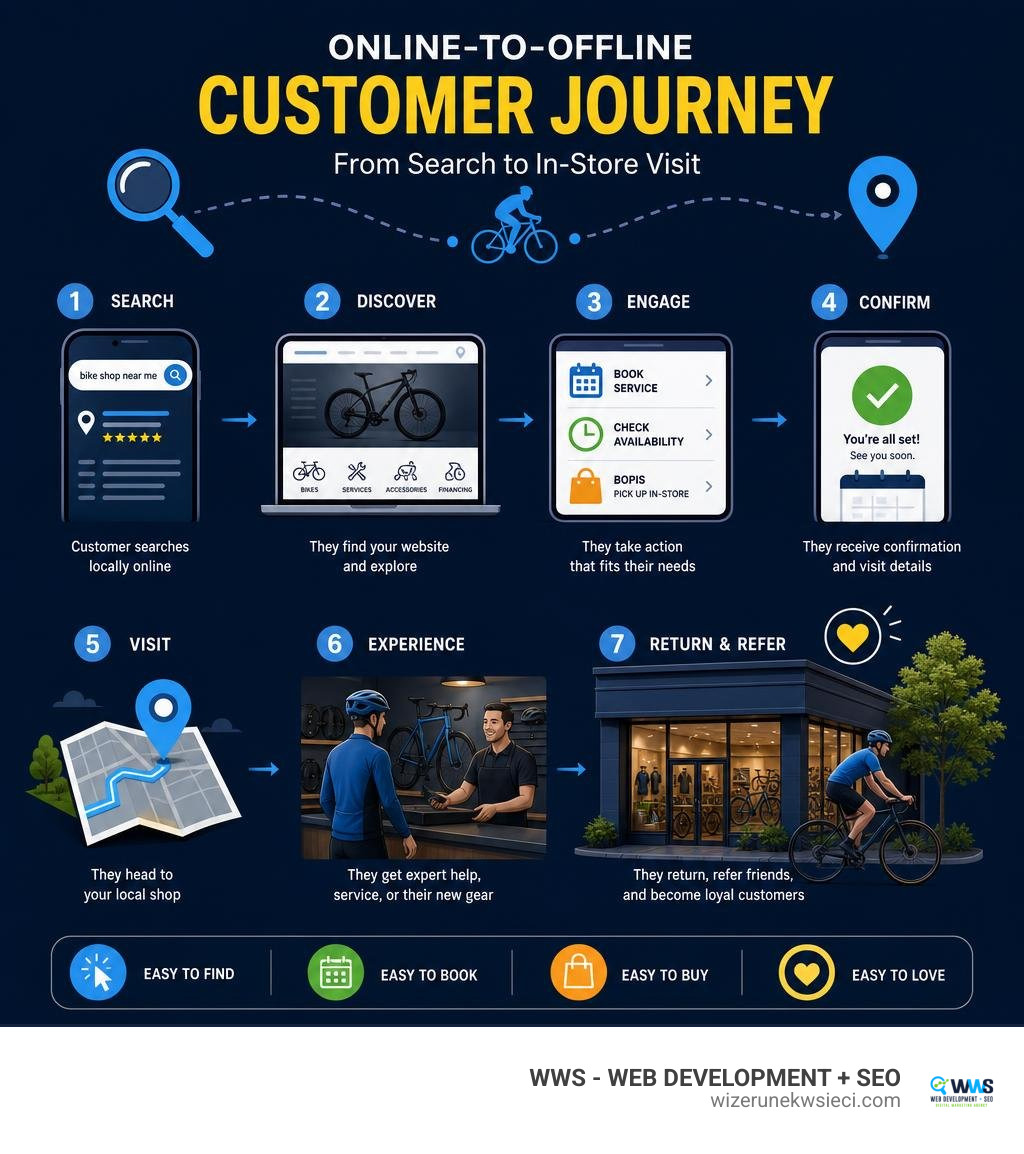
Key Features of a High-Converting Local Bike Shop Website
To turn digital visitors into physical store foot traffic and online buyers, your website must be built around a seamless user experience. When a cyclist in Barrington IL or Arlington Heights IL lands on your page, they should immediately understand what you sell, where you are located, and how they can book a service.
A high-converting website is not just a digital brochure; it is an active sales tool. By focusing on conversion rate optimization (CRO), we design layouts that guide users naturally from inspiration to action. This means placing clear, high-contrast call-to-action (CTA) buttons like “Book a Repair” or “Shop E-Bikes” in prominent positions above the fold.
High-margin services are the lifeblood of physical shops. Specialized offerings like professional bike fitting and advanced suspension tuning cannot be replicated by online-only giants. Your website must highlight these services prominently. For instance, a dedicated bike fitting landing page should explain how proper adjustments prevent knee, back, and neck strain, complete with an easy scheduling widget.
Similarly, trade-in programs lower the barrier to entry for customers looking to upgrade. By featuring an online trade-in calculator where riders can input their current bike’s details to receive an estimated value, you capture high-intent leads who are ready to purchase a new model.
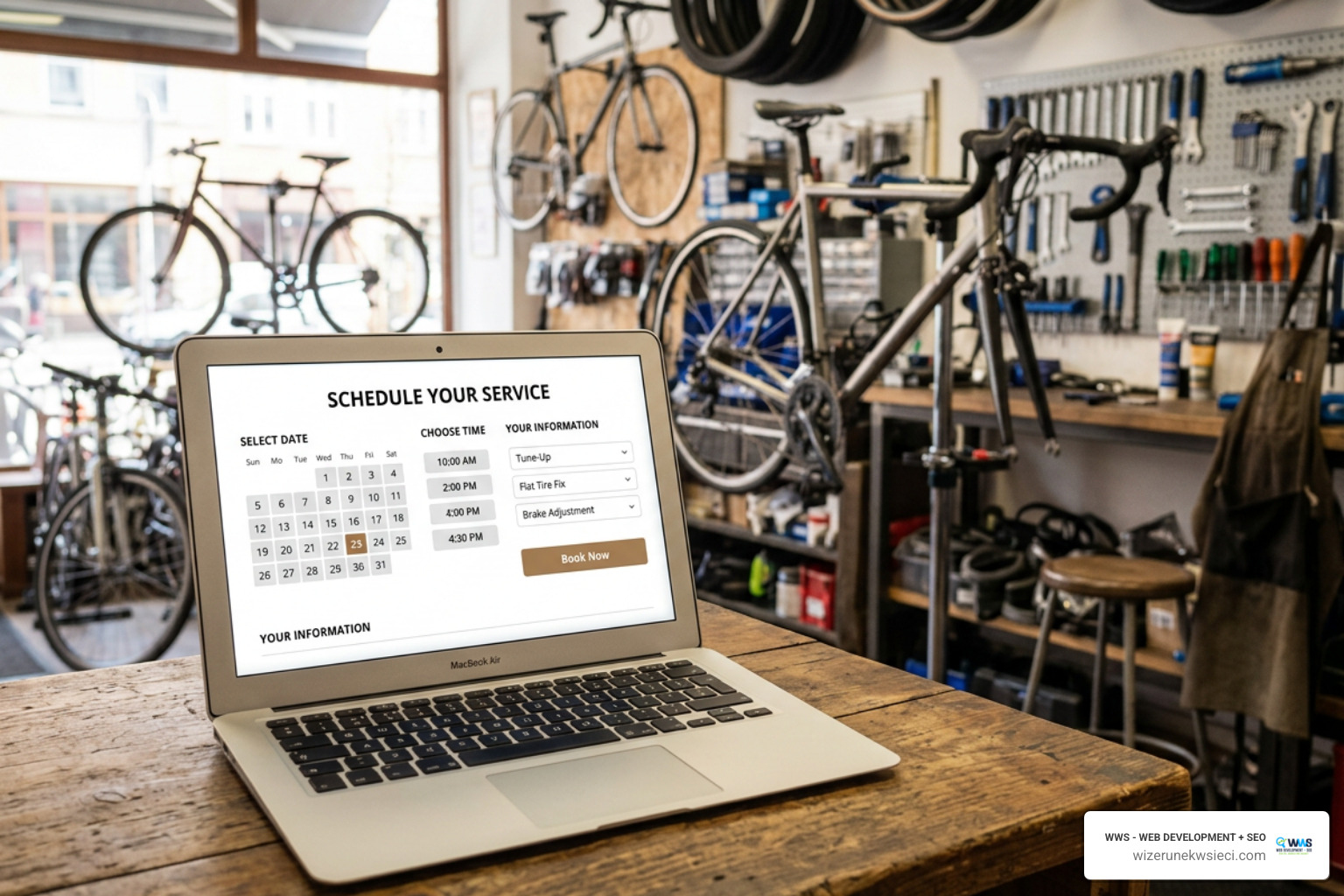
To learn more about how we build these high-converting features, explore our specialized approach to Website Design.
Balancing E-Commerce Inventory and Local Services
One of the biggest hurdles for local shop owners in the Chicago suburbs IL is balancing their digital storefront with their physical service bays. Your homepage needs to cater to two distinct audiences: the customer looking to buy a new helmet or closeout gravel bike, and the local commuter who needs a flat tire fixed or a spring tune-up.
An effective layout uses clear product categorization right at the top of the page, allowing users to browse by riding style or component type. Directly below this, a dedicated service menu should outline your repair packages with complete pricing transparency. When customers see exactly what a “Standard Tune-Up” includes and how much it costs, it removes friction and builds immediate trust.
Promoting closeout sales and seasonal deals on the homepage is also highly effective for clearing older inventory. To see this hybrid model in action, you can look at how industry leaders like River City Bicycles organize their navigation to give equal weight to physical product sales and their local retail presence.
Showcasing Brand Partnerships and Exclusive Product Lines
Your website must establish your shop as an authorized dealer for major, trusted brands like Specialized, Giant, or Trek. This status builds instant credibility. When local riders search for these premium brands, having dedicated brand landing pages on your site ensures you capture that highly valuable search traffic.
Beyond global giants, highlighting partnerships with high-end, niche component manufacturers can set your shop apart. For example, stocking premium brands like Hope Technology—known globally for manufacturing top-tier hydraulic brakes and hubs in the UK—positions your shop as a destination for serious cycling enthusiasts. Displaying these exclusive product lines and hard-to-find spare parts on your website signals to the local community that your staff possesses deep, specialized technical expertise.
Designing for the Modern Cyclist: E-Bikes vs. Traditional Bikes
The rapid rise of electric bikes (e-bikes) has fundamentally changed how we design a local bike shop website. E-bike buyers have completely different questions, concerns, and demographic profiles compared to traditional road racers or mountain bike enthusiasts.
Traditional riders often search for technical specs like frame weight, carbon fiber grade, and groupset components. E-bike buyers, on the other hand, want to know about battery range, motor wattage, charging times, and ease of use. They are often commuters or older adults looking for a fun, eco-friendly alternative to driving through Chicagoland traffic.
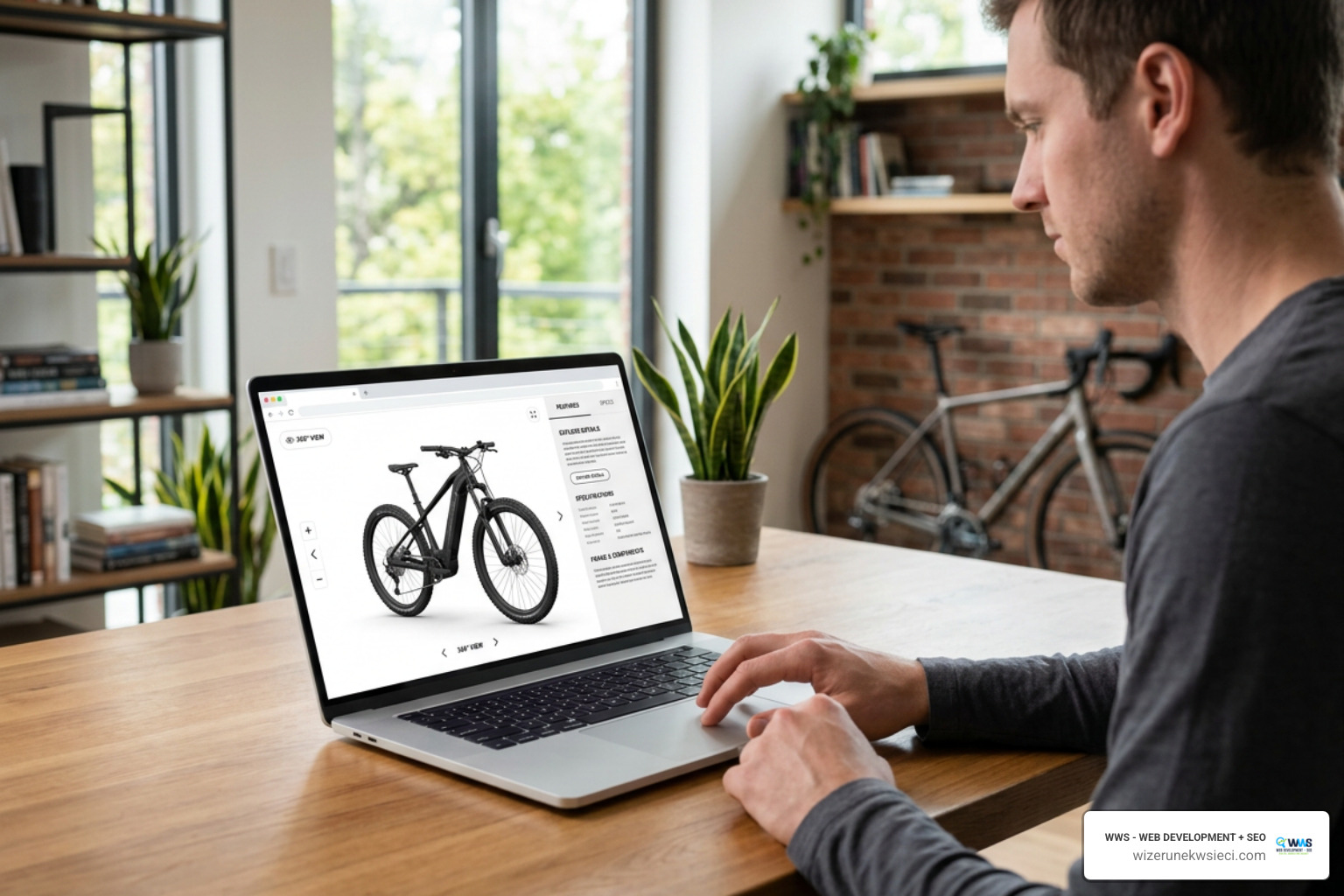
To address these different audiences, your website design should segment these products clearly. E-bike product detail pages require educational content, such as battery maintenance guides and explanations of pedal-assist technology. Because e-bikes represent a significant financial investment, incorporating interactive tools—like a range calculator or a 3D product viewer—helps justify the premium price point and builds buyer confidence.
Optimizing Your Local Bike Shop Website for Search Engines
To ensure local cyclists find your shop when searching online, you must implement a robust local SEO strategy. This begins with optimizing your Google Business Profile and ensuring your name, address, and phone number (NAP) are completely consistent across the web.
On your website, you should use location modifiers naturally within your headings and copy. If your shop is in Naperville IL, Schaumburg IL, or Elk Grove Village IL, make sure those city names are integrated into your meta titles and product descriptions.
Additionally, implementing local business schema markup helps search engines understand your exact location, operating hours, and service areas. By optimizing your site for local search, you ensure that when someone types “bike repair near me” into Google, your shop appears at the top of the map pack.
For a deeper dive into ranking your business locally, check out our guide on Local SEO.
Integrating Community Elements and Social Proof
What truly separates a local bike shop from an online giant is the community it builds. Your website should reflect this by serving as a local cycling hub.
Integrating a community events calendar that showcases upcoming group rides, maintenance clinics, and local races keeps your content fresh and encourages repeat website visits. Featuring a “Staff Favorites” section—where your actual mechanics and sales staff share their personal gear reviews—adds a warm, human touch that builds authentic trust.
Social proof is equally critical. Embedding real Google Reviews directly on your homepage allows potential customers to read honest feedback from their neighbors. Highlighting testimonials that praise your staff by name demonstrates your commitment to excellent customer service. To see how community elements can be seamlessly integrated, take a look at the community-centric approach used by Another Bike Shop.
Streamlining the Transaction: Fulfillment and Digital Operations
In 2026, convenience is a major ranking factor for consumers. Your website’s checkout process must be as frictionless as possible. Offering flexible fulfillment options is the best way to compete with direct-to-consumer giants.
Buy Online, Pickup In-Store (BOPIS) is a massive driver of local sales. It allows customers to secure their gear online and pick it up at their convenience, where your staff can ensure a perfect fit. For customers who prefer home delivery, setting clear free shipping thresholds (such as free shipping on orders over $99) reduces cart abandonment.
To make high-ticket purchases like e-bikes or premium carbon frames accessible, offering flexible financing options, such as 0% interest for 12 months, is a proven way to boost conversion rates.
| Fulfillment Method | Best For | Key Advantage for Retailers | Customer Benefit |
|---|---|---|---|
| In-Store Pickup (BOPIS) | High-value bikes, helmets, shoes | Drives foot traffic; opportunities for accessory add-ons | Free, fast, and ensures professional assembly and fitting |
| Local Home Delivery | Oversized cargo bikes, busy families | Captures local buyers within a 5-10 mile radius | Convenient; bike arrives fully assembled at their door |
| Nationwide Shipping | Small components, apparel, niche gear | Expands market reach beyond the local physical storefront | Access to specialized inventory with free shipping thresholds |
Fulfillment and E-Commerce on a Local Bike Shop Website
Building a flexible, high-converting e-commerce platform requires a robust backend. We highly recommend utilizing Shopify customized with tailored content management fields. This setup allows you to synchronize your online store with your physical point-of-sale (POS) system in real-time, preventing customers from ordering items that are temporarily out of stock in your physical shop.
Your checkout flow must be optimized for mobile users, featuring quick-pay options like Apple Pay and Google Pay. If you offer local home delivery, implementing a tiered pricing structure based on mileage from your Des Plaines IL, Mount Prospect IL, or Glenview IL storefront makes logistics simple and transparent for your customers.
To optimize your online store for maximum search visibility and seamless transactions, read our expert insights on Ecommerce SEO.
Frequently Asked Questions about Bike Shop Web Design
How can a local bike shop website drive both online sales and in-store service bookings?
By utilizing a hybrid homepage layout that gives equal visual weight to both offerings. This means having clear product categories (e.g., “Shop Road Bikes”) alongside prominent, easy-to-use online scheduling buttons (e.g., “Schedule a Tune-Up”) that allow customers to book a service drop-off in seconds.
What is the best way to handle high-ticket items like e-bikes online?
High-ticket items require more information to build trust. Provide detailed, interactive product specifications, clear explanations of financing options (like 0% interest), and a prominent call-to-action inviting the customer to book an in-store test ride.
How do seasonal themes impact a bike shop’s digital content strategy?
Cycling is highly seasonal. Your website should update its banners and promotional sections to reflect the time of year. Highlight “Spring Tune-Ups” in March, “Summer Adventure Gear” in June, and “Winter Storage & Maintenance” in November to keep your content fresh and aligned with local search trends.
Conclusion
A successful local bike shop website is much more than a simple online catalog. It is a powerful, dual-purpose engine designed to drive digital sales while consistently funneling local riders directly into your physical store. By combining a seamless user experience, transparent service pricing, robust local SEO, and flexible fulfillment options, your shop can easily stand out in a crowded market.
At WWS (Wizerunek w Sieci), led by Tomasz Lasota and headquartered in Des Plaines, IL, we specialize in building custom, high-performing digital solutions for small and medium-sized businesses. Serving the entire Chicago metropolitan area—including local business owners in Schaumburg IL, Naperville IL, Arlington Heights IL, and Barrington IL—our bilingual team (English & Polish) brings meticulous attention to detail and deep local market knowledge to every project we touch. We treat your business as if it were our own.
Ready to dominate your local market and build a website that actually grows your business? Contact WWS today, visit wizerunekwsieci.com, or stop by our office at 636 S River Rd #218, Des Plaines, IL 60016 for a free website audit. Let’s build your high-converting digital storefront together.