





What Separates Floral E-Commerce from Standard Online Stores
Running an online flower shop is completely different from running a traditional e-commerce storefront. When selling standard retail products like clothing or electronics, items sit safely in warehouses waiting for standard multi-day shipping. Flowers, however, are delicate, perishable art pieces that require immediate assembly, climate control, and rapid localized transportation.
Because of this unique operational reality, building a high-converting floral platform demands specialized architecture. Customers rarely browse a flower website simply to hoard inventory; they are usually purchasing an emotional gift intended for someone else. This means your checkout flow must effortlessly collect recipient names, hospital room or suite numbers, safe delivery instructions, and personalized greeting card messages. If a website treats floral arrangements like ordinary boxed goods, it risks creating cart abandonment and severe fulfillment mistakes. Implementing smart layout structures outlined in no more ghost towns the ultimate guide to local business website design ensures your shop captures local buyers while handling these complex logistics seamlessly.
Occasion-Based Navigation and Merchandising Structure
Standard e-commerce stores typically categorize products by physical attributes such as material, size, or brand. In the floral space, customer intent is driven primarily by sentiment. Most shoppers visiting your digital storefront do not search by specific botanical varieties like ranunculus, hydrangeas, or delphiniums; they look for arrangements suited for specific life events.
To match customer psychology and reduce friction, your main navigation must prioritize occasion-based collections:
- Celebrations & Romance: Anniversaries, birthdays, congratulations, and date nights.
- Sympathy & Funeral: Standing sprays, casket pieces, memorial wreaths, and delicate home sympathy arrangements.
- Seasonal & Holiday: Valentine’s Day, Mother’s Day, autumn centerpieces, and winter holiday greens.
- Everyday Gestures: “Just Because,” Get Well Soon, new baby arrivals, and thank-you gifts.
Structuring your online store around emotional intent guides the shopper to the right product instantly. When visitors see curated categories matching their specific occasion, they spend less time searching and move quickly into the purchasing funnel. To discover how intentional layout choices stop visitors from leaving prematurely, explore our guide on how to stop bouncing and start buying how to capture leads from your website.
Perishable Inventory and Delivery Logistics Architecture
The logistical backbone of any successful floral website is its delivery validation engine. Because local florists operate within specific driving radii—such as serving Des Plaines, Elk Grove Village, Mount Prospect, Arlington Heights, and the surrounding Chicago suburbs—the website must verify order feasibility before taking payment.
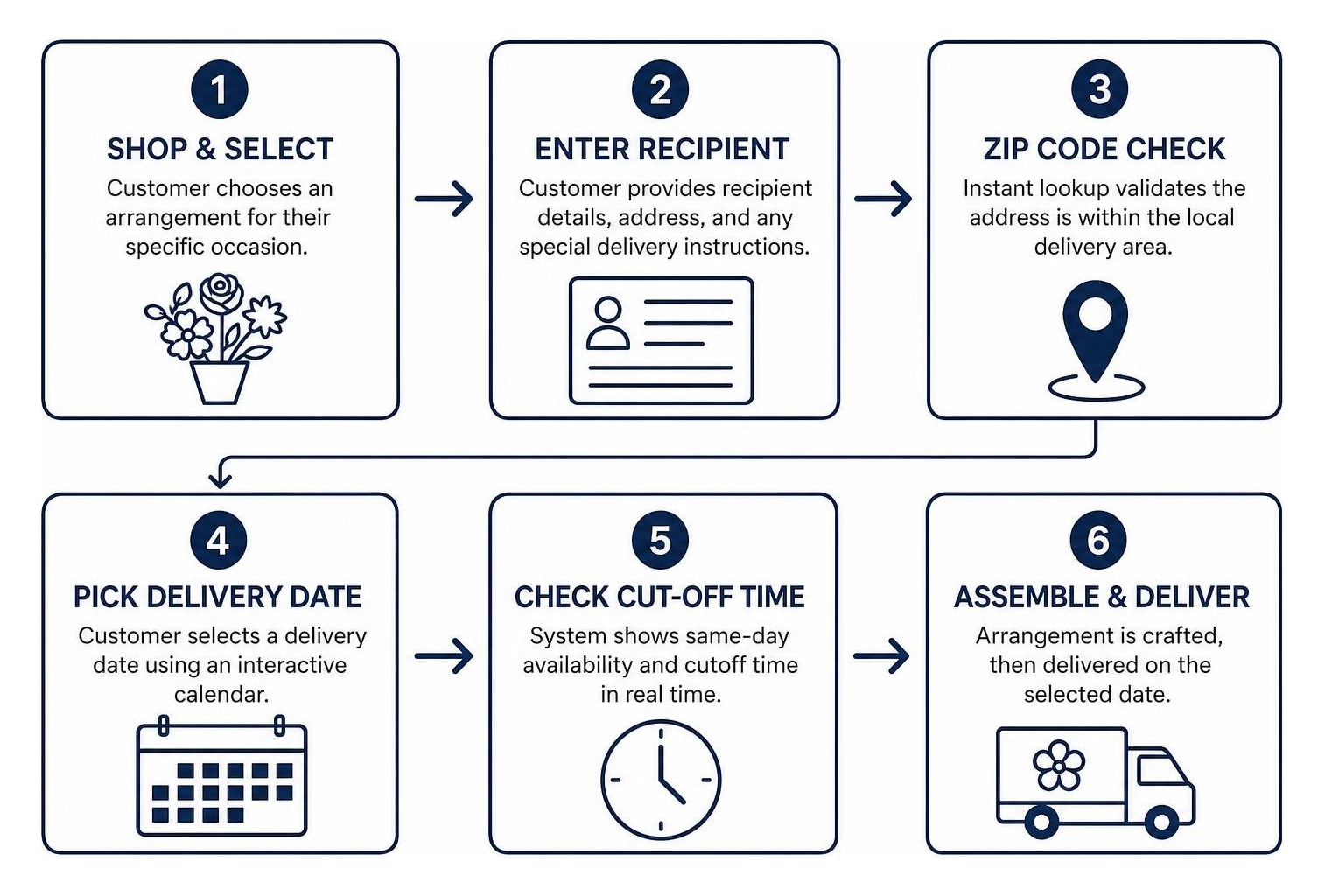
A truly robust floral site integrates several automated rules directly into the product and cart pages:
- Instant ZIP Code Lookup: Validates whether the recipient’s address falls within your local delivery zone or requires courier surcharges.
- Interactive Delivery Date Pickers: Allows customers to select specific arrival dates on an interactive calendar while blacking out days when the shop is closed.
- Dynamic Same-Day Cutoff Clocks: Automatically disables same-day delivery options once your daily production deadline (e.g., 1:00 PM) passes.
- Daily Order Capacity Caps: Prevents holiday overselling during peak surges like Valentine’s Day or Mother’s Day by locking out time slots once your design bench reaches maximum capacity.
Integrating these logistical features directly into your website backend saves hours of customer service phone calls and eliminates delivery disputes. Implementing reliable website booking integration transforms your site into an automated, error-free order processing engine.
Core Elements of the Best Florist Website Design
To stand out in an industry generating over $9 billion annually, your website must balance aesthetic elegance with commercial power. The best florist website design achieves visual balance by letting the floral artistry take center stage while supporting it with clean typography, intuitive user pathways, and modern whitespace.
Visual Branding, Color Palettes, and Photography Standards
Floral arrangements are naturally vibrant, rich in color, and visually complex. When designing a flower shop website, the digital backdrop should never compete with your arrangements. Neutral background palettes—such as soft creams, crisp whites, subtle warm grays, and muted botanical earth tones—allow the natural colors of petals and foliage to stand out vividly.
When preparing photography for your floral catalog, consider the following technical and artistic standards:
- Natural, Diffused Lighting: Photograph arrangements near large windows on overcast days or using diffused studio lights to capture authentic petal tones without harsh shadows.
- Multiple Viewing Angles: Provide at least three to four images per product: a front-facing hero shot, an overhead flat lay showing bouquet fullness, a 45-degree angle, and a close-up macro shot displaying stem texture and bloom quality.
- Lifestyle Staging: Show arrangements placed in real-world contexts, such as on a dining table or entryway console, to help buyers understand scale and proportion.
- Compositional Harmony (The 3:5-8 Principle): Apply the classic floral design rule of grouping stems in odd proportions to create natural visual tension and organic balance in your digital promotional banners.
- Next-Gen Image Optimization: Compress all desktop images below 200KB using modern WebP formats at a minimum width of 1200px to maintain high resolution without slowing down page load times.
Why Mobile UX Defines the Best Florist Website Design
With over 60% of flower orders occurring on mobile devices, responsive mobile UX is not an optional extra—it directly drives your revenue. Mobile flower shoppers are frequently on the go, ordering last-minute gifts during a commute or during a lunch break.
To capture these high-intent mobile shoppers, your mobile interface must provide:
- Touch-Friendly Navigation: Tap targets, category buttons, and menu links must have a minimum size of 44px to eliminate accidental taps.
- Sticky “Order Now” Triggers: Persistent call-to-action buttons anchored at the bottom of product pages ensure the checkout trigger is always within thumb’s reach.
- Express Digital Wallets: Native one-touch payment integrations via Apple Pay, Google Pay, and Shop Pay allow customers to complete purchases in seconds without manually typing credit card numbers.
- Streamlined Checkout Funnels: Reducing the checkout flow to three friction-free steps with guest checkout enabled prevents drop-offs.
Understanding how user experience directly impacts your bottom line is why partnering with experienced professionals matters; see how a local web designer can help your business build an optimized mobile store that converts.
Trust Signals, Social Proof, and Conversion Optimization
Sending flowers is an emotionally sensitive transaction. Buyers worry about whether the arrangement will arrive fresh, look as full as the website photograph, and get delivered on time for the event. Incorporating visible trust signals throughout the website puts their minds at ease.
Prominently display verified Google reviews, direct customer testimonials, and local community badges near your order buttons. Transparent pricing that clearly indicates vase inclusions, delivery fees, and stem upgrades builds trust before checkout. Additionally, offering curated impulse add-ons—such as artisan chocolates, scented candles, plush gifts, and custom handwritten cards—boosts average order values naturally. To explore how well-crafted websites turn casual visitors into loyal buyers, review our guide on lead generation websites the x best options compared.
Top Floral Website Design Concepts and Inspirations Compared
Different floral business models require distinct website design strategies. A retail storefront delivering daily mixed bouquets requires a different web architecture than a luxury wedding florist booking custom event design contracts.
| Floral Business Model | Primary Website Goal | Key Architecture Features | Recommended Visual Aesthetic |
|---|---|---|---|
| Boutique Retail & Local Delivery | Direct e-commerce orders & fast same-day checkout | ZIP code lookup, date pickers, cutoff timers, Click & Collect | Clean, vibrant, product-focused with white or light neutral backgrounds |
| Luxury Wedding & Event Florist | High-ticket consultation inquiries & lead qualification | Categorized portfolios, mood boards, detailed client intake forms | Editorial, minimalist, spacious typography, sophisticated earth tones |
| Floral Subscription & Gifting Brand | Recurring monthly revenue & corporate accounts | Subscription frequency toggles, customer self-service portals | Modern, lifestyle-oriented, pastel accents, step-by-step unboxing visuals |
Boutique Retail and Same-Day Delivery Storefronts
Local retail flower shops thrive on convenience, community loyalty, and speed. Their digital storefronts must make it effortless for a customer to jump on the site, verify local delivery, pick a price tier (Standard, Deluxe, Premium), and check out in under two minutes.
Leading local florists often feature interactive Google Maps showing their delivery zones, alongside prominent Click & Collect options for neighborhood shoppers who prefer to pick up in person. An excellent real-world benchmark of local retail presence can be seen with Des Plaines Florist | Flower Delivery by All in Bloom Designs, which serves neighborhood customers with direct online catalog ordering and clear local delivery options across the Northwest suburbs.
Luxury Wedding and Event Portfolio Studios
Wedding and event floral designers do not rely on standard “Add to Cart” buttons. Instead, their websites act as digital art galleries designed to attract engaged couples, corporate planners, and venue coordinators.
These websites feature extensive bridal portfolios organized by aesthetic style (such as Romantic Garden, Modern Minimalist, Rustic Elegance, or Dramatic Contemporary) or floral installation types (ceremony arches, suspended greenery, floral chandeliers, and tablescapes). The primary conversion mechanism is an interactive, multi-step consultation inquiry form that captures event dates, venue locations, aesthetic vision, and estimated floral budgets, allowing florists to qualify high-ticket leads before booking a consultation call.
Curated Botanical Subscription and Gifting Brands
Subscription floral models provide steady, predictable recurring cash flow. Websites specializing in floral subscriptions emphasize recurring delivery frequencies (weekly, bi-weekly, or monthly) with customizable arrangement sizes.
These platforms require a clean customer account dashboard where subscribers can easily pause, skip, or redirect deliveries when traveling. The design aesthetic is typically lifestyle-driven, showing how fresh flowers brighten up home living rooms, modern kitchens, or corporate office lobbies. For inspiration on structuring e-commerce layouts for botanical gifting, check out the Florist Shopify Website Theme, a Shopify Template by Template Twist Shop.
Evaluating CMS Platforms and Technical Infrastructure
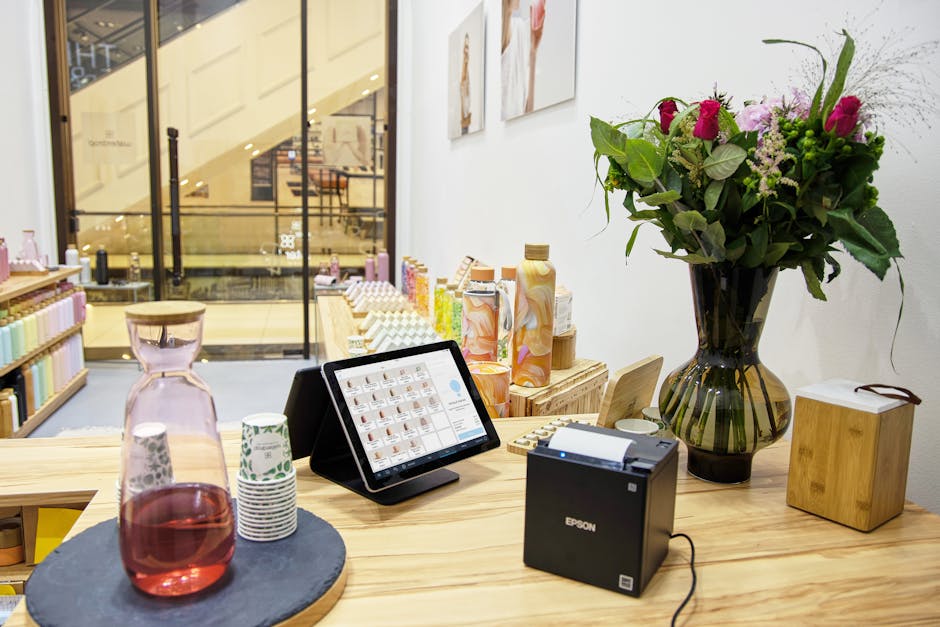
Choosing the right technical foundation is one of the most critical decisions for any flower shop owner. Your digital platform must handle high-traffic spikes on major holidays, secure customer financial data with SSL encryption, and synchronize inventory smoothly.
Choosing the Best Florist Website Design Platform for Growth
While there are many website platforms available, each serves different business needs:
- Custom Shopify Deployments: Ideal for fast-growing retail florists focused on high-volume e-commerce sales. Shopify provides enterprise-level hosting stability during massive holiday rushes, smooth mobile wallet checkouts, and a rich ecosystem of delivery scheduling apps.
- WordPress with WooCommerce: The top choice for floral business owners who want complete ownership and creative freedom over their digital assets. WooCommerce allows for bespoke delivery logic, custom booking pipelines, and zero recurring transaction fees.
- Custom Web Frameworks: Best for larger multi-location floral studios requiring deep database synchronization with in-cooler stock levels and custom Point of Sale (POS) hardware.
To ensure your digital platform looks beautiful while ranking organically on search engines, it must be engineered using foundational seo web design principles from day one.
Local SEO, Geotargeting, and POS Integration
A visually striking florist website will only generate revenue if local customers can find it when searching for “flower delivery near me.” Achieving top search visibility requires pairing your website design with targeted local optimization.
This involves embedding LocalBusiness and Florist schema markup into your website code, configuring dedicated location landing pages for every suburb you deliver to (such as Des Plaines, Schaumburg, Arlington Heights, Mount Prospect, and Glenview), and keeping your Google Business Profile updated with fresh photos, seasonal holiday hours, and customer reviews. Synchronizing your website with specialized floral Point of Sale (POS) systems ensures that in-store walk-in sales immediately reflect on online inventory counts. Comprehensive website seo keeps your flower shop visible across local map packs and organic search results year-round.
Frequently Asked Questions About Florist Web Design
What makes floral website checkout different from standard e-commerce?
Floral checkouts require specialized form fields rarely found in standard retail. These include recipient contact details (distinct from the billing customer), interactive delivery calendars, automated same-day delivery cutoff logic, specific delivery instructions (such as gate codes or apartment numbers), customized card message fields, and curated gift add-on selections.
How do local florists effectively manage same-day delivery cutoffs online?
Effective floral websites utilize automated backend scripts tied to the store’s local timezone. Shop owners configure a specific cutoff hour (such as 1:00 PM CST). Once that time is reached, the website automatically greys out same-day delivery dates on the checkout calendar, offering either next-day delivery or same-day in-store pickup instead.
Which website platform is easiest for independent florists to maintain?
Platforms like Shopify and WordPress with WooCommerce offer the best balance of flexibility and ease of use. Once properly developed and configured by a professional agency, they provide intuitive, self-service admin dashboards that allow florists and their staff to easily adjust daily flower availability, update holiday pricing, add seasonal arrangement photos, and print delivery slips without writing code.
Elevate Your Floral Brand with WWS
A successful florist website requires more than just pretty arrangement photos—it demands a seamless combination of emotional brand storytelling, robust delivery logistics, mobile-first UX, and high-performance local search engine visibility. Whether you run a bustling retail shop in the Chicago suburbs or a high-end wedding and event design studio, your digital storefront should work around the clock to turn casual visitors into loyal, repeat customers.
At Wizerunek w Sieci / WWS — Web Development + SEO, we specialize in helping small and medium-sized businesses establish commanding digital presences. Based in Des Plaines, Illinois, our team delivers custom, high-converting digital solutions tailored specifically to your unique business operations. We combine the technical capabilities of a full-scale agency with the dedicated, bilingual (English & Polish) support of a trusted local partner.
Ready to build a stunning, high-converting online storefront for your flower business? Explore our custom website design services or connect with Tomasz Lasota and the WWS team online at wizerunekwsieci.com, or visit our office at 636 S River Rd #218, Des Plaines, IL 60016 for a free website and SEO audit!