



Prioritize three things in this order: Google Local Services Ads, a fully verified Google Business Profile, and a phone-first website. That combination produces the fastest, highest-quality emergency leads a restoration company can generate, because it matches how a homeowner actually behaves at 2 a.m. with water in the basement. They search, they call the first legitimate-looking result, and they hire whoever picks up.
Three moves in the next 30 days will move the needle immediately:
- Enable Local Services Ads and complete the Google Guarantee screening (insurance, license, background check) so your ads appear at the very top of results, above traditional PPC.
- Verify and fully build out your Google Business Profile with accurate categories, service areas, and photos, since most consumers now search online before choosing a local business.
- Fix click-to-call on your website’s mobile header so a panicked caller never has to hunt for your number.
These three steps aren’t a one-time project. They feed a 90-day loop: launch, measure cost per qualified lead by channel, then reallocate budget toward whatever is actually converting, a discipline Restoration & Remediation Magazine ties directly to predictable growth.
Key Takeaways
Restoration company marketing succeeds when Local Services Ads, a verified Google Business Profile, and a phone-first website work together as one measured system rather than as separate, disconnected tactics.
| Point | Details |
|---|---|
| Lead with LSA | Local Services Ads typically produce a $80 to $180 cost per lead versus $150 to $400 or more for Search Ads in competitive metros. |
| Perfect your GBP first | Verify categories, service areas, and photos monthly since most local searches now start online. |
| Fix your site’s conversion path | Click-to-call above the fold and short forms stop paid leads from bouncing before they call. |
| Build referral and insurance pipelines | TPA scorecards and property manager outreach create steadier, less price-sensitive revenue over time. |
| Measure every 90 days | Tag leads by channel, compute cost per qualified lead, then cut the worst performer and double the best. |
| Let WWS build the full system | WWS – Web Development + SEO manages GBP, LSA, PPC, and website conversion in-house for Chicago-area restoration companies. |
Table of Contents
- What Restoration Company Marketing Actually Requires
- Optimize Google Business Profile and Map-Pack Presence
- How Do Local Services Ads Compare to Google Ads for Restoration?
- Make Your Website a Conversion Machine for Emergency Calls
- What Content and Local SEO Actually Move the Needle?
- Building Referral Programs and Commercial Preferred-Vendor Pipelines
- Reputation Management: Getting and Using Reviews to Boost Calls
- Measuring What Matters: KPIs, Attribution, and Budget
- Publisher Case Studies and Credentials You Can Trust
- Social Media Marketing Strategies Tailored for Restoration Services
- Email Marketing Campaigns and Follow-Up Sequences for Nurturing Leads
- Partnerships with Insurance Companies and Adjusters as a Referral Source
- Community Engagement and Local Sponsorships to Build Brand Trust
- Video Marketing and Virtual Tours to Showcase Expertise
- Why Restorers Must Treat Marketing Like Emergency Response
- How WWS – Web Development + SEO Builds Your Emergency-Response Marketing System
- Authoritative Links for Deeper Setup Steps
- Sources
- FAQ
What Restoration Company Marketing Actually Requires
Restoration company marketing is the practice of generating emergency and commercial leads for water, fire, mold, and storm damage services, and it behaves nothing like marketing for a boutique or a landscaper. Demand is reactive, decisions happen in minutes, and the buyer rarely comparison-shops the way they would for a kitchen remodel. That reality should shape every dollar you spend.
Industry guidance consistently points to the same core stack: Google Ads, Local Services Ads, SEO, Google Business Profile optimization, reputation management, and a conversion-ready website working together rather than in isolation. Skip one and the others underperform. A beautifully optimized website with no LSA presence loses the top-of-page real estate to a competitor. A strong LSA account feeding a slow, cluttered website wastes the click you just paid for.
Optimize Google Business Profile and Map-Pack Presence
Your Google Business Profile is often the first thing a distressed homeowner sees, and it needs to look like it belongs to a company that shows up in twenty minutes, not twenty hours. Get the fundamentals locked down before touching anything else.
- Complete verification through Google, then confirm your primary category is “Water Damage Restoration Service” or the closest exact match, not a generic “Contractor” label.
- List every secondary category that applies (fire damage restoration, mold remediation, biohazard cleanup) so you surface for adjacent searches.
- Set your service area precisely to the towns and zip codes you actually cover, and keep hours marked as 24/7 if that’s genuinely true.
- Upload new photos monthly. Crews on-site, equipment in action, and before-and-after shots outperform stock imagery every time.
- Write a business description that names your specific services and coverage area instead of vague marketing copy.
- Add detailed service line items under the “Services” tab with the keywords customers actually type, like “basement flood cleanup” or “smoke odor removal.”
Reviews function as both a trust signal and a ranking factor, which means you need a system, not a hope. Set up automated review requests that fire the day after job completion, and route a handful of your strongest reviews onto relevant service pages on your own local SEO landing pages, not just your Google profile.
Don’t stop at Google. Bing Places is a smaller pond, but it’s free visibility you’re otherwise leaving on the table, and some homeowners (particularly on desktop and older devices) still default to Bing or Microsoft Edge searches.

Pro Tip: Check your Google Business Profile weekly for suggested edits from Google or unauthorized changes from competitors. Restoration categories get hijacked more often than you’d expect, and a wrong phone number sitting live for even three days can cost you real jobs.
How Do Local Services Ads Compare to Google Ads for Restoration?
Local Services Ads should be your default channel for residential emergency work, and the cost data backs that up clearly. Reported LSA cost-per-lead for restoration typically runs $80 to $180, while traditional Google Search Ads in competitive metro areas often land between $150 and $400 or more per lead for the same emergency keywords. LSAs charge per lead rather than per click, so you only pay for homeowner contacts who actually reach out.
Getting into LSAs requires clearing Google’s screening:
- Submit business license and insurance documentation for verification.
- Pass a background check for company owners and applicable employees to earn the Google Guarantee badge.
- Set weekly budget caps and adjust your service radius based on which zip codes actually convert to booked jobs.
- Respond to every lead within minutes; LSA ranking rewards fast response time almost as much as review scores.
Search Ads (PPC) still earn a spot in your budget, just for different jobs. Use them for commercial-scale losses, multi-location coverage where LSA service areas don’t overlap cleanly, or specific services like “commercial fire damage restoration” where LSA volume runs thin. PPC also gives you far more control: exact-match keywords, call extensions, dayparting, and geo-fencing around competitor service areas.
Whichever channel you run, treat negative keywords as ongoing maintenance, not a one-time setup task. Terms like “DIY,” “jobs,” and “training” bleed budget fast on broad match, and CPCs for high-intent restoration keywords can spike to $200 to $250 per click in the most competitive metros.
A rough budget split by company stage: operators with lower revenue typically focus heavily on LSAs first, then add disciplined Search Ads when LSA volume plateaus. Larger, multi-location operators need to run PPC and local SEO concurrently, treating organic SEO as a 12 to 24 month asset that eventually lowers blended cost per lead. To calculate your fully-loaded CPL, add ad spend plus the LSA lead fees plus any agency management cost, then divide by booked jobs, not raw leads.
Make Your Website a Conversion Machine for Emergency Calls
A slow, cluttered website is the single most common reason a paid lead never converts. If someone clicks your ad or your map listing and can’t find your phone number in three seconds, they bounce to the next result.
- Put your phone number in the header, in a contrasting color, on every single page, and make it a tap-to-call link on mobile.
- Build individual landing pages for each core service (water damage, mold remediation, fire restoration, storm cleanup) that mirror the exact language in your ad copy and your GBP service list.
- Display trust signals prominently: IICRC certifications, insurance-billing assistance language, real before-and-after photos, and your review score pulled directly from Google.
- Keep contact forms to name, phone, and a one-line description of the problem. Every extra field costs you completed submissions.
- Install call tracking on every channel (organic, LSA, PPC, GBP) so you know precisely which source produced which call.
- Run your site through a speed test regularly. A restoration site loading in four-plus seconds on mobile is quietly losing jobs every single day.
Pro Tip: Add a one-line insurance reassurance directly under your phone number, something like “We work directly with your insurance company.” It answers the homeowner’s second-biggest fear (cost) in five words, right when they’re deciding whether to call.
Your website’s on-page SEO and its conversion design aren’t separate projects. A page that ranks well but converts poorly is just an expensive way to generate traffic you never bill for.
What Content and Local SEO Actually Move the Needle?
Content strategy for restoration companies splits into two jobs: capturing people in crisis right now, and building the organic authority that lowers your cost per lead over the next year or two.
- Publish “what to do after” emergency guides (what to do in the first 24 hours after a pipe burst, how to prevent mold after flooding) since these capture people searching before they’ve decided to call anyone.
- Build full service pages at 1,200 to 1,800-plus words for each core offering, covering the process, timeline, insurance handling, and equipment used.
- Add an FAQ section to every service page targeting the exact questions adjusters and homeowners ask.
- Create dedicated city and service-area pages for each town you cover, and link them internally to your core service pages to reinforce local relevance.
- Implement LocalBusiness and Service schema markup so search engines can parse your service area and offerings accurately.
- Optimize every image (compressed file size, descriptive alt text) since restoration pages are often photo-heavy and slow to load without it.
- Publish consistently. A monthly cadence beats a burst of ten posts followed by six months of silence.
Original photos from actual jobs, paired with content that reads like it was reviewed by someone who’s actually run a mitigation crew, build trust with readers far faster than generic stock-photo articles ever will.
Building Referral Programs and Commercial Preferred-Vendor Pipelines
Paid ads win you the 2 a.m. call. Referral relationships win you the steady, less price-sensitive commercial work that stabilizes revenue between disaster spikes. Both need a system, not a handshake and a hope.
- Build a formal referral program for plumbers, real estate agents, and property managers, complete with a flat or percentage incentive, a unique tracking link or code per partner, and co-branded one-pagers they can hand to their own clients.
- Apply to third-party administrator (TPA) and insurance preferred-vendor programs methodically. These typically score you on response time, customer satisfaction, and claim documentation quality, so track your own performance metrics before you apply and keep improving them after acceptance.
- Run an outbound cadence targeting property management companies on a monthly touchpoint schedule: an introductory call, a follow-up email with your capabilities sheet, and an in-person site visit or lunch-and-learn once you’ve earned the meeting.
- Balance the timeline honestly. Referral and commercial pipelines take three to six months to produce consistent volume, so keep LSA and Google Business Profile work fully funded while you build them rather than pulling budget away too early.
Reputation Management: Getting and Using Reviews to Boost Calls
Review volume and freshness now function almost like a ranking signal in their own right, and homeowners in crisis skim star ratings before anything else on the page.
- Automate a review request via SMS or email that fires within 24 hours of job completion, when gratitude is highest and the memory is freshest.
- Keep the message template short and specific: thank them, ask directly for a Google review, and include a one-click link.
- Aim for a sustained average above 4.7 stars, with new reviews landing every week rather than in occasional clusters.
- Respond to every negative review within 24 hours, acknowledge the specific complaint, and move the resolution offline with a phone number or email rather than arguing in the comments.
- Feature your strongest, most specific reviews (ones mentioning response time or a difficult job) directly in ad copy and on landing pages.
Pro Tip: Ask happy commercial clients (property managers, adjusters) for reviews too, not just homeowners. A review mentioning “handled our 40-unit building after a pipe burst” signals capability that residential reviews alone never will.
Measuring What Matters: KPIs, Attribution, and Budget
None of the tactics above matter if you can’t tell which one is actually producing booked revenue. Four numbers deserve a permanent spot on your dashboard:
- Cost per qualified lead, calculated separately for each channel (LSA, PPC, organic, referral).
- Lead-to-job conversion rate, which exposes whether your intake team or your website is losing leads that should be closing.
- Revenue by channel, tracked monthly, not just leads by channel.
- Average ticket size by source, since commercial referrals and paid emergency leads rarely produce the same job value.
Start with a 90-day audit: tag every lead from the past quarter by its actual source, then compute cost-per-qualified-lead and revenue per channel before making any budget changes. Guessing at what’s working is how most restorers overspend on the wrong channel for years.
Operators with moderate revenue commonly allocate marketing budgets roughly among LSAs, Search Ads, SEO and content, and referral and commercial business development to sustain longer-payoff channels.
Every quarter, apply the same simple rule: cut your worst-performing channel by cost per qualified lead, double down on your best, and test exactly one new tactic. Anything more than that and you lose the ability to tell what actually caused the improvement.
Publisher Case Studies and Credentials You Can Trust
Tactics only matter if someone has actually made them work under real budget constraints. WWS – Web Development + SEO’s Kitchen and Bath Direct case study and its Amsterdam Enterprises case study document exactly this kind of disciplined, channel-by-channel local optimization for service businesses.
The pattern across both engagements was the same: fix Google Business Profile accuracy and category selection first, rebuild the website for mobile conversion second, and layer paid local ads on top only once the foundation could actually convert the traffic it received.
Three things worth copying directly from that pattern:
- Fix the free, foundational assets (GBP accuracy, site speed, click-to-call) before spending a dollar on paid ads.
- Track leads by source from day one so budget decisions are based on data, not instinct.
- Treat SEO and paid media as complementary, not competing, line items in the same budget.
As an official Google and Meta Partner, WWS – Web Development + SEO’s team is exclusively Google and Facebook certified, which matters for platform support access and campaign troubleshooting. Because every part of the work stays in-house rather than outsourced, fixes to a website conversion problem and adjustments to an ad account happen on the same day, by the same team, instead of bouncing between vendors.
Social Media Marketing Strategies Tailored for Restoration Services
Social media won’t generate many direct emergency leads, but it builds the credibility that makes a homeowner trust you when they land on your profile mid-crisis. Treat it as a trust-building channel, not a lead-gen channel.
Facebook still matters more than Instagram for restoration, since your audience skews toward homeowners in the 35 to 65 age range who use it to check reviews and local recommendations. Post before-and-after job photos weekly, since visual proof of a mold remediation or fire cleanup does more for credibility than any written claim.
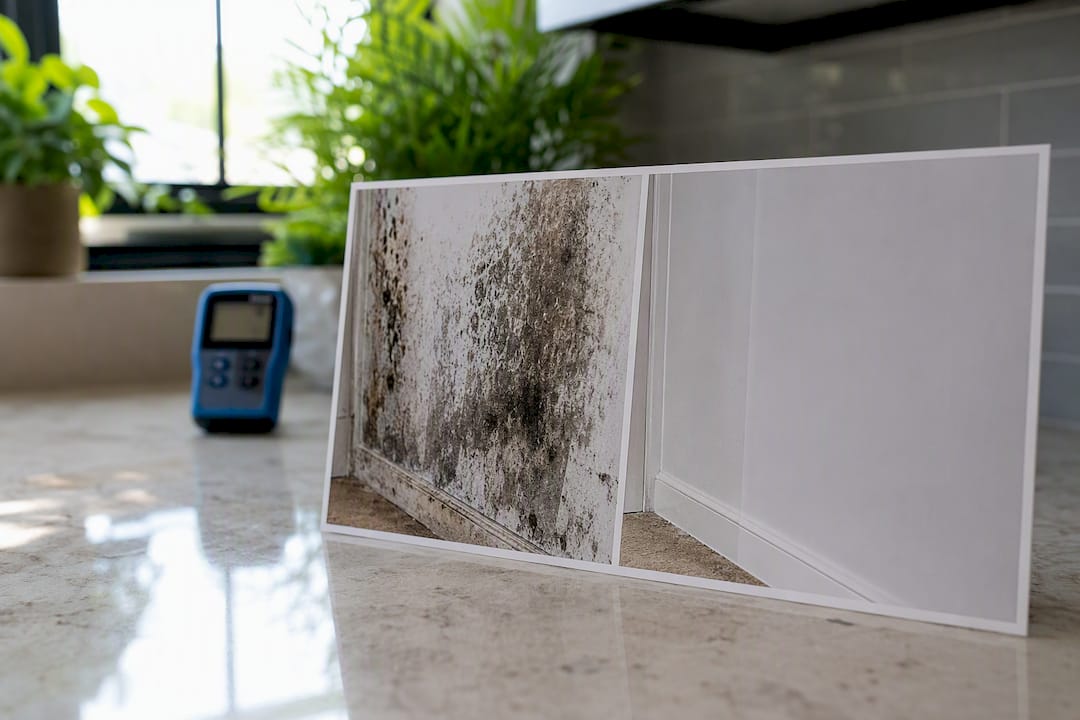
Instagram and Facebook Reels work well for short, 30 to 60 second clips of equipment in action, like an air scrubber running in a flooded basement or a crew setting up containment for asbestos abatement. These clips also repurpose easily into ad creative for Local Services Ads and Search Ads.
Respond to every comment and message within a few hours. A restoration company that goes quiet on social media for days looks abandoned exactly when someone’s checking if you’re a real, active business before calling. Consider a monthly “storm season prep” or “winter pipe protection” post series, since it positions you as the expert to call before the emergency happens, not just after.
Email Marketing Campaigns and Follow-Up Sequences for Nurturing Leads
Email won’t catch the 2 a.m. emergency caller, but it recovers the leads that didn’t convert immediately and it keeps past customers thinking of you for the next incident.
Build a simple automated sequence for anyone who calls or fills out a form but doesn’t book: a same-day confirmation, a 48-hour follow-up if there’s no response, and a one-week check-in offering a free inspection. This alone recovers jobs that would otherwise disappear into a missed-call log.
For past customers, a quarterly email covering seasonal risks (frozen pipes in winter, storm prep before hurricane season, mold risk after heavy spring rain) keeps your name in front of people during the exact window when a referral or repeat job becomes likely. Segment your list between residential customers and commercial contacts like property managers and adjusters, since their content needs differ completely. A property manager wants response-time guarantees and documentation quality; a homeowner wants reassurance and simple next steps.
Keep every email short, mobile-friendly, and ending with one clear action: call now, request an inspection, or reply directly. A five-paragraph newsletter gets ignored; a three-line seasonal reminder with a phone number gets read.
Partnerships with Insurance Companies and Adjusters as a Referral Source
Insurance-driven referrals produce some of the most stable, recurring revenue in this industry, but they require patience and documentation discipline most restorers underestimate.
Start by identifying the local adjusters and independent agents who write policies in your service area, and introduce yourself directly rather than waiting for a claim to bring you together. Bring a one-page capabilities sheet covering your certifications, average response time, and direct-billing process.
Third-party administrator programs formalize this relationship at scale. TPAs typically score vendors on response time, customer satisfaction, and how cleanly your documentation supports the claim, so track those metrics internally before you even apply. Once accepted, your performance on those same scorecards determines how much volume you get routed, which means the relationship rewards consistency far more than charm.
Make claims documentation painless for the adjuster’s side of the process: detailed photos, moisture readings, and a clear scope of work delivered fast. An adjuster who trusts your paperwork sends you the next job without a second thought. One who has to chase you for documentation quietly moves you down their list.
Community Engagement and Local Sponsorships to Build Brand Trust
Local visibility outside of search results still shapes whether someone recognizes and trusts your name when disaster strikes. Sponsoring a youth sports league, a local fire department fundraiser, or a chamber of commerce event puts your name in front of the same homeowners and property managers you’re targeting online, in a context that feels like community support rather than advertising.
Volunteer for storm-prep seminars at libraries or community centers, especially before hurricane or winter storm season. Offering a free “what to do when a pipe bursts” talk positions your company as the local expert months before anyone actually needs you, and it’s the kind of goodwill that generates word-of-mouth referrals no ad budget can buy.
Partner with local hardware stores or plumbing supply shops for co-branded flyers or in-store materials. These cross-promotions put your name in front of exactly the customers most likely to need restoration services soon. Track this activity loosely, not with the same rigor as paid channels, but do ask new customers how they heard about you so sponsorship and community work don’t disappear into an unmeasured black hole.
Video Marketing and Virtual Tours to Showcase Expertise
Video does something photos and text can’t: it lets a stressed homeowner see your equipment, your crew, and your process before they ever pick up the phone, which meaningfully lowers the trust barrier at the exact moment they’re deciding who to call.
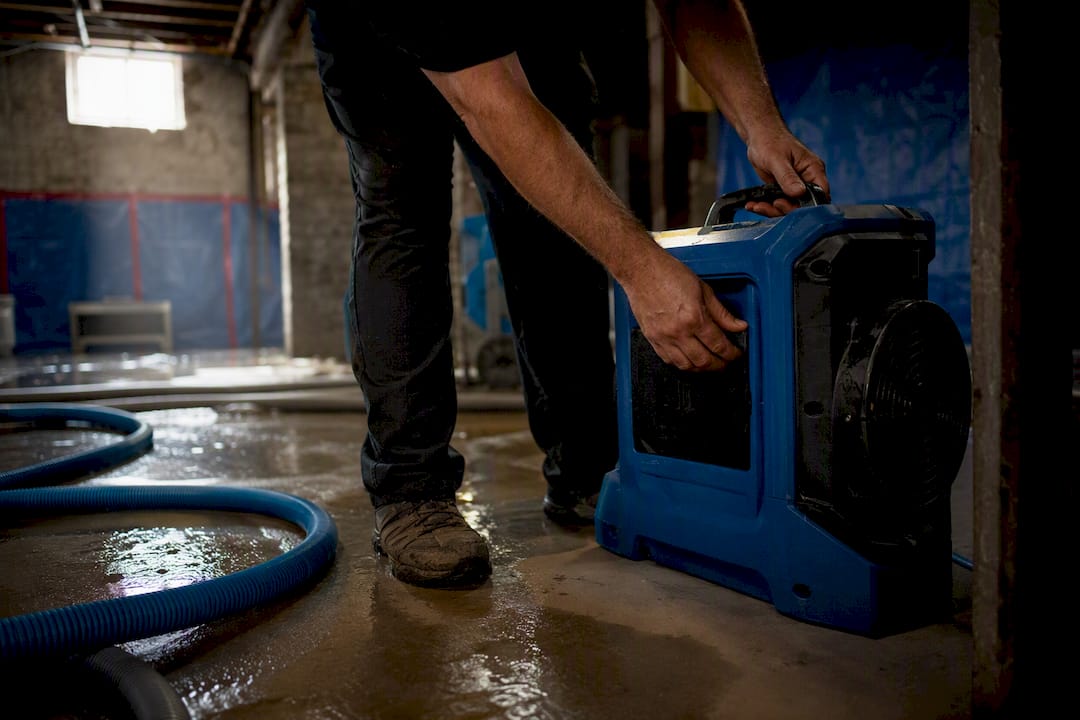
Film short walkthroughs of an actual job (with the customer’s permission) showing the equipment setup, the drying process, and the final result. These work as website content, YouTube uploads for search visibility, and ad creative for Local Services Ads and social campaigns alike.
A basic “meet the team” video on your homepage and Google Business Profile humanizes a company that homeowners are otherwise trusting sight-unseen in a moment of genuine stress. Virtual before-and-after tours of past jobs, even shot simply on a phone, do more to demonstrate real capability than any written testimonial.
Keep video under two minutes for social distribution and under five minutes for in-depth YouTube service explanations. Attention drops fast, and a homeowner mid-emergency has neither the time nor the patience for a ten-minute production.
Why Restorers Must Treat Marketing Like Emergency Response
Most restoration marketing advice gets written by people who’ve never had to answer a phone at 2 a.m. Reactive demand dominates this industry, so capture-first tactics (LSA, a verified GBP, a fast phone-first site) have to lead every budget conversation, not follow it. Everything else, content, social, referrals, is genuinely valuable, but none of it matters if the emergency call goes to a competitor because your site took six seconds to load.
The owners who win consistently aren’t running smarter individual tactics. They’re running a system, checking the same numbers every week, and refusing to let any one channel go unmeasured. Random acts of marketing lose to boring consistency every time.
If there’s one change to make this month, it’s this: stop treating marketing as a project with an end date. Build the 90-day measurement loop and actually run it.
— Online Marketing Experts
How WWS – Web Development + SEO Builds Your Emergency-Response Marketing System
Running Local Services Ads, Google Business Profile optimization, paid search, a conversion-ready website, and call tracking all at once is a lot to manage in-house while you’re also running restoration jobs. WWS – Web Development + SEO is is the alternative to juggling five different freelancers or agencies for this stack in the Chicago area: every one of those pieces gets built and managed by the same in-house, Google and Facebook certified team, so a fix to your website’s click-to-call button and an adjustment to your LSA bidding happen the same week, not after three separate vendor calls.
A typical starter engagement runs as an audit first: WWS reviews your current Google Business Profile, website conversion path, and ad accounts, then delivers a prioritized fix list. From there, the team implements the highest-impact changes, tests results over 30 to 60 days, and scales whatever channel is producing the lowest cost per qualified lead. With over 200 successful client partnerships, across contractors, restoration, and other local service businesses, the goal is the same every time: more calls, not just more traffic.
If your restoration company needs a marketing system built by people who specialize in local service businesses, request an audit through WWS – Web Development + SEO’s local SEO team and get a prioritized plan instead of another generic checklist.
Authoritative Links for Deeper Setup Steps
Set up your platforms directly from the source before layering on strategy:
- Google Business Profile for official verification and category guidance.
- Bing Places for a secondary, free map listing.
- Restoration marketing channel comparisons for deeper LSA versus PPC cost breakdowns.
- WWS – Web Development + SEO’s website SEO resources for technical and on-page fixes.
Sources
- Statista — online local business search frequency (US & Canada)
- Restoration marketing channels: LSA vs Google Ads vs SEO — Tygart Media
- The complete marketing system for restoration companies that drives growth — Restoration & Remediation Magazine
FAQ
What Is Restoration Marketing?
Restoration marketing is the set of digital and local tactics (Local Services Ads, Google Business Profile optimization, SEO, reputation management, and website conversion) that generate emergency and commercial leads for water, fire, mold, and storm damage companies. It leans heavily on capture-first channels because most demand is reactive rather than researched in advance.
What’s Hot in Marketing Right Now for Restoration Companies?
Local Services Ads and Google Business Profile optimization remain the highest-priority channels because they capture reactive, high-intent searches directly. Video content and short-form social clips showing real jobs are also gaining traction as trust-building tools that support those paid channels.
How Do Restoration Companies Make Money?
Restoration companies earn revenue from both residential emergency jobs (water, fire, mold, storm damage) and larger commercial or insurance-driven contracts sourced through TPA programs, property managers, and adjuster relationships. Most stable operators run both streams at once: paid emergency leads for immediate cash flow and commercial referral pipelines for steadier, higher-ticket work.
Should a Small Restoration Company Use an Agency or Handle Marketing In-House?
It depends on bandwidth, but most owner-operators run out of time to manage LSA verification, website conversion, and reputation management simultaneously while running jobs. An in-house team like WWS – Web Development + SEO’s, where the same certified specialists handle SEO, ads, and web development together, removes the coordination gap that slows down smaller operators managing multiple vendors.