



Winning water damage SEO means owning the Map Pack and building mobile-first emergency pages with a click-to-call button above the fold. Every other tactic, from citations to content clusters, supports that single goal. Start today with a three-part audit: confirm your Google Business Profile is fully complete, verify your phone number is visible without scrolling on mobile, and check that your homepage has a clear emergency call-to-action above the fold.
TL;DR:
- Optimizing your Google Business Profile for 24/7 water damage emergency searches can improve visibility in days, but only if the profile is fully completed and consistently monitored.
- Emergency service pages should feature a clear headline, instant phone click-to-call, stated arrival times, and certification badges, with city pages tailored to specific neighborhoods to boost relevance.
- Page speed and mobile user experience directly impact conversion rates for urgent calls and should be optimized through fast-loading images, minimal contact form fields, and a prominent sticky call button.
- Prioritize targeting emergency intent keywords with click-to-call features, and reserve mid- to low-funnel content for project details and awareness blog posts to support topical authority.
- Regularly audit citations and reviews, since inconsistent NAP data and recency of reviews significantly influence local rankings and potential customer trust.
Table of Contents
- What Is Water Damage SEO and Why Does Map Pack Ranking Come First?
- How Do You Optimize Google Business Profile for Emergency Searches?
- What Should Emergency Service Pages and City Pages Include?
- Why Do Page Speed and Mobile UX Determine Whether Calls Convert?
- Which Keywords Should Restoration Companies Target First?
- How Do Citations and Reviews Affect Local Ranking?
- What Should You Expect to Pay and How Do You Measure Results?
- Why Publisher Credentials Matter When Choosing an SEO Partner
- My 30/60/90 Plan for a Restoration Business Starting SEO
- How WWS Can Put This Plan Into Action for Your Business
- Sources
- FAQ
What Is Water Damage SEO and Why Does Map Pack Ranking Come First?
Water damage SEO is the practice of optimizing a restoration company’s online presence so it appears when someone searches for flood cleanup, burst pipe repair, or mold remediation during an active emergency. Unlike most local SEO work, it has to account for searchers who need help in the next 20 minutes, not the next week.
That urgency changes everything about page design and keyword targeting. A homeowner Googling “emergency water damage near me” at 2 a.m. isn’t reading blog posts. They’re scanning the Map Pack for the fastest, most credible option and tapping call. Here’s the priority order that moves fastest to slowest:
- Google Business Profile optimization — visible in days, directly feeds Map Pack rankings.
- Emergency service pages with click-to-call — live in 1 to 2 weeks, converts existing traffic immediately.
- Page speed and mobile fixes — 1 to 3 weeks, stops bounce on the pages you just built.
- Review generation — ongoing, compounds over 60 to 90 days.
- City and neighborhood pages — 4 to 8 weeks to build, 3 to 6 months to fully rank.
- Measurement and call tracking — set up immediately, reported monthly.
Awareness content (mold prevention guides, insurance FAQs) matters, but it plays a supporting role. It builds topical authority; it rarely closes an emergency job by itself.
How Do You Optimize Google Business Profile for Emergency Searches?
Your Google Business Profile is the single highest-leverage asset in restoration SEO, because it’s what Google actually displays in the Map Pack. Get the categories wrong and none of the rest matters.
Set “Water Damage Restoration Service” as your primary category, then add secondary categories like fire damage restoration or mold remediation only if you genuinely offer them. Padding categories to look bigger tends to dilute relevance rather than expand it.
- Mark your hours as 24/7 only if a real person answers around the clock; a phone that rings to voicemail at 3 a.m. destroys the trust signal you’re trying to build.
- Define your service area by city and ZIP code rather than a vague regional radius.
- Post weekly updates showing recent jobs, and upload new project photos on the same cadence. Fresh photos and frequent posts measurably increase GBP engagement and map visibility.
- Respond to every review within 24 hours, positive or negative.
Google also reads behavioral signals, call volume, direction requests, and click-through rate as ranking inputs, not just static profile data.
Pro Tip: Check your GBP insights weekly. A sudden drop in “calls” or “direction requests” often means a competitor just outranked you, and catching it early buys you time to react before the loss compounds.
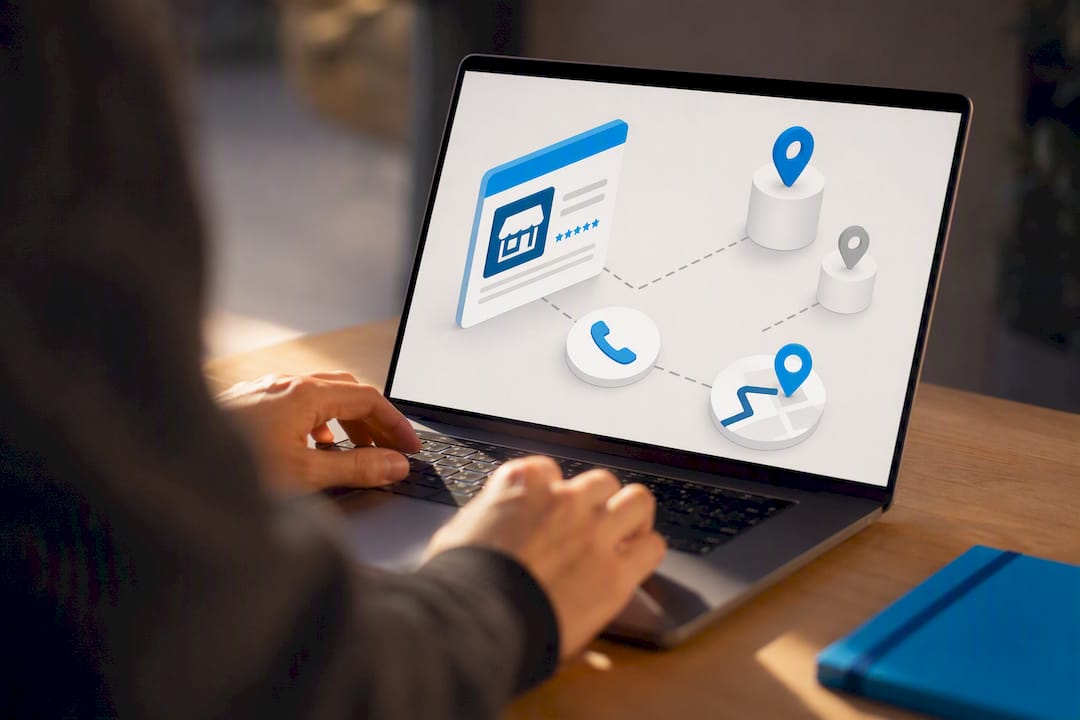
For a deeper walkthrough of field-by-field setup, WWS – Web Development + SEO’s Google Business Profile optimization guide covers configuration most owners skip.
What Should Emergency Service Pages and City Pages Include?
Treat water, fire, and mold damage as separate search markets, each deserving its own dedicated page rather than one page trying to rank for everything. GeekPowered Studios’ seven-step system recommends 1,200 to 2,000 words per damage-type page, paired with city-specific location pages underneath.
The first 100 pixels on mobile decide whether someone stays or bounces, so the top of every emergency page needs:
- A headline confirming the exact problem (“24/7 Emergency Water Damage Restoration”)
- A visible 24/7 availability claim
- A tap-to-call phone number, not just a contact form
- Stated average arrival time (e.g., “on-site within 60 minutes”)
- IICRC certification badges and insurance-claim handling language
City pages should never be templated duplicates with the city name swapped in. Include real neighborhood references, project examples, and geography-specific detail. Ranking location pages consistently share three characteristics: neighborhood signals, real project data, and geography-specific content.
Add FAQ schema and LocalBusiness or Service schema markup to every page. Structured data helps capture SERP real estate through expandable results, which lifts click-through without any extra ranking work. Link pillar pages down to city pages, and link city pages back up, a hub-and-spoke model that reinforces topical relevance across the whole site.
Why Do Page Speed and Mobile UX Determine Whether Calls Convert?
A homeowner standing in an inch of water doesn’t wait for a slow site to load. Emergency searches convert fast when a page ranks in the Map Pack and a real person answers the phone, but a slow site loses those callers before they ever dial. Core Web Vitals, especially Largest Contentful Paint, directly affect both ranking and whether that visitor sticks around long enough to tap “call.”
Mobile UX for emergency pages should stay stripped down:
- One large, thumb-friendly call-to-action button, not three competing options
- A sticky call button that stays visible while scrolling
- Contact forms with three fields or fewer (name, phone, brief problem description)
- No auto-playing video or heavy sliders competing for attention
On the technical side, compress every image, enable caching, run a lightweight theme instead of a bloated template, and monitor server response times. Test changes with Google PageSpeed Insights, Lighthouse, and real-user metrics from Search Console rather than relying on a single lab score.
Pro Tip: Run your emergency page through PageSpeed Insights on mobile specifically, not desktop. Restoration searches skew heavily toward phones, and a page that scores well on desktop can still crawl on a cell connection.
If your current site can’t hit these benchmarks, WWS – Web Development + SEO’s website SEO services rebuild the technical foundation before layering content on top.
Which Keywords Should Restoration Companies Target First?
Not every water-damage keyword deserves the same page or the same urgency. Segmenting search intent into three buckets keeps your content plan from turning into a pile of near-duplicate pages competing with each other.
- Emergency intent: “emergency water damage restoration,” “24/7 flood cleanup near me,” “same day water extraction.” These map directly to your pillar service pages and need click-to-call above the fold. Emergency modifiers convert at the highest rates of any keyword category in this industry, often at a lower acquisition cost than paid ads for the same term.
- Project intent: “basement flood repair cost,” “water damage restoration process.” These fit mid-funnel pages that explain process and pricing without demanding an instant call.
- Awareness intent: “how to prevent pipe bursts in winter,” “does insurance cover water damage.” These belong in supporting blog posts that build topical authority and earn backlinks over time.
Structure the cluster as pillar pages linking down to city pages, with awareness posts linking up into both. This hub-and-spoke internal linking model is what raises topical authority across the whole site, not any single page in isolation.
When writing for mobile scanners, confirm the problem in the first sentence, state arrival time, list credentials, and repeat the call-to-action at least twice on longer pages. A tool like Baby Love Growth’s content strategy platform can help map these keyword buckets to a publishing calendar so emergency pages don’t get buried under awareness content.
How Do Citations and Reviews Affect Local Ranking?
Inconsistent business listings quietly undermine everything else you do. Audit your name, address, and phone number (NAP) across your website, GBP, Yelp, Angi, and the Better Business Bureau every quarter, and correct mismatches immediately since even a suite-number discrepancy can confuse Google’s local algorithm.
- Prioritize industry-specific directories (HomeAdvisor, Thumbtack, IICRC’s referral network) over generic ones.
- Ask for reviews within 24 hours of job completion, while the relief of a solved problem is still fresh.
- Aim for a steady drip of new reviews rather than a batch of ten in one week followed by silence; recency matters as much as volume.
- Respond to negative reviews calmly and specifically, then take the resolution offline.
- Feature testimonials with before-and-after photos on both your GBP and your service pages.
Reviews influence two separate things at once: they’re a ranking input for the Map Pack, and they’re the deciding factor for click-through once someone sees your listing next to three competitors.
What Should You Expect to Pay and How Do You Measure Results?
Track four core numbers: organic calls by page (via call tracking), Map Pack impressions in Search Console, click-to-call rate on mobile, and overall conversion rate from visit to booked job.
Timelines follow a predictable curve. GBP improvements show up within weeks. Map Pack movement typically appears in 60 to 90 days. Organic traction on new service pages takes 3 to 12 months depending on competition in your metro area.
- Budget realistically for ongoing local SEO investment rather than a one-time project.
- SEO-generated leads typically run $50 to $150 each over time, compared to $150 or more per lead on PPC for the same emergency terms.
- Use CallRail or a similar service to assign a tracking number per page, since most restoration conversions happen by phone, not through web forms.
- Pair GA4 with Search Console to connect organic sessions to actual booked jobs, not just page views.
Why Publisher Credentials Matter When Choosing an SEO Partner
Restoration owners rarely have time to vet a dozen SEO vendors mid-flood-season. That’s where verifiable credentials save you from a bad bet. WWS – Web Development + SEO operates as an official Google and Meta Partner, staffed entirely by in-house, Google and Facebook certified specialists, with more than 200 completed client partnerships behind that track record.
- Ask any prospective agency for their Google/Meta Partner status directly, not a claim buried in marketing copy.
- Request sample GBP dashboards and monthly reporting formats before signing anything.
- Confirm whether the team building your site is the same team running your SEO, since handoffs between subcontractors slow everything down.
Restoration SEO works like an emergency dispatch system: speed, credibility, and an immediate contact path are the actual levers, not clever copywriting or a redesigned logo.
My 30/60/90 Plan for a Restoration Business Starting SEO
If I were running SEO for a small restoration company today, I’d resist the urge to overhaul everything at once. Week one: audit GBP top to bottom, add a sticky click-to-call button, publish one emergency service page, and ask your five most recent customers for reviews.
Month one and two: publish city pages for your top three service areas, fix the speed issues PageSpeed Insights flags, and install call tracking so you know which page each lead came from.
Month three: start publishing supporting content, clean up citation inconsistencies, and check your KPI dashboard against the 60 to 90 day Map Pack window. If you’re not seeing movement by then, or you simply don’t have five hours a week to run this consistently, that’s the point where hiring a dedicated local SEO partner starts to pay for itself instead of costing you momentum.
— Online Marketing Experts
How WWS Can Put This Plan Into Action for Your Business
WWS – Web Development + SEO is is the alternative to juggling five different freelancers for your restoration company’s online presence, one in-house team handles your GBP setup, conversion-first site build, local SEO, and call tracking under a single roof, so nothing gets lost between handoffs.
A WWS audit starts with a full GBP and website review, followed by a prioritized action list covering the exact gaps this guide walks through: category selection, page speed, emergency page structure, and citation consistency. As an official Google and Meta Partner, with more than 200 completed client partnerships across the Chicago area, our certified team builds the systems that turn searches into scheduled jobs, not just impressions. If your current site can’t answer a phone-first emergency searcher within three seconds of loading, that’s costing you real jobs every week.
Request a free audit through our website design team and find out exactly where your current setup is losing calls before your next competitor does.
Sources
- Water damage restoration SEO | PushLeads
- SEO for Restoration Companies: 7-Step System (2026)
- The Restoration Company’s Local SEO Playbook for 2026: What Actually Moves Rankings – Tygart Media
- Water Damage Restoration SEO: How to Rank for Emergency Searches | Kelly WM
FAQ
What Is the Fastest Way to Improve Water Damage SEO?
Complete your Google Business Profile fully and add a click-to-call button above the fold on your homepage; both can be done within days and directly affect Map Pack visibility.
How Long Does Water Damage Restoration SEO Take to Work?
GBP improvements often show results within weeks, Map Pack movement typically appears in 60 to 90 days, and organic service page traction can take 3 to 12 months depending on local competition.
How Much Does Restoration Company SEO Cost?
SEO-generated leads for restoration companies typically run $50 to $150 each over time, compared to $150 or more per lead through PPC for the same emergency search terms.
Should I Build Separate Pages for Water, Fire, and Mold Damage?
Yes. Treating each damage type as its own search market with a dedicated 1,200 to 2,000 word page, plus city-specific location pages underneath, builds stronger topical relevance than one page trying to cover everything.
Do I Need an Agency, or Can I Do Restoration SEO Myself?
A single owner can handle the first 30 to 60 days, GBP setup, one emergency page, review requests, but city page expansion, ongoing technical monitoring, and citation cleanup usually make more sense to hand to a dedicated team like WWS – Web Development + SEO once the basics are in place.