





Choose a Google Ranking Checker That Shows the Whole Search Picture
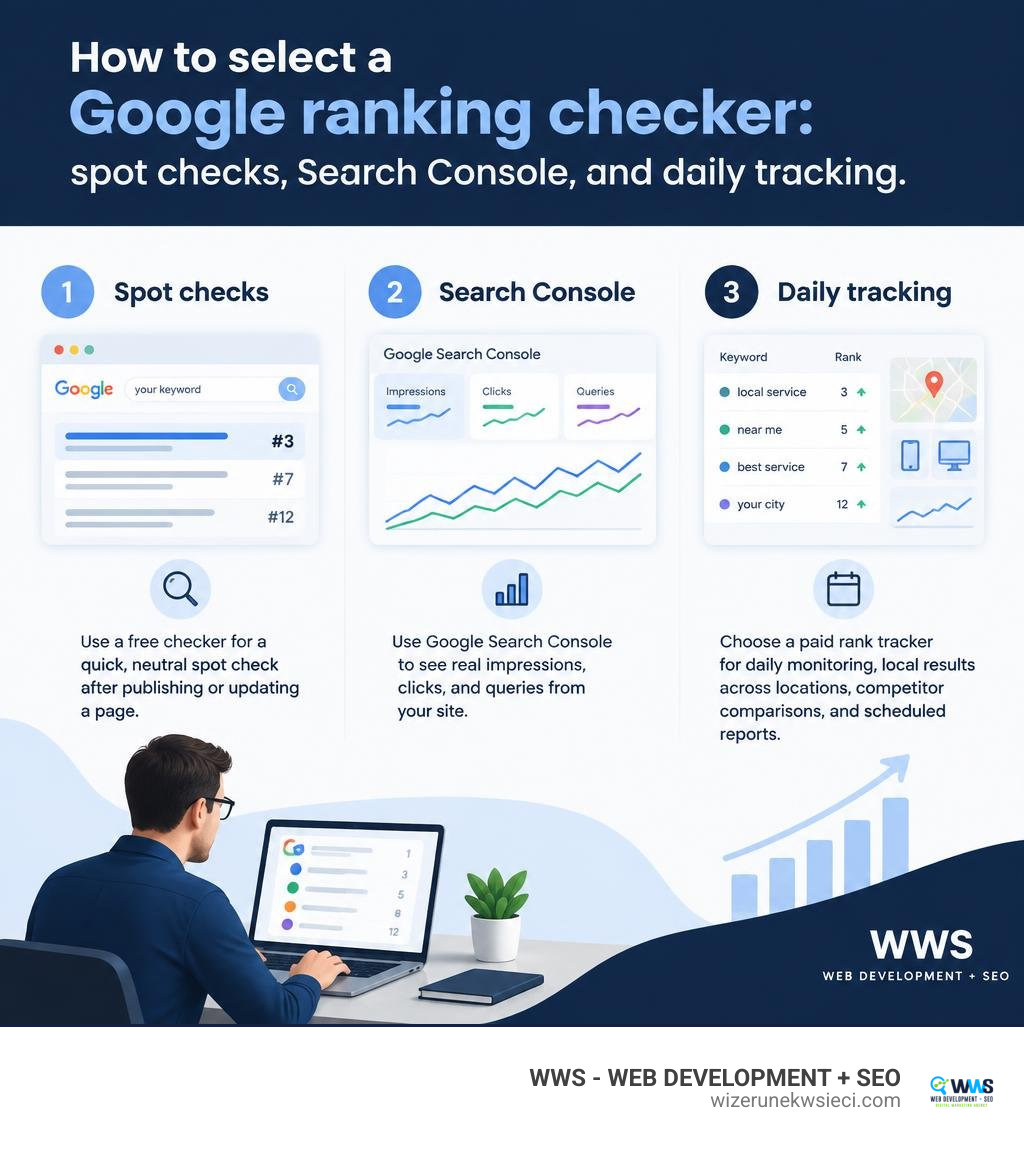
The right website ranking checker Google tool does more than show a single position. Choose one that tracks your target keywords by city or country, separates mobile from desktop results, detects SERP features such as map packs and AI Overviews, and keeps ranking history over time.
For most small businesses, start with this checklist:
- Use a free checker for a quick, neutral spot check after publishing or updating a page.
- Use Google Search Console to see real impressions, clicks, and queries from your site.
- Choose a paid rank tracker when you need daily monitoring, local results across Chicago-area locations, competitor comparisons, and scheduled reports.
Do not rely on a normal Google search alone. Results can change based on your location, device, search history, and whether you are signed in. A reliable tracker removes much of that personal bias and helps you focus on the question that matters: Are the right customers finding your business before they find a competitor?
I am Tomasz Lasota, founder of Wizerunek w Sieci / WWS – Web Development + SEO, and I have spent more than 22 years helping Chicago-area and U.S. small businesses turn search visibility into calls, leads, and revenue. In this guide, I will help you select a website ranking checker Google solution that fits your business goals, local market, and SEO workflow.
Must-know website ranking checker google terms:
Understanding SERP Tracking and Neutral Search Results
When business owners check where their company appears on search engines, they often open a standard browser window, type in a service name, and look for their listing. This simple search rarely displays what potential customers see. Google’s search algorithms customize search engine results pages (SERPs) based on physical location, past searches, active Google accounts, and device configurations.
Accurate rank tracking relies on extracting clean, unbiased search data directly from the index. Professional rank monitoring software uses clean requests without cookies or personalized browsing histories. This process captures standard rankings across different devices and geographic areas, reflecting how real customers discover local services.
How a Website Ranking Checker Google Platform Gathers Neutral SERP Data
A modern rank checking utility gathers data by simulating authentic, non-personalized search queries across designated data centers. The tool sends automated requests using clean network proxies, specifying query parameters such as language, device type (mobile or desktop), and exact geographic coordinates down to a specific town or postal code.
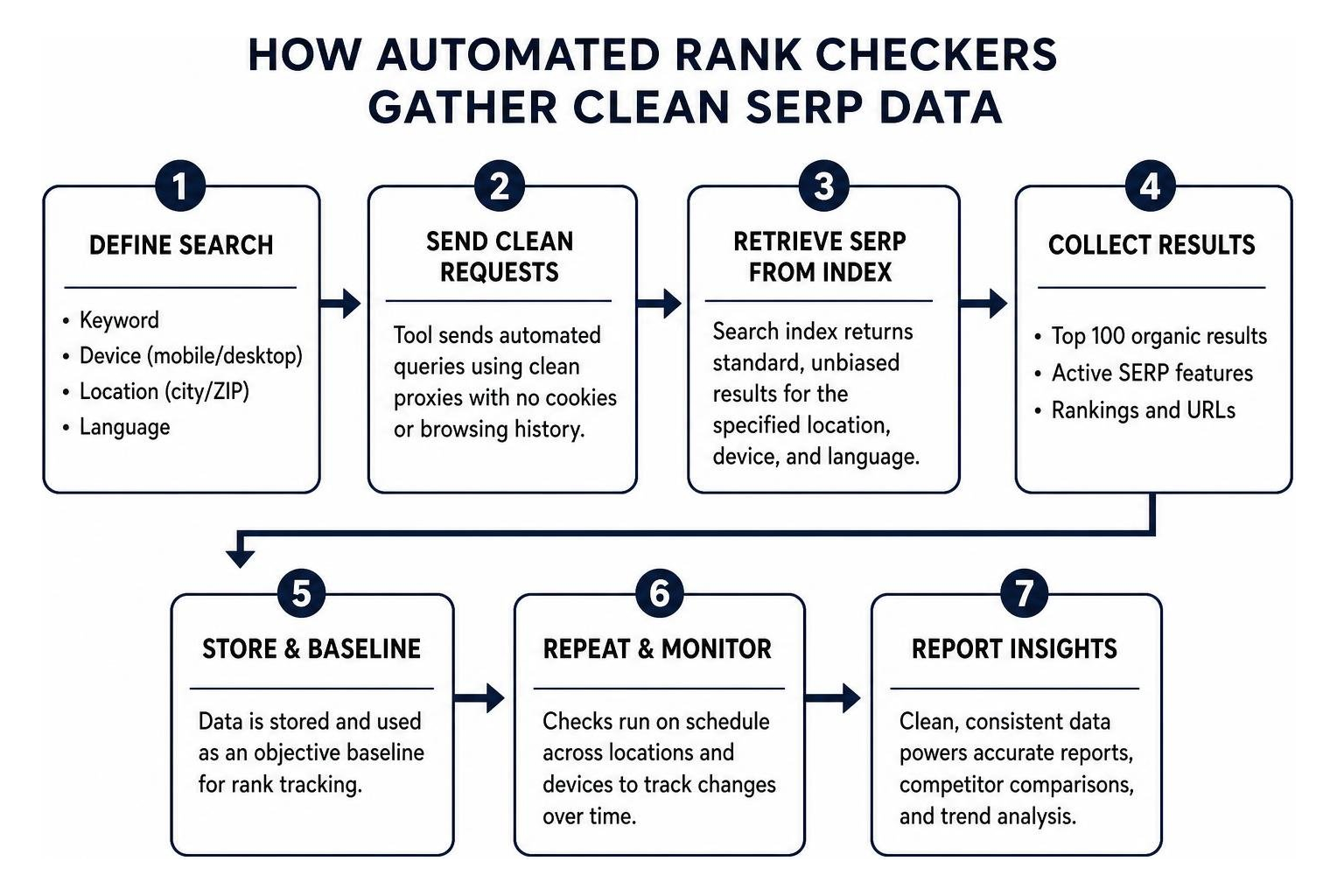
Dedicated platforms query search indexes directly to fetch the top 100 organic positions along with active SERP features. This clean retrieval process bypasses personalized browser history, presenting search visibility as an objective baseline.
Evaluating Browser Personalization and Search Intent Dynamics
Personalization helps everyday searchers find nearby lunch spots or revisit recent websites, but it creates a skewed view for business owners tracking their own marketing performance. If you visit your website daily from an office in Des Plaines or Chicago, your personal web browser learns that preference and elevates your site in your private search results.
A customer searching for those exact services from Arlington Heights, Schaumburg, or Naperville will see a different set of results based on localized intent and algorithmic competition. Business owners benefit from finding your Google ranking of website pages through objective tools rather than private browsing sessions, ensuring promotional efforts match authentic buyer behavior.
Why Every Business Needs a Website Ranking Checker Google Tool in 2026
The search landscape in 2026 demands constant attention to position shifts. Search engines frequently adjust ranking algorithms, update local pack criteria, and expand automated AI summaries at the top of results pages. Businesses that rely on occasional manual checks risk losing qualified customer leads without realizing their positions have dropped.

A structured rank monitoring routine provides early warnings when positions fluctuate. Rather than discovering traffic drops at the end of a slow month, tracking software alerts you immediately when key commercial terms move. This allows your team to refresh page content, correct technical errors, or adjust local signals before lead generation suffers.
Tracking Algorithm Shifts and AI Overview Volatility
Modern search result pages integrate AI Overviews alongside traditional organic links and map packs. Because AI Overviews summarize topics directly on the page, securing visibility within these summaries and holding top-three organic rankings is essential for maintaining traffic.
Professional rank tracking platforms monitor whether a domain appears inside AI Overviews or traditional organic listings. Search algorithms update continuously, causing brief position fluctuations across dynamic keywords. Using reliable utilities for tracking site positions accurately ensures that short-term volatility is distinguished from lasting ranking losses.
Measuring Conversion Intent and Click-Through Potential
Position metrics become valuable when tied directly to user intent and revenue potential. Industry click-through data shows that the first three organic positions capture roughly 25% to 35% of all search clicks, while listings past the tenth position receive less than 1%.
Advanced rank tracking tools pair ranking data with estimated search volume and Cost-Per-Click (CPC) figures. Evaluating these metrics helps small businesses focus optimization work on commercial search terms that drive phone calls and sales consultations, rather than low-value informational phrases.
Core Criteria for Evaluating Enterprise and Local Rank Trackers
Selecting the right rank tracking tool depends on your operating model, service area, and growth targets. While free tools help verify individual pages, expanding businesses require scheduled tracking, local geography filters, and mobile-specific monitoring.
| Evaluation Metric | Free Spot-Check Tools | Paid Continuous Tracking Suites |
|---|---|---|
| Data Freshness | On-demand single queries | Daily automatic updates & alerts |
| Geographic Targeting | Country-level default | City, ZIP code, & GPS coordinates |
| SERP Feature Tracking | Basic top-10/20 organic lists | Local Packs, AI Overviews, Snippets |
| Historical Reporting | Single snapshot (no history) | Long-term trend curves & exports |
| Device Segmentation | Generally desktop-focused | Desktop and Mobile separated |
| Scalability | 1 to 5 checks per day | Hundreds to thousands of keywords |
Setting Up Automated Tracking with a Website Ranking Checker Google System
Configuring an automated tracking system requires organizing target keywords by intent and mapping them to dedicated service pages. This prevents keyword cannibalization, which occurs when multiple pages on your site compete for the same query and reduce overall rankings.

- Group Keywords by Theme: Categorize queries by specific services and target service locations across the Chicago area.
- Assign Target URLs: Match every keyword group to a distinct landing page to evaluate specific content performance.
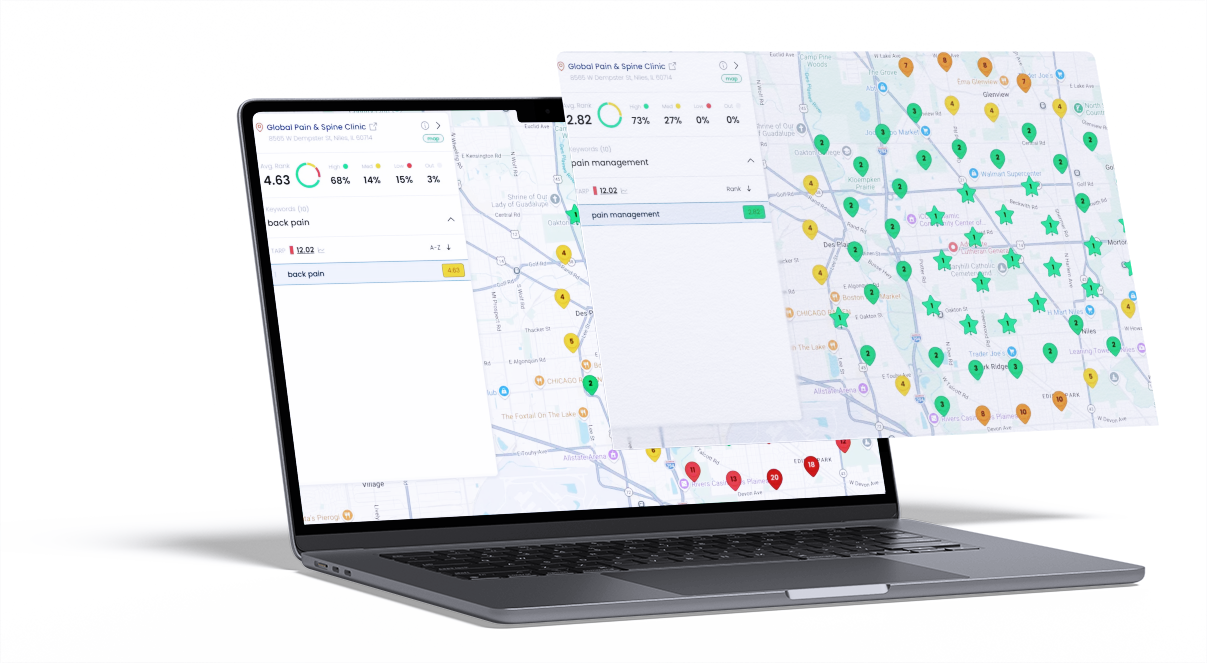
- Configure Geographic Coordinates: Set precise tracking locations (such as Des Plaines IL, Mount Prospect IL, or Glenview IL) to monitor true local pack positioning.
- Enable Multi-Device Tracking: Track mobile search performance separately, as Google indexes and ranks websites based on their mobile versions.
- Establish Reporting Cadences: Schedule weekly trend summaries to review ongoing search engine positioning without getting distracted by daily minor fluctuations.
Comparing Free Spot-Check Utilities Against Dedicated Tracking Suites
Free spot-check utilities provide quick validation when publishing new blog posts or updating service pages. They confirm whether Google has indexed the URL and identify its general position in the top 100 results.
For ongoing campaigns, free tools lack historical tracking, automated alerts, and multi-location monitoring across neighboring suburbs like Park Ridge, Niles, and Rosemont. Dedicated tracking suites store historical data, enabling businesses to measure progress over quarterly marketing cycles and assess the direct impact of website improvements.
Turning Rank Tracker Metrics into an Actionable SEO Growth Strategy
Rank tracking data provides the clearest value when used to guide ongoing website improvements. Identifying pages that rank between positions 4 and 15 highlights prime opportunities where focused content updates, internal links, and technical fixes can move your business onto the first page.
At WWS (Wizerunek w Sieci), based in Des Plaines, IL, we analyze keyword position trends to guide high-impact website updates for our clients. By focusing on real customer search behavior, we turn rank tracking data into practical strategies that increase incoming inquiries and booked services.
Diagnosing Crawlability and On-Page Keyword Gaps
When a page drops in rankings or fails to appear in the top 100 search results, technical crawl barriers are often the underlying cause. Reviewing technical settings ensures search engine crawlers can access and evaluate your content properly:
- Robots.txt Rules: Ensure essential service pages are not accidentally blocked from search engine indexing by incorrect disallow commands.
- Meta Tag Settings: Check that key landing pages are free of accidental “noindex” tags that remove them from search results.
- Canonical URL Tags: Confirm that canonical tags point to the preferred page URL, avoiding diluted ranking authority across duplicate links.
- Mobile Page Matching: Verify that mobile layouts deliver the same navigation depth, written text, and contact forms found on desktop views.
- Header & Content Alignment: Update title tags, H2 headings, and introductory paragraphs to match the real-world search phrases identified in your tracking reports.
Expanding Geo-Targeted Visibility for Multi-Location Markets
For service businesses operating across Cook County, Lake County, and the Northwest Chicago suburbs, search engine visibility varies significantly from one town to the next. A plumbing contractor or medical practice may rank in the top three within Des Plaines, but drop in visibility for customers searching from Elk Grove Village, Northbrook, or Evanston.
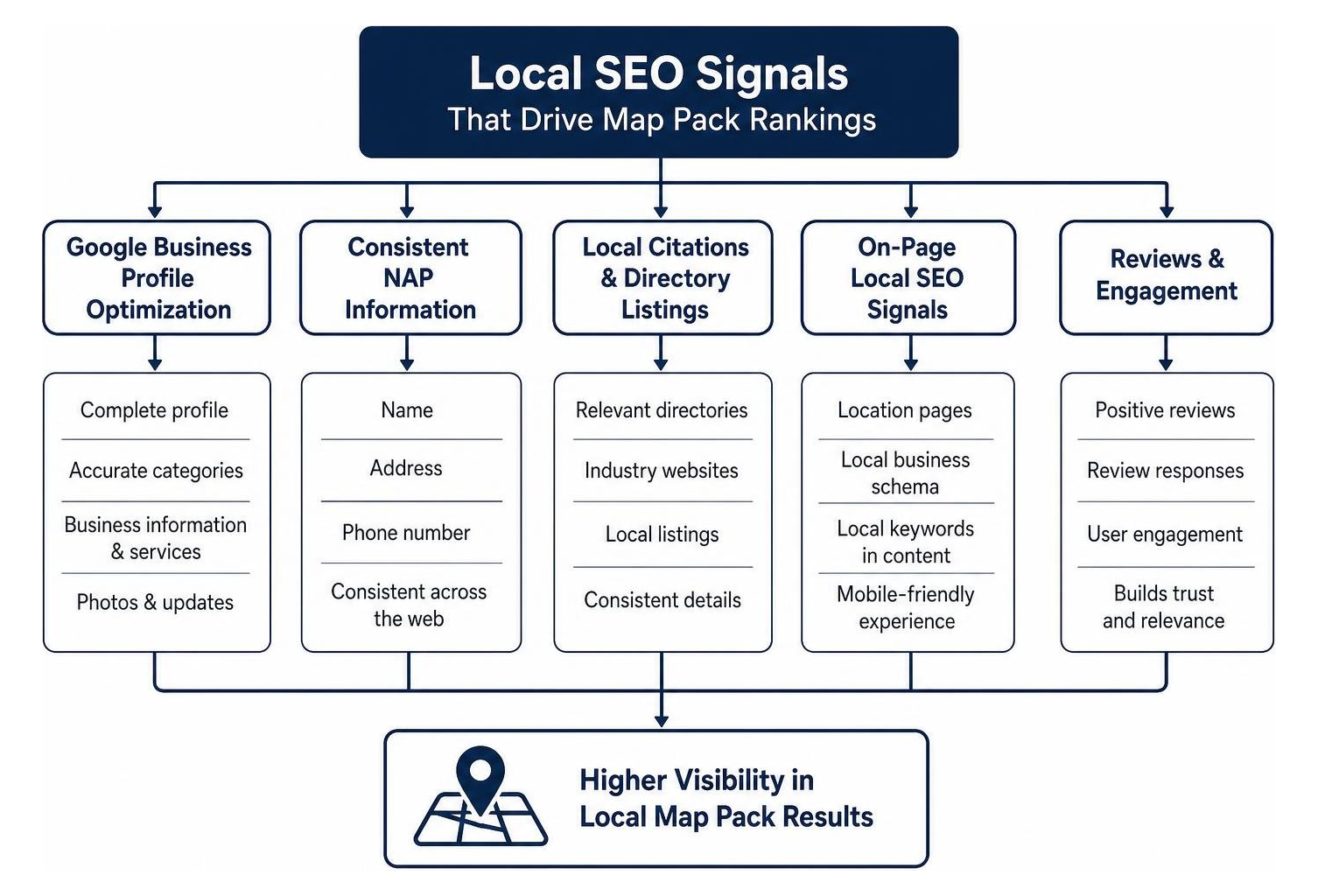
Improving local rankings across multiple suburbs requires dedicated location pages, accurate local business schema, and active business profile optimization. Implementing structured approaches for improving local search visibility helps your business secure high positions in local map packs across all your primary service areas.
Frequently Asked Questions About Google Rank Checking
How often should a business check its Google keyword positions?
For most small and medium-sized businesses, reviewing ranking data once a week provides an accurate view of organic performance. Daily automated tracking is useful for catching sudden drops caused by technical bugs or core algorithm updates, but acting on minor daily shifts can lead to unnecessary, reactive changes. Weekly and monthly trend reviews reveal true ranking trajectories.
Why do manual Google search results differ from rank checker data?
Manual browser searches reflect your personalized browsing profile, stored cache, signed-in Google account, and physical location down to your current street block. Professional rank checkers bypass these personal factors by submitting non-personalized queries through neutral data centers, delivering an objective view of how new prospects encounter your business.
What is the difference between domain-level and URL-level rank tracking?
Domain-level rank tracking evaluates all search terms for which any page on your entire website appears in search results. URL-level tracking monitors the exact position of a specific web page for designated target keywords. Tracking at the URL level helps business owners verify that the correct landing page ranks for its intended service term, preventing keyword cannibalization across the site.
Conclusion
Regular search position monitoring provides the objective insights needed to build a dependable online presence. Tracking neutral search data, identifying on-page content gaps, and monitoring local map visibility helps business owners make informed marketing decisions that protect their market share and attract high-value clients.
Turning ranking metrics into sustained customer growth requires combining clear data tracking with high-quality web development, localized search optimization, and technical site care. WWS (Wizerunek w Sieci) provides the ideal middle ground for business owners—delivering the advanced capabilities and tools of a large agency alongside the direct communication, local Chicagoland knowledge, and personalized attention of a dedicated partner.
Whether you run a local service company in Des Plaines, an expanding practice across the Chicago suburbs, or a business serving clients nationwide, our bilingual team (English & Polish) is ready to help you grow. Explore our tailored website SEO solutions or contact WWS to schedule your free website audit and strengthen your search visibility today.