


Keyword Rank Checker Website Guide: Stop Guessing Your Google Positions
Stop guessing your Google positions - use a keyword rank checker website to track SERP rankings, spot drops, and boost local SEO for Chicago small businesses.
 By WWS Team
7 min read

In this article6 sections
- Check Your Google Positions Before You Change Your SEO Plan
- What Is a Keyword Rank Checker Website and How Does It Work?
- Essential Features to Evaluate in Keyword Rank Checking Platforms
- How to Use Ranking Data to Strengthen Your SEO Strategy
- Frequently Asked Questions About Keyword Rank Tracking
- Conclusion
Check Your Google Positions Before You Change Your SEO Plan
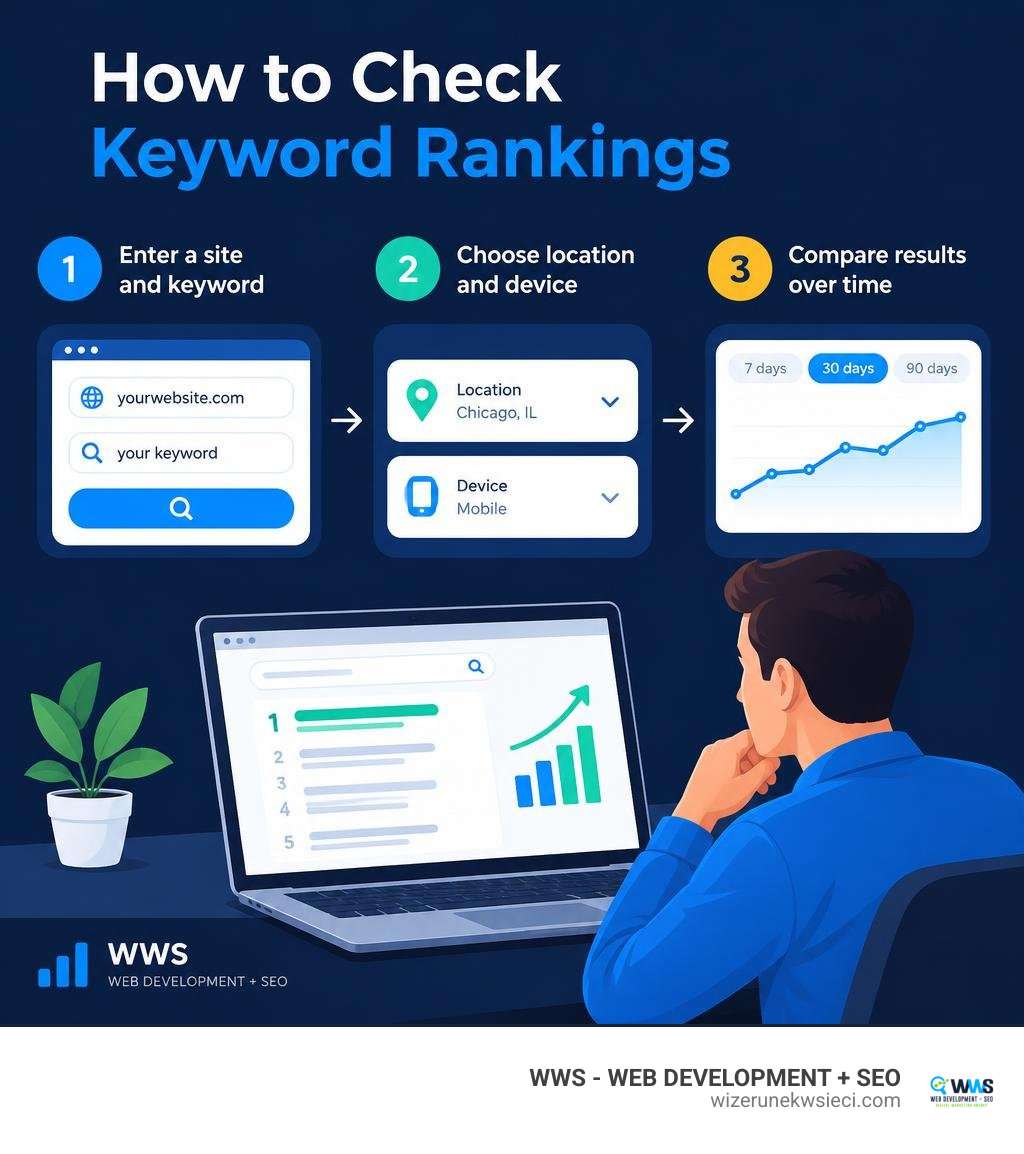
A keyword rank checker website shows where your site appears in search results for a specific phrase. Enter your website and keyword, then choose the location and device your customers use. Check the same searches over time: one result is a snapshot, but a trend can show whether your SEO work is helping.
For a Chicago-area business, location matters. A ranking checked across the country may not reflect what a nearby customer sees. This guide compares what rank-checking tools can do, where free checks fall short, and which features help you make better SEO decisions.
I’m Tomasz Lasota, founder of Wizerunek w Sieci / WWS - Web Development + SEO in Des Plaines. For over 22 years, I’ve helped small businesses improve their online presence, and I’ll show you how to use a keyword rank checker website to turn position data into useful next steps.
Keyword rank checker website further reading:
What Is a Keyword Rank Checker Website and How Does It Work?
A keyword rank checker website is an online software platform designed to query search engines programmatically and report where your specific web pages sit on the search engine results page (SERP). Instead of manually opening a browser and scrolling through dozens of listings, the software automatically retrieves, parses, and logs your exact ranking position.
At its core, search visibility relies on understanding search engine positioning fundamentals. Search engines calculate rankings using complex algorithms that evaluate relevance, page speed, backlink authority, and local proximity. When a user enters a search query, Google dynamically generates a results page. Web-based rank checkers simulate this process by sending automated queries across targeted parameters to provide an unbiased snapshot of organic visibility.
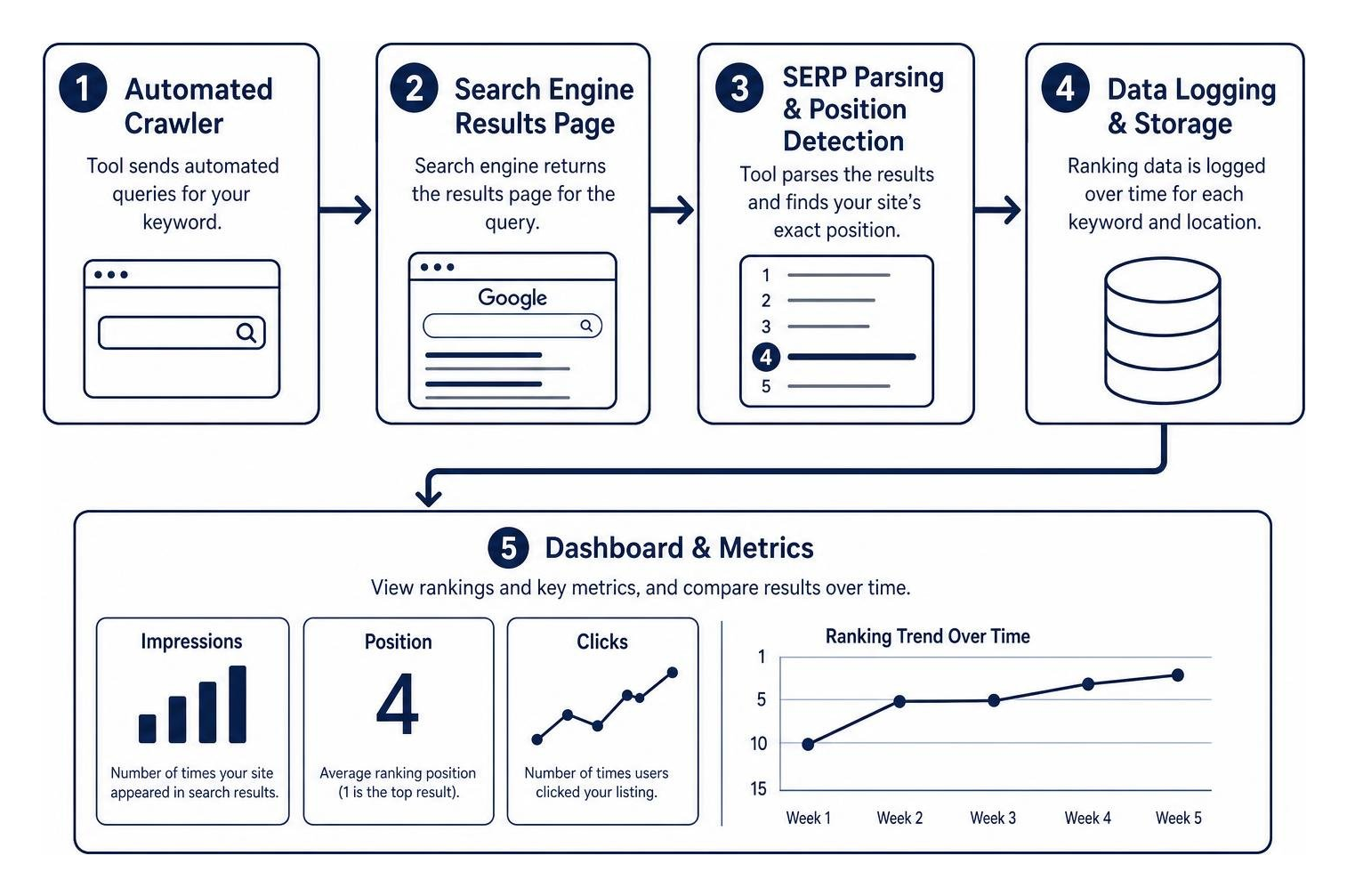
When evaluating rank data, it helps to understand standard metrics defined in Google Search Console Help documentation:
- Impressions: The number of times a user saw a link to your site in search results.
- Position: The average numerical spot where your URL appeared on the page (with position 1 being the top organic listing).
- Clicks: How many times users selected your snippet and visited your site.
How a Keyword Rank Checker Website Simulates Real User Searches
If you manually search for your own business on Google, your results are heavily skewed. Search engines personalize results based on your browsing history, cached cookies, account preferences, and your device’s exact GPS location. If you frequently visit your own domain, it may appear higher on your personal screen than it does for an actual customer searching from Arlington Heights, Schaumburg, or Naperville.
A professional rank checker removes this personalization bias. It routes queries through localized proxy nodes, dynamically rotates IP addresses, and specifies exact device user-agents (such as an Apple iPhone or a Windows desktop). By executing non-personalized, clean-session requests, these platforms retrieve the raw SERP that an everyday searcher sees. For visual guidance on auditing your standings, you can watch this video tutorial on finding search positions.
Keyword Rank Checkers vs Automated Rank Trackers
While the terms are often used interchangeably, there is a clear functional distinction between an instant rank checker and a fully automated rank tracker:
- Instant Keyword Rank Checkers: These operate on an on-demand basis. You enter a domain, paste in one or more search terms, choose a location, and get a single live snapshot of your positions. They are useful for quick spot-checks during a site launch or immediate diagnostic audits.
- Automated Rank Trackers: These monitor selected keyword clusters continuously on a scheduled cadence (typically daily or weekly). They store historical data, calculate movement trends, issue alerts when rankings drop, and track competitors over time.
For continuous marketing oversight, exploring strategic search engine ranking checker tools provides the historical context required to evaluate ongoing campaigns.
Essential Features to Evaluate in Keyword Rank Checking Platforms
Choosing the right platform requires looking past flashy interfaces and focusing on the underlying data collection methods. Small businesses need reliable, actionable numbers that reflect actual customer behavior in their target markets.
Key capabilities to look for include:
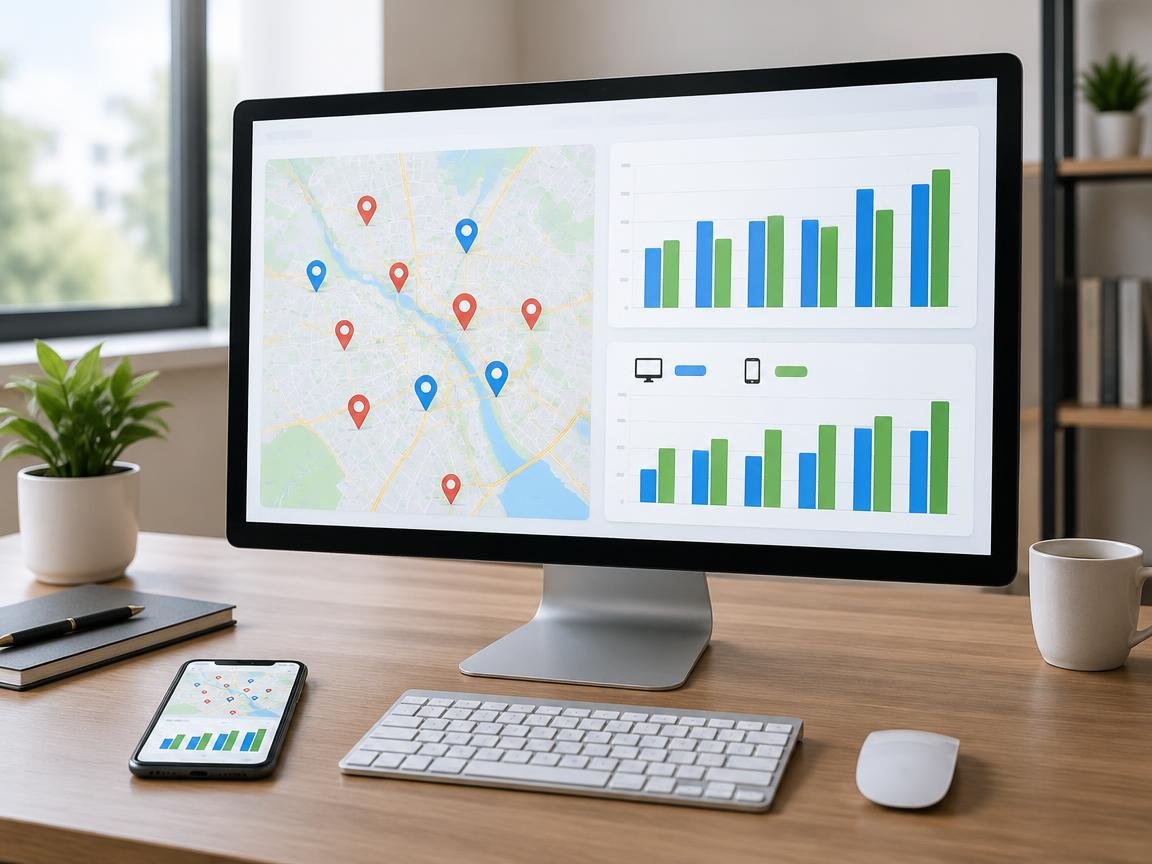
- Location Precision: The ability to check positions at national, regional, city, and zip code levels.
- Device Segmentation: Clear separation between mobile and desktop results to account for layout variations.
- SERP Feature Tracking: Visibility into Google Map Packs, featured snippets, “People Also Ask” boxes, and image carousels.
- Competitor Benchmarking: Side-by-side performance tracking against other local businesses in your category.
- Integration & Exports: CSV, PDF, or API capabilities to integrate ranking figures into broader business reporting.
Evaluating a Keyword Rank Checker Website for Local and Multi-Device Tracking
Local search is the lifeblood of service providers throughout Cook County, Lake County, and the broader Chicago metropolitan area. A plumbing contractor in Des Plaines targets searchers in Mount Prospect, Park Ridge, and Glenview, while a corporate consulting firm in Rosemont may seek nationwide reach.
Because Google uses mobile-first indexing, desktop and mobile rankings frequently diverge. Mobile SERPs prioritize local proximity and feature compact map integrations, while desktop layouts display broader snippet data. When monitoring website page rankings, ensure your tool tracks both device environments across specific suburban municipalities.
Bulk Checking and Competitor SERP Analysis
Managing your search visibility is rarely about a single keyword. A typical local business targets dozens of variations - from primary services to neighborhood-specific long-tail terms.
When managing high-volume keyword audits, bulk checking features allow you to upload complete keyword groups and evaluate performance simultaneously. Comparing your standings directly against your top local competitors reveals gaps where competing pages outrank yours for high-intent search queries.
| Feature Category | Free Web Checkers | Dedicated Paid Trackers | Professional Agency Management (WWS) |
|---|---|---|---|
| Check Frequency | On-demand only (manual) | Scheduled daily or weekly | Continuous monitoring + strategic review |
| Location Depth | Country or broad state level | City & Zip-code level | Hyper-local targeting across Chicagoland |
| Competitor Tracking | Rare (single URL only) | 5 to 40 competitors | Full competitor SERP gap analysis |
| Data History | None (instant snapshot) | 30 to 365+ days | Multi-year campaign performance records |
| Actionable Strategy | Raw numbers only | Dashboards & alerts | Custom web updates & on-page execution |
How to Use Ranking Data to Strengthen Your SEO Strategy
Rankings are an indicator of search engine visibility, but raw numbers alone do not grow a business. The real value comes from interpreting movement patterns and implementing strategic website improvements.

To turn rank data into actual customer inquiries, follow a structured process:
- Identify Quick-Win Keywords: Look for high-value terms sitting on page two (positions 11 through 20). Updating these pages with clearer answers, faster load speeds, and improved metadata often pushes them into the top ten.
- Address Sudden Drops: If a primary keyword drops five or more spots, investigate technical issues, lost backlinks, or new competitor content by diagnosing Google search ranking drops.
- Optimize for Click-Through Rates (CTR): Ranking at position 4 is great, but if your meta title and description do not convince users to click, you lose traffic. Studies show the #1 organic position earns approximately 28% of total clicks, with rates dropping sharply down the page.
Monitoring Tracking Frequency and SERP Volatility
Search engines update their search indexes around the clock, rolling out minor algorithmic adjustments daily and major core updates multiple times per year. Checking positions every hour is unnecessary and often counterproductive, as normal index testing can cause temporary fluctuations.
When evaluating baseline stability, analyzing domain authority metrics alongside ranking trends helps you distinguish between brief SERP tests and structural visibility shifts. For most local businesses, weekly reviews offer a reliable balance between spotting meaningful trends and avoiding overreactions to daily volatility.
Free vs Paid Tracking Tools: Navigating Limitations
Free checking tools are helpful for quick, occasional assessments, but they have practical limits for ongoing business use:
- Daily Quotas: Most free platforms limit non-registered users to 5 to 10 queries per day.
- Estimated vs. Live Data: Some free utilities cache older results or provide estimated averages rather than executing live SERP calls.
- Privacy Controls: Modern browser-based tools sometimes process queries client-side to preserve user privacy, whereas heavier platforms store data in cloud accounts.
For consistent commercial tracking, selecting dedicated ranking checkers or partnering with an established agency ensures your decisions are backed by reliable historical data.
Frequently Asked Questions About Keyword Rank Tracking
How accurate are web-based keyword rank checkers?
High-quality rank checkers deliver near 99% accuracy when simulating localized search environments. However, slight variations can occur between tools due to differing proxy locations, personalization filters, and live A/B tests run by search engine algorithms.
How often should small businesses monitor their keyword rankings?
For most local businesses in areas like Niles, Skokie, or Elk Grove Village, monitoring rankings once per week is ideal. Weekly audits provide clear visibility into steady progress or sudden drops without causing panic over normal daily SERP fluctuations.
Can rank tracking tools differentiate between mobile and desktop results?
Yes. Quality rank tracking platforms allow you to choose your target device explicitly. Because mobile search results place heavy emphasis on local map packs and responsive page speeds, desktop and mobile positions frequently differ for the same keyword.
Conclusion
Tracking your search visibility takes the guesswork out of digital marketing. By using a keyword rank checker website to monitor your target search terms across specific locations and devices, you gain the clarity needed to make data-backed website updates that drive real calls and sales.
At Wizerunek w Sieci (WWS - Web Development + SEO), we combine deep technical expertise with personal attention to help businesses succeed online. Located in Des Plaines, IL, we understand the local market across Cook County, Lake County, and the broader Chicago metropolitan area, with dedicated bilingual support for the Polish-American community (Polonia Chicago) and businesses nationwide.
Whether you need hyper-local visibility in the Northwest Suburbs or broad commercial reach across the United States, our team provides complete website SEO positioning services, custom web design, and tailored digital marketing strategies.
Ready to see where your website stands on Google? Contact WWS today for a comprehensive, free website audit:
- Phone: (773) 814-2992
- Website: wizerunekwsieci.com
- Address: 636 S River Rd #218, Des Plaines, IL 60016
A Des Plaines, IL team helping local service businesses get found, get called and get booked since 2005: local SEO, Google Ads, conversion-focused websites and AI search optimization.
Meet the teamKeep reading
All articles
Contractor Website Checklist: 40 Checks Before You Go Live
A contractor website checklist covering trust, service pages, calls, mobile speed, local visibility and lead tracking, so your site turns visitors into estimates.

SEO Pricing in Chicago: What to Expect and How to Budget
What SEO costs in the Chicago market: monthly retainers, hourly and project rates, what drives the price, and how Iowa businesses can compare proposals.

Local Content Ideas for Service Businesses in 2026
Local content ideas for contractors, restaurants and service businesses: what to publish, how to find topics, where to share it and how to measure leads.